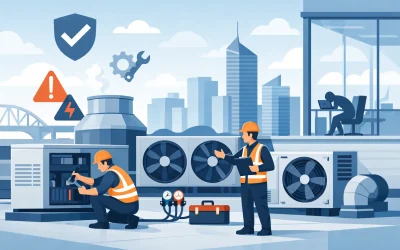
When an office floor goes warm at 10am, a café loses cool air over lunch, or an aged care site has a system fault after hours, the problem is not just comfort. It is staff productivity, customer experience, equipment performance and, in some settings, compliance. That is why choosing between commercial air conditioning companies is less about finding the cheapest quote and more about finding a contractor you can rely on when the pressure is on.
In Brisbane and across South East Queensland, commercial HVAC has to cope with heat, humidity, long operating hours and changing occupancy loads. A system that looks fine on paper can still underperform if it has been poorly designed, installed without enough attention to site conditions, or left without proper maintenance. The company behind the work matters as much as the equipment itself.
What separates good commercial air conditioning companies from average ones
A capable contractor does more than install units and move on. They assess how the building is used, how different areas heat up through the day, what downtime actually costs the business and what level of redundancy is needed. For a retail tenancy, that may mean fast-response servicing and reliable split or ducted systems. For a larger site, it may involve VRV or VRF systems, central plant support, asset audits and a structured maintenance plan.
The gap between average and reliable usually shows up in the details. Good commercial air conditioning companies document assets properly, communicate clearly, show up when they say they will and make recommendations that suit the building rather than their own convenience. They also understand that one missed service can turn into a much larger repair bill later.
That matters even more in sectors where indoor conditions affect more than comfort. Schools, healthcare settings, aged care facilities, hospitality venues and multi-tenant commercial buildings all have different operational pressures. A contractor who treats every site the same will miss issues that an experienced commercial team will spot early.
Start with capability, not just price
Price always matters, but it should not be the first filter. A low quote can hide a narrow scope, low-grade materials, rushed installation or limited after-sales support. In commercial work, those shortcuts usually surface later as repeat breakdowns, poor airflow, uneven temperatures or higher power bills.
A better starting point is capability. Ask what types of systems the company regularly works on. There is a difference between a contractor who occasionally handles commercial jobs and one that supports commercial sites day in, day out. You want a team that is comfortable across split systems, ducted systems, packaged units, VRV or VRF applications and broader HVAC service requirements.
It also helps to ask how they approach fault finding and lifecycle support. Installation is one part of the job. Ongoing servicing, emergency breakdown response, hygiene cleaning, upgrades and restoration work are where long-term value is built. If a company cannot support the system after handover, the relationship will become frustrating quickly.
Why maintenance matters as much as installation
A lot of businesses only start shopping around for contractors after a failure. By then, the system is already costing time and money. The stronger approach is preventative maintenance – not because it sounds good, but because it gives you control.
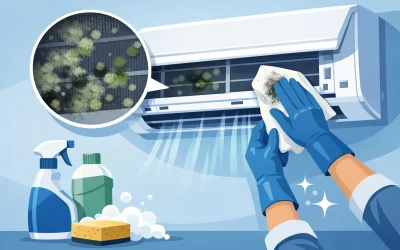
Commercial systems run hard, especially in Queensland conditions. Filters clog, drains block, electrical components wear, belts and fans lose efficiency and coils collect dirt that drags performance down. If those issues are picked up during scheduled servicing, the fix is usually straightforward. Left alone, they lead to poor cooling, rising energy use and breakdowns at the worst possible time.
The best commercial air conditioning companies build maintenance around risk, usage and site conditions. A busy restaurant kitchen, for example, needs a different servicing rhythm from a lightly occupied office. A childcare centre, medical facility or aged care site may need tighter attention to air quality, hygiene and system reliability. There is no one-size-fits-all schedule that works everywhere.
A proper maintenance program should also give you visibility. You should know what assets are on site, what condition they are in, what work has been carried out and what issues are likely to need attention next. Without that information, budgeting becomes guesswork.
Compliance, safety and documentation are not extras
Commercial HVAC work carries obligations around safety, licensing and system performance. If a contractor is vague about compliance, that is a red flag. The same goes for incomplete reporting, poor record keeping or casual communication around defects.
For building owners and facility managers, documentation is not admin for admin’s sake. It supports planning, contractor accountability and smoother handovers between internal teams. If you are managing multiple tenancies or sites, having consistent maintenance records and asset information makes life a lot easier.
This is where experienced commercial contractors stand out. They understand the reporting side of the job, not just the mechanical side. They know clients need clear service notes, practical recommendations and honest advice on whether a unit should be repaired, upgraded or replaced.
Sometimes the right answer is not an immediate replacement. If a system still has serviceable life left, a targeted repair and clean-up may be the sensible call. Other times, ongoing patchwork costs more than a planned upgrade. A good contractor will tell you which side of that line you are on.
Response time matters more than most businesses expect
Breakdowns rarely happen at a convenient time. They hit in peak summer, on busy trading days, before inspections or outside standard business hours. That is why response capability should be part of your decision from the start.
Ask what happens when the system fails unexpectedly. Is there emergency support available? How quickly can someone attend? Can they isolate faults, source parts and provide temporary strategies to reduce disruption? A company might be excellent at quoting new installs and still be weak when it comes to urgent service.
For many commercial operators, responsiveness is the difference between a manageable issue and a full-blown operational problem. A warm boardroom is inconvenient. A failed system in hospitality, healthcare or aged care can become far more serious. Fast support is not a premium extra – it is part of the service standard you should expect.
Local knowledge counts in Brisbane conditions
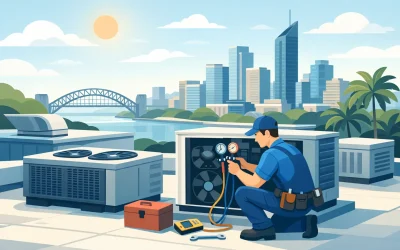
Brisbane buildings face a mix of heat load, humidity and heavy seasonal demand. Add in older commercial stock, extensions, tenancy fit-outs and inconsistent maintenance histories, and the job can get complicated quickly. Local experience helps because it sharpens judgement.
A contractor working regularly across Brisbane and the surrounding region will have a better feel for common failure points, realistic maintenance intervals and what system setups tend to work in local conditions. They are also more likely to be practical about response times, site access and the pressures local businesses face during summer.
This is where a responsive local specialist can offer an edge. A team like Big Dog Mechanical brings both residential and commercial experience, which matters when sites include offices, mixed-use properties, accommodation or staff areas with different cooling requirements. That broader technical range often makes problem-solving quicker and more efficient.
Questions worth asking commercial air conditioning companies
You do not need to turn a contractor interview into an exam, but a few direct questions can save a lot of trouble later. Ask what sectors they regularly support, what systems they specialise in and how they handle preventative maintenance. Ask whether they provide asset audits, detailed reporting and emergency repairs.
It is also worth asking how they approach system upgrades. Some contractors push replacement too quickly. Others hold on to failing equipment for too long. The right answer depends on age, performance, running costs, parts availability and how critical the system is to operations.
Finally, pay attention to how they communicate. Are they clear, practical and direct? Do they explain trade-offs without talking around the issue? Commercial clients usually do not need a sales pitch. They need straight answers, realistic timeframes and confidence that the work will be done properly.
The right fit is a long-term service partner
The best outcomes usually come from a steady working relationship, not a revolving door of contractors. When a service provider knows your site, your equipment and your operating pressures, they can act faster and make better recommendations. That familiarity reduces downtime and helps avoid reactive decision-making.
For property owners and business operators, the goal is not just to keep cool air moving this week. It is to keep systems reliable, energy use under control and major surprises off the budget. That takes more than a one-off install or occasional callout.
If you are comparing commercial air conditioning companies, look beyond the brochure promises. Choose a team that can install well, maintain properly, respond quickly and give honest advice when the system is under pressure. When that support is in place, your HVAC stops being a recurring headache and starts doing what it should – quietly keeping the business running.