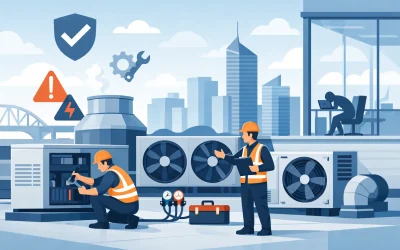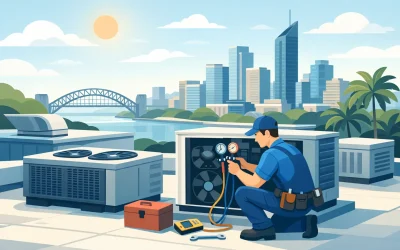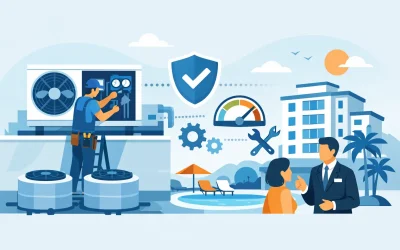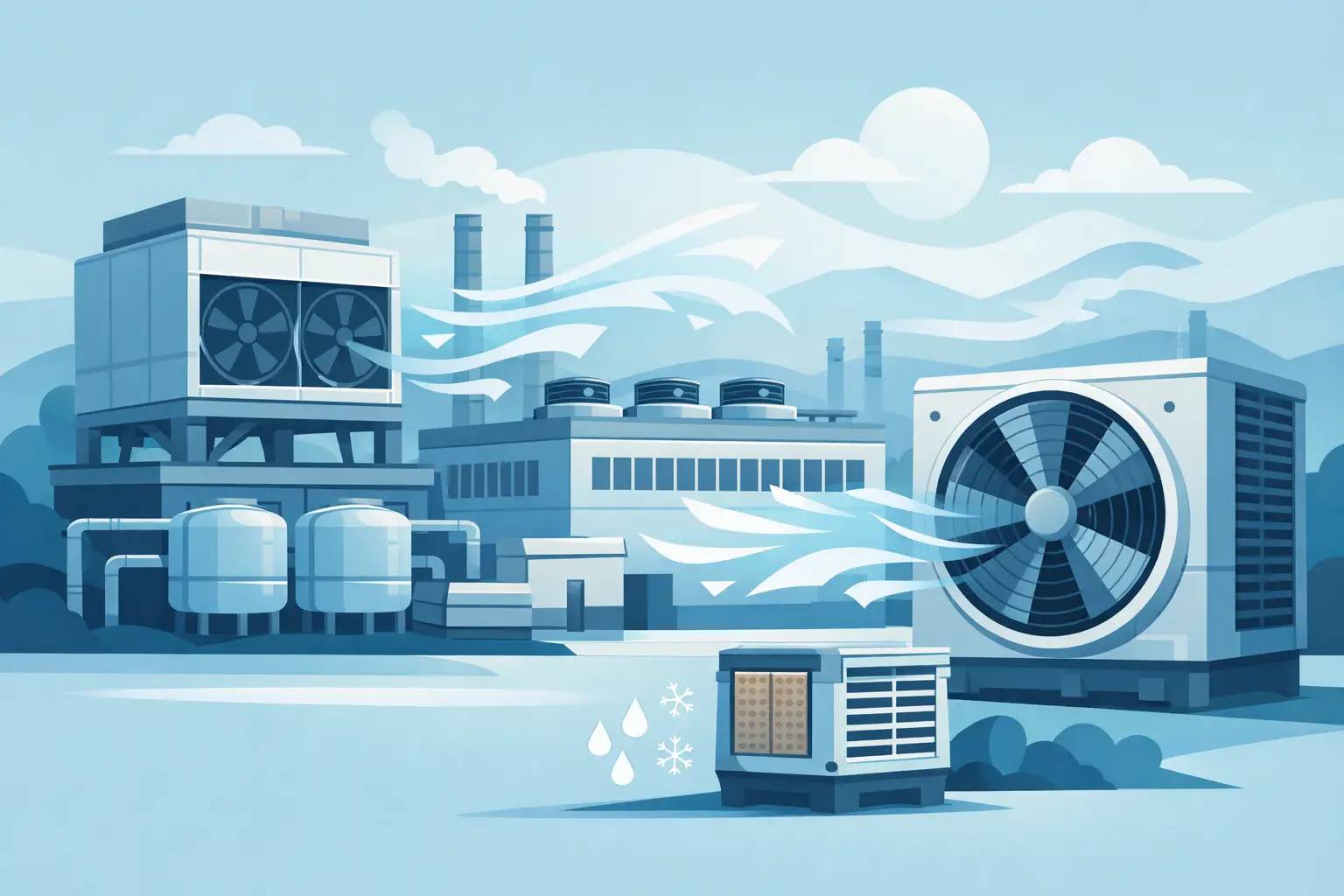
When a site runs hot, the problem usually shows up long before anyone says the word HVAC. Staff get uncomfortable. Equipment rooms start creeping past safe operating range. Cold rooms, server areas, production spaces or plant zones lose stability. Energy use climbs, breakdown risk follows, and what looked like a small comfort issue becomes an operational one. That is why industrial air cooling solutions need to be chosen around performance, not guesswork.
For commercial and industrial operators across Queensland, cooling is rarely about one unit on one wall. It is about matching the system to the load, the building, the hours of use and the consequences of failure. A warehouse has different demands to an aged care facility. A hospitality venue needs a different response again. The right setup keeps people productive, protects assets and avoids preventable downtime.
What industrial air cooling solutions actually need to do
At this level, cooling has to do more than lower room temperature. It needs to hold stable conditions across changing weather, occupancy and equipment load. In Brisbane and the surrounding region, that matters because heat and humidity can push a system hard for long periods, not just on a few extreme days.
A good system should maintain reliable temperatures, manage humidity where needed, support indoor air quality and do it without sending power bills through the roof. It also needs to be serviceable. That part gets missed. A system that looks efficient on paper but is difficult to access, maintain or repair can become expensive very quickly.
There is also a compliance side to the conversation. Some facilities need stricter environmental control, documented servicing and clear asset visibility. In those cases, cooling is tied directly to risk management. If a site cannot afford unscheduled outages, the system has to be built and maintained with that reality in mind.
Choosing the right type of industrial air cooling solution
There is no single best option for every site. The right answer depends on the size of the area, internal heat load, building layout, occupancy patterns and whether you are cooling people, products, machinery or all three.
Split and ducted systems
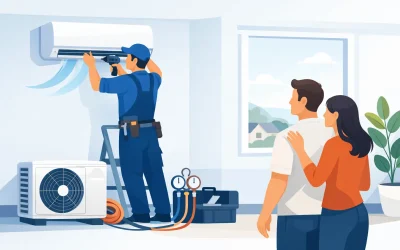
For smaller commercial spaces, certain workshops, offices and mixed-use sites, split or ducted systems can still be the right fit. They are often cost-effective, relatively straightforward to install and suitable where zoning is limited or heat loads are predictable. The trade-off is scale. Once the building gets more complex, or different areas need different control, these systems can become less efficient and harder to manage as a whole.
VRV and VRF systems
For larger or more varied commercial environments, VRV and VRF systems offer more flexibility. They allow multiple indoor units to run from a central outdoor system while giving better zoning and control across different spaces. That works well in buildings where one area is occupied all day and another only occasionally, or where internal heat loads vary from room to room.
These systems can deliver strong efficiency when designed properly, but design matters. Pipe runs, controls, unit selection and commissioning all affect results. A poor setup can undermine the advantages very quickly.
Central plant and packaged systems
For bigger facilities, central plant or packaged systems may be the better call. These are often used where cooling demand is high, operating hours are long and reliability is critical. They can support broader site requirements and give better long-term control over large areas, but they also require proper maintenance planning and experienced technical support.
The upfront cost is usually higher, and so is the complexity. That said, for the right site, the payoff is better performance, stronger lifecycle value and fewer limitations as the facility evolves.
Why design and sizing matter more than brand names
People often ask which brand is best. Brand matters, but not as much as correct design, sizing and installation. An oversized system can short cycle, waste energy and struggle with humidity control. An undersized system will run constantly, wear out faster and still fail to keep conditions stable.
That is why proper assessment comes first. Floor area alone is not enough. Ceiling height, insulation, glazing, door use, equipment heat load, occupancy and air leakage all change what the system actually needs to do. In industrial and commercial settings, these factors can shift the final requirement by a long way.
Good industrial air cooling solutions start with a practical site review, not a rough estimate. That is the difference between buying capacity and getting performance.
The hidden cost of running the wrong system
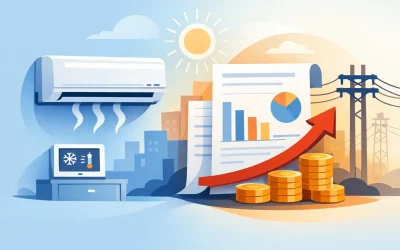
A cooling system does not need to fail completely to cost you money. Many sites operate for months, sometimes years, with inefficient settings, poor airflow, dirty coils, blocked filters or ageing components. The system still runs, so it gets ignored. Meanwhile, power use rises, wear increases and comfort drops off.
In a business setting, those costs spread wider than the electricity bill. Staff productivity can dip. Tenants complain. Temperature-sensitive stock or equipment sits closer to risk. Emergency repairs become more likely, and emergency repairs are rarely cheap or convenient.
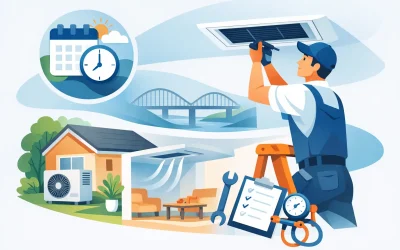
This is where preventative maintenance earns its keep. Regular servicing helps pick up early signs of stress before they become outages. It also gives operators a clearer picture of asset condition, likely repair needs and whether a system upgrade would be more economical than another patch-up job.
Maintenance is part of the solution
A lot of people treat maintenance as a separate issue from system selection. In practice, they are tied together. The best cooling system in the world will not stay efficient if it is neglected, and even a solid installation can lose performance through dirt build-up, drainage issues, sensor faults or ageing controls.
Maintenance should be scheduled around how the site actually operates. A lightly used office does not need the same program as a hospitality venue, school, medical setting or high-load commercial plant area. The point is not to over-service. The point is to keep the system reliable, efficient and compliant with the demands of the environment.
That includes more than basic cleaning. Proper servicing can involve performance checks, refrigerant assessment, electrical testing, hygiene cleaning, drain inspection, control review and identifying components that are close to failure. For commercial clients, asset audits can also help with budgeting and lifecycle planning.
When to repair, upgrade or replace
Not every struggling system needs full replacement. Sometimes a targeted repair, control adjustment or component upgrade will restore performance. Other times, continued repairs are just delaying the obvious.
A few signs point towards replacement rather than another short-term fix. Frequent breakdowns, rising power use, uneven cooling, poor parts availability and systems that no longer suit the building layout are all red flags. If the site has changed over time, the original design may simply no longer fit the current load.
Upgrades can sit in the middle. Improved controls, zoning changes, replacement indoor units or restoration work can lift performance without a full system overhaul. It depends on the age of the equipment, the condition of the major components and what level of reliability the site needs.
For many operators, the smart question is not what costs less today. It is what will cause fewer disruptions and lower operating costs over the next few years.
What to expect from a capable HVAC partner
Industrial cooling is not just about selling equipment. You want a contractor who can assess the site properly, explain the options in plain language and back the work with dependable support. Fast response matters, especially when a breakdown affects business continuity, staff comfort or sensitive environments.
You also want technical range. Some providers are fine for straightforward installs but struggle once systems become more complex. A team that can handle split systems, ducted air conditioning, VRV or VRF setups, central plant support, servicing, repairs and restoration is better placed to give advice that fits the site rather than pushing one narrow solution. That is where a service-led operator such as Big Dog Mechanical adds value, particularly for clients who want one reliable team for install, maintenance and urgent support.
Clear communication counts too. You should know what is failing, what needs attention now, what can wait and what the likely cost path looks like. No fluff. No vague promises. Just practical advice and work that holds up.
Getting industrial air cooling solutions right the first time
If your site is dealing with heat, humidity, rising energy use or repeated faults, the right move is to assess the whole picture. Look at system condition, building demands, operating hours and the cost of downtime. The answer may be maintenance, an upgrade or a fresh installation, but guessing is what gets expensive.
The best cooling outcomes come from tailored design, quality installation and ongoing support that matches the way the site actually runs. Get those three parts right, and your system does what it is supposed to do – keep the space stable, protect your operation and stay dependable when the weather turns hard.