Walk into a café with a packed lunch rush, a medical clinic with treatment rooms running all day, or a school office in the middle of a Brisbane summer, and you can feel straight away when the air conditioning is doing its job. If you have been asking what is commercial air conditioning, the short answer is this: it is a larger-scale climate control system designed to cool, heat, ventilate and manage air quality across business, public and multi-use spaces.
That sounds simple enough, but commercial air conditioning is not just a bigger version of the system in your house. It is built for longer operating hours, higher occupancy, stricter compliance requirements and a lot more pressure to keep running without disruption. For business owners and facility managers, that difference matters because comfort is only one part of the job. Energy use, reliability, maintenance access and downtime all come into it.
What is commercial air conditioning and how is it different?
Commercial air conditioning refers to HVAC systems installed in non-residential settings such as offices, shops, warehouses, schools, medical facilities, restaurants, apartment common areas and large retail spaces. These systems are designed to maintain stable indoor conditions for people, equipment and operations.
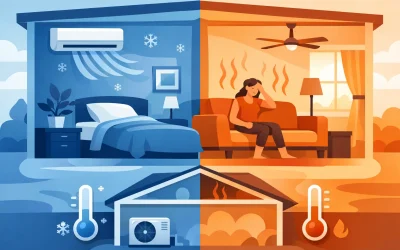
The main difference from residential air conditioning is scale, but scale is not the whole story. A commercial system often needs to serve multiple rooms or zones with different temperature demands at the same time. A boardroom full of people, a kitchen generating heat and a server room with sensitive equipment do not all need the same thing. That is why commercial setups are usually more complex, with stronger controls, more advanced components and a bigger focus on ventilation and fresh air management.
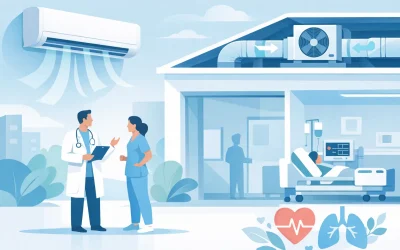
Commercial systems are also expected to cope with heavier wear. Many sites run them every day for long hours, and some operate around the clock. In places like aged care, hospitality and health settings, a breakdown is not just inconvenient. It can affect safety, trading conditions, staff performance and customer experience.
What does a commercial air conditioning system actually do?
At its core, the system moves heat from one place to another. In cooling mode, it removes heat from inside the building and transfers it outside. In heating mode, depending on the system type, it can reverse that process or use another heating method to warm the space.
But proper commercial air conditioning goes beyond temperature control. It also helps manage airflow, humidity and air quality. Ventilation is a big part of this. In a commercial environment, you are often dealing with enclosed spaces, varying occupancy, odours, airborne particles and building code requirements. Good system design takes all of that into account.
That is why two buildings of the same size can need very different solutions. The right system depends on layout, insulation, ceiling height, how the space is used, how many people are inside, what equipment is producing heat and whether different areas need separate control.
Common types of commercial air conditioning
There is no single system that suits every building. The best fit depends on the site and how the business operates.
Split systems are common in smaller commercial tenancies, small offices and individual rooms. They can be cost-effective and straightforward, but they are not always ideal when you need central control or coverage across a larger footprint.
Ducted systems are often used where you want more even air distribution and a cleaner look. They can work well in offices, retail and mixed-use premises, especially when zoning is part of the design.
VRV and VRF systems are popular in more complex commercial spaces because they allow different zones to be controlled independently. That makes them useful for buildings with varied occupancy and room usage throughout the day. They also tend to offer strong energy performance when correctly designed and maintained.
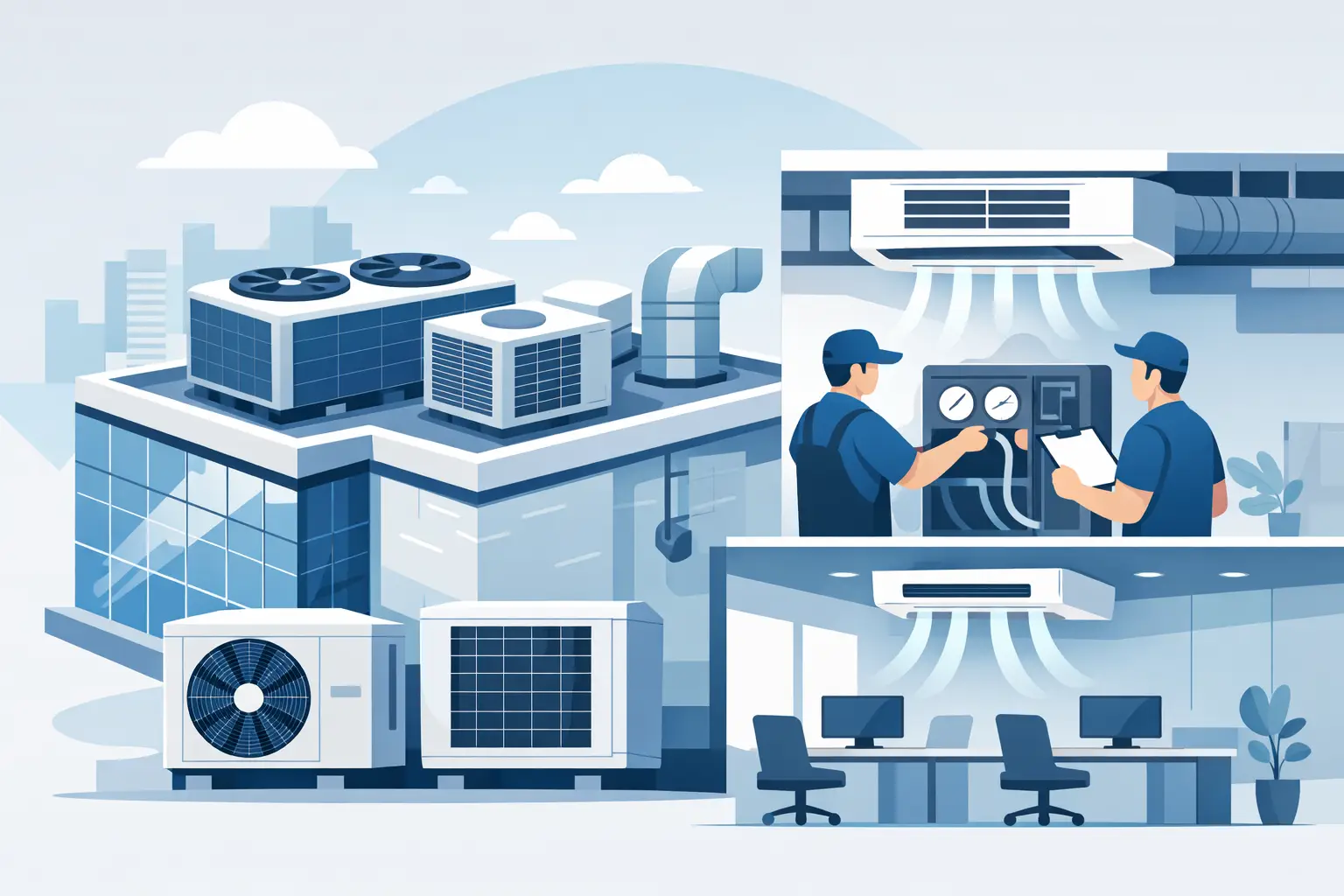
Larger properties may use packaged units, rooftop units or central plant systems such as chillers and air handling units. These are common in bigger commercial buildings, multi-storey sites and facilities where capacity, ventilation and system integration are more demanding.
Each option has trade-offs. A cheaper install can become an expensive system to run. A highly advanced system may deliver excellent control, but it needs the right maintenance support. The smartest choice is usually the one that balances performance, efficiency, serviceability and budget over the life of the asset, not just on day one.
Why the right design matters
A commercial air conditioning system should never be treated as a box-ticking exercise. Poor design leads to uneven temperatures, high power bills, short cycling, noisy operation and avoidable breakdowns. It can also create compliance issues if ventilation rates or fresh air requirements are not being met.
Sizing is one of the most common problems. An undersized system struggles to keep up, especially in Queensland heat. An oversized system can switch on and off too often, which wastes energy and puts extra wear on components. Neither outcome is good for comfort or operating costs.
Good design starts with understanding the site properly. That includes heat load calculations, occupancy patterns, equipment loads, building orientation and access for future servicing. If maintenance is difficult, the system tends to suffer over time because routine servicing becomes harder, slower and more expensive.
Where commercial air conditioning is used
You will find commercial air conditioning in far more places than many people realise. Offices and retail are obvious examples, but the category covers a broad range of environments.
In hospitality venues, systems need to handle frequent door openings, kitchen heat, dense occupancy and changing demand across the day. In education, classrooms and administration spaces need dependable comfort without constant disruption. In aged care and medical settings, temperature control, hygiene and uptime can be critical. Warehouses and industrial spaces may focus more on ventilation, spot cooling or worker comfort in operational zones rather than full-building conditioning.
This is why there is no one-size-fits-all answer to what is commercial air conditioning. The application shapes the system.
Maintenance is not optional
A commercial system that is left alone until it fails will usually cost more over time. Dirty coils, blocked filters, refrigerant issues, worn belts, drainage faults and control problems can all reduce efficiency before they cause a full breakdown. By the time occupants start complaining, the system may already be under strain.
Preventative maintenance helps keep performance steady and catches problems early. It also supports hygiene, especially where internal components and ductwork can accumulate dust, moisture and microbial growth. For many businesses, regular servicing is as much about protecting uptime as it is about extending equipment life.
Asset visibility matters too. On larger sites, it helps to know what equipment you have, how old it is, what condition it is in and which units are costing you the most in repairs or energy use. That makes budgeting and upgrade planning far easier.
Energy efficiency and running costs
For most commercial properties, the air conditioning system is one of the biggest contributors to power use. That makes efficiency a business issue, not just a comfort issue.
Running costs are influenced by more than the unit itself. Controls, zoning, sensor accuracy, operating hours, maintenance standards and building conditions all play a role. A well-maintained older system can sometimes perform better than a neglected newer one, but there is a point where replacement becomes the more economical path.
Upgrades can improve efficiency significantly, especially when old systems are mismatched to the building or no longer suited to how the space is being used. Even small control changes can help. Scheduling, setpoint adjustments and zoning reviews often cut waste without affecting comfort.
When to repair and when to replace
This is where practical advice matters. Not every fault means the whole system is needs replacing, but not every repair is worth approving either. Ask our staff about the most economical option.
If a unit is relatively modern, parts are available and the fault is isolated, a repair often makes sense. If the system is ageing, unreliable, inefficient or no longer fit for the space, continuing to patch it can become false economy. Frequent callouts, occupant complaints and rising energy bills are usually signs that a broader review is needed.
For commercial clients, the real cost is not just the invoice for the repair. It is lost productivity, tenant dissatisfaction, trading disruption and the risk of failing at the worst possible time. That is why many businesses work with a specialist who can assess the full picture rather than just fix the immediate symptom.
Choosing the right support
Commercial air conditioning is not something you want handled by guesswork. The right contractor should understand system design, compliance, fault finding, maintenance planning and the pressures of keeping a site operational.
That means clear communication, realistic advice and fast response when something goes wrong. It also means tailored support. A small office tenancy and a multi-site facility do not need the same approach, even if both want reliability and lower running costs.
For Brisbane businesses, local conditions matter too. Heat, humidity and long cooling seasons put real demand on equipment. A contractor with hands-on experience across split systems, ducted setups, VRV or VRF systems and larger commercial plant is in a much better position to recommend what will actually hold up on site. That is where a team like Big Dog Mechanical adds value – practical advice, responsive service and systems built around real operating conditions.
If you are weighing up a new install, dealing with repeat faults or trying to get more life out of an ageing system, start with the basics: what the space needs, what the equipment is doing now and what level of reliability your operation can live with. Get those right, and commercial air conditioning stops being a constant problem and starts doing what it should – quietly keeping the place running.