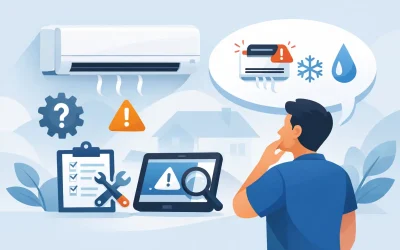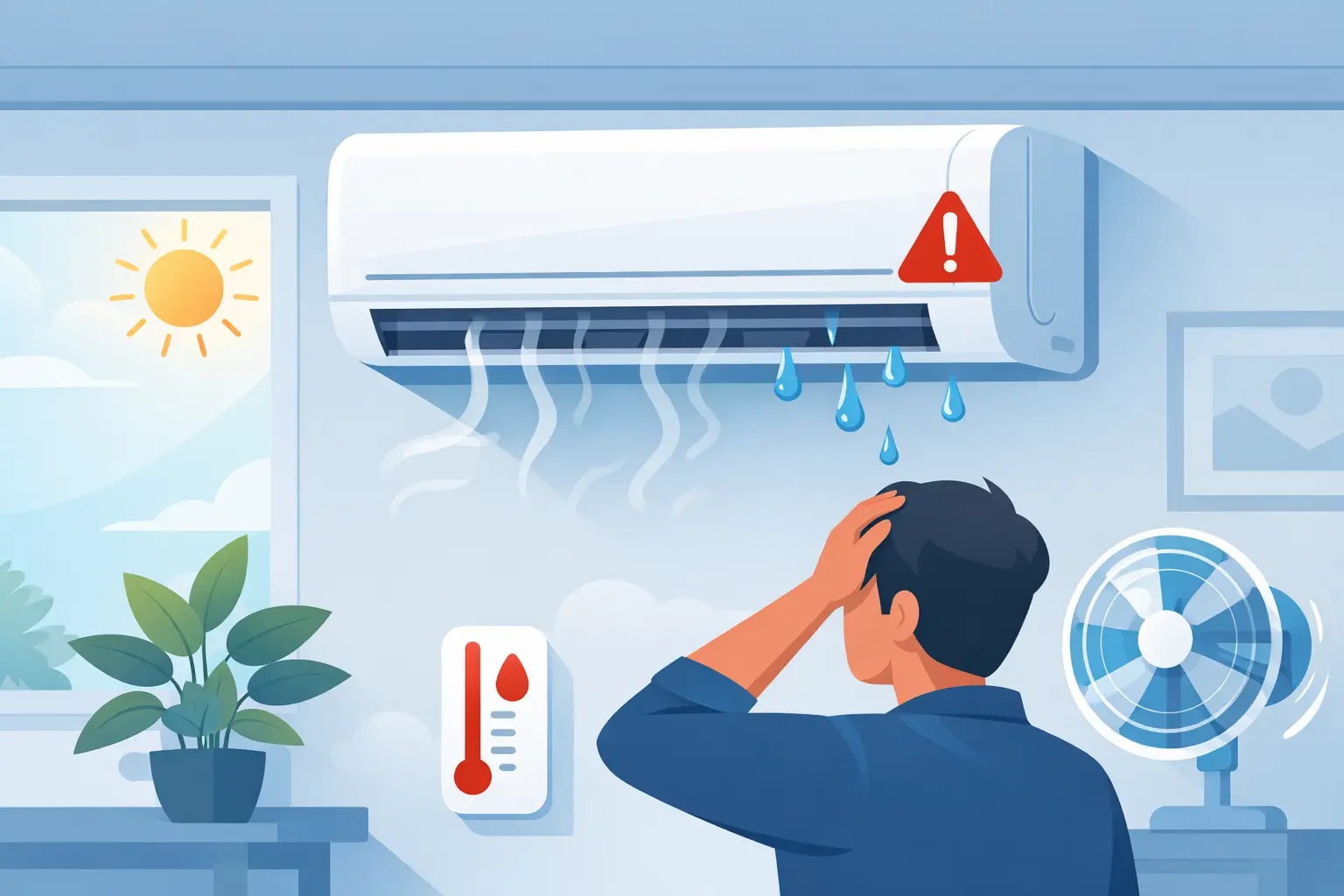
You usually notice it on the worst possible day. The unit is running, the fan is pushing air, the power bill is still climbing – but the house, office or tenancy stays warm. If your air conditioner not cooling properly, the issue might be simple, or it might be the first sign of a bigger fault that will only get more expensive if it is ignored.
The key is not guessing. Poor cooling can come from airflow restrictions, dirty components, incorrect settings, refrigerant issues, electrical faults or a system that is simply not keeping up with the load. For homeowners, that means discomfort and frustration. For businesses, it can mean unhappy staff, upset customers, equipment stress and avoidable downtime.
Why an air conditioner not cooling properly happens
An air conditioner cools by moving heat out of the space, not by creating cold out of nowhere. When any part of that process is restricted, the system keeps running but delivers less result for more effort. That is why poor cooling is not one single fault. It is a symptom with several likely causes.
A clogged return air filter is one of the most common. When airflow is choked, the indoor coil cannot do its job properly. You may notice weak airflow from the outlets, longer run times and rooms that never quite reach set temperature. In residential split systems, this is often a quick fix. In ducted or commercial systems, the issue may sit deeper in the return path, grilles or ductwork.
Dirty coils are another regular culprit. Indoor evaporator coils collect dust and grime over time, while outdoor condenser coils cop Queensland heat, dirt, leaves and general build-up. When either coil is dirty, the system loses efficiency fast. It still operates, but heat exchange drops away and cooling performance follows.
Settings also matter more than many people think. A unit set to fan mode instead of cooling mode, an overly high temperature setpoint, zoning errors, or a controller fault can all look like a breakdown when the system is actually responding to the wrong instructions. In larger commercial sites, a BMS or control issue can create the same result across multiple areas.
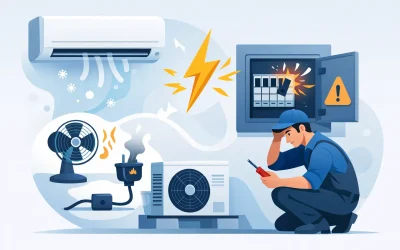
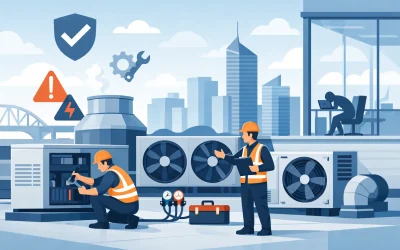
Then there are the faults that need a licensed technician. Low refrigerant, failing capacitors, sensor problems, compressor issues, blocked drains leading to safety shut-offs, frozen coils and electrical defects can all sit behind an underperforming system. These are not jobs for trial and error.
What to check first when your air conditioner is not cooling properly
Before you assume the system has failed, there are a few practical checks worth making. These steps can save time, and in some cases, they solve the problem straight away.
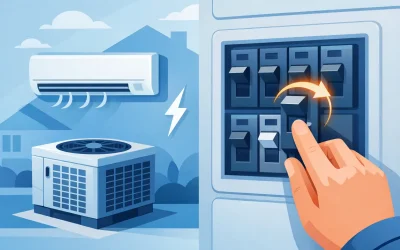
Start with the controller. Make sure the system is on cooling mode, not fan or dry, and that the temperature is set low enough to call for cooling. It sounds basic, but it catches more issues than you would expect, especially in rental properties, shared offices or family homes where multiple people use the controller.
Next, inspect the filter if it is a unit designed for owner access. If it is covered in dust, airflow will suffer. A gentle clean may help restore performance, but if the filter is damaged, heavily blocked or the unit has not been serviced in a long time, it is worth having the full system checked.
Go outside and look at the condenser. If the outdoor unit is buried behind stored items, garden overgrowth, or debris stuck to the coil, the system may be struggling to dump heat. Adequate clearance matters. So does coil cleanliness.
Also pay attention to what the system is actually doing. Is airflow weak? Is the air only slightly cool? Is the unit turning on and off too quickly? Is there ice on the pipework? Any of those signs point to a fault beyond a quick reset.
If the system serves a commercial space, ask whether the issue is isolated or site-wide. One hot room may suggest a zone, diffuser or damper problem. Multiple warm areas could point to a broader plant, controls or maintenance issue.
Signs the problem is more than basic maintenance
There is a clear line between a simple user issue and a system that needs professional attention. If the unit is running but not reducing room temperature after a reasonable period, especially on a hot Brisbane day, something is wrong.
Unusual noises are one clue. Buzzing, rattling, hard starts or humming from the outdoor unit can indicate electrical or mechanical trouble. Water leaks indoors are another. Sometimes that is just a blocked drain, but left alone it can damage ceilings, walls and finishes.
Ice formation is a stronger warning sign. A frozen coil can be caused by airflow issues, refrigerant problems or component faults. Running the system harder will not fix it. In fact, it usually makes the problem worse.
A sudden spike in power usage without a matching cooling result is also worth taking seriously. Systems that are dirty, low on refrigerant, or operating with failing parts often work longer and harder to produce less comfort. That is bad for operating costs and bad for equipment life.
For commercial operators, recurring complaints from tenants, staff or patrons are often the earliest sign of underperformance. A system does not need to be completely down to be costing you money. Patchy cooling, slow pull-down and poor reliability all affect operations before full failure happens.
Why servicing makes such a difference
Air conditioning systems rarely go from perfect to broken overnight. Most cooling problems build gradually. Filters load up. Coils get dirty. Components wear. Drain lines collect build-up. Refrigerant issues start small. By the time the poor performance becomes obvious, the system has often been working under strain for months.
That is why regular servicing matters. Proper maintenance is not just a box-ticking exercise. It is how you keep airflow, heat exchange, electrical components and controls working as they should. It also gives you a chance to catch minor faults before they turn into callouts, breakdowns and expensive repairs.
For homeowners, that means a more comfortable house, lower running costs and fewer nasty surprises in summer. For businesses, preventative maintenance helps protect uptime, improve energy efficiency and support compliance obligations where required. It also gives you a clearer picture of system condition, especially across larger or ageing assets.
There is a trade-off, of course. Not every older unit is worth extensive repair work. Sometimes a service and minor repair will restore solid performance. Other times, repeated faults, poor efficiency and ageing equipment make replacement the smarter long-term decision. The right answer depends on system age, condition, usage and the cost of keeping it alive.
When to call a technician for an air conditioner not cooling properly
If you have checked the settings, cleaned accessible filters and confirmed the outdoor unit has clear airflow, but the cooling still is not there, it is time to book a professional inspection. The same applies if you notice ice, water leaks, electrical issues, odd noises or repeated loss of performance.
Licensed HVAC technicians can test refrigerant pressures, inspect coils and fans, check electrical components, assess controls and identify whether the issue is maintenance-related, repairable or part of a bigger system limitation. That matters because replacing parts without proper diagnosis is a quick way to waste money.
It also matters because cooling complaints are not always caused by the air conditioner alone. Poor insulation, heat load changes, duct leakage, damaged zoning, undersized equipment or space layout changes can all affect performance. In commercial settings, tenancy changes, added equipment or altered occupancy can push a once-suitable system beyond its design.
A dependable contractor should tell you clearly what is wrong, what needs attention now, and what can be planned. That straight answer is far more useful than a vague promise or a rushed patch-up.
The cost of waiting too long
An air conditioner that is underperforming still tends to get used. People keep turning it down, expecting more from a system that is already struggling. That usually leads to longer run times, more wear and a higher chance of a full breakdown when you need it most.
For residential customers, that can mean losing cooling in the middle of a heatwave. For commercial sites, waiting can create a larger operational problem, especially in hospitality, education, aged care and high-occupancy environments where indoor comfort is not optional.
Fast attention does not always mean major repairs. Sometimes the fix is straightforward. But the sooner the problem is diagnosed, the better your odds of avoiding bigger cost, inconvenience and disruption. That is exactly why teams like Big Dog Mechanical focus on responsive support, practical fault-finding and maintenance that keeps systems performing the way they should.
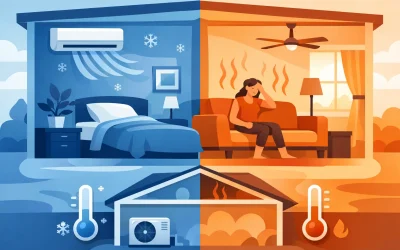
If your system is running but the space still feels warm, do not put up with it and hope for the best. Cooling problems nearly always leave clues, and catching them early is the difference between a manageable service job and a breakdown you could have avoided.