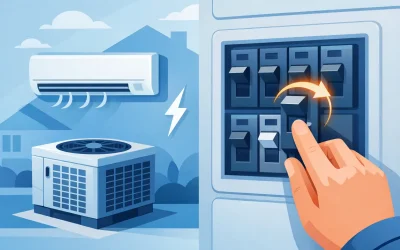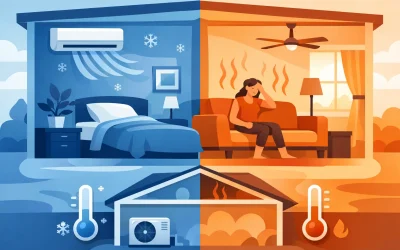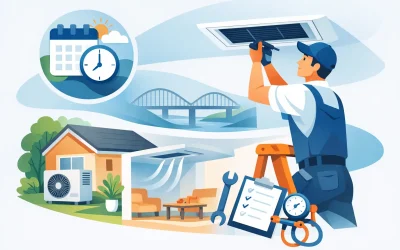
That first properly hot week in Brisbane is when a lot of people find out their aircon is not as ready as they thought. It might still turn on, but that does not mean it is running efficiently, safely, or reliably. If you are asking when should aircon be serviced, the short answer is before peak cooling season starts – but the right schedule depends on how hard the system works, what type of property you have, and whether you have noticed any warning signs.
For most homes, an annual service is the right baseline. For commercial sites, high-use systems, or properties with strict comfort and compliance requirements, once a year is often not enough. Aged care, hospitality, education, and busy office environments usually need planned maintenance at more regular intervals to reduce breakdown risk and keep performance consistent.
When should aircon be serviced for the best results?
If you want the best mix of performance, efficiency, and reliability, service your air conditioning before summer. In Queensland, that usually means booking in during spring, before the heavy heat and humidity hit. Waiting until the system is already struggling through a hot spell is when small issues become urgent repairs.
Pre-season servicing gives a technician time to pick up wear, blocked drains, dirty coils, refrigerant issues, electrical faults, and airflow problems before they affect comfort. It also means you are not competing with everyone else trying to get a breakdown repaired in the middle of a heatwave.
That said, spring is the ideal window, not the only window. If your system missed that timing, it is still worth booking a service now rather than waiting another year. Air conditioning that runs with poor airflow or dirty components often uses more power and puts extra strain on parts that are already under load.
A simple rule for homes
Most residential split systems and ducted systems should be professionally serviced every 12 months. That suits the average household where the unit gets regular use through summer and occasional use for heating.
If the system runs daily for long periods, if you have pets, if the home gets dusty, or if someone in the household is sensitive to air quality, servicing may be worth doing every six months. The same applies if the unit is older and starting to show signs of wear. A more frequent schedule can help keep it clean, reduce odours, and pick up faults before they become expensive.
Homeowners often leave it too long because the aircon still feels cold enough. That is not always a reliable measure. A system can cool the room while still carrying blocked filters, dirty coils, mould growth, drainage issues, or electrical components under stress.
When should aircon be serviced in commercial properties?
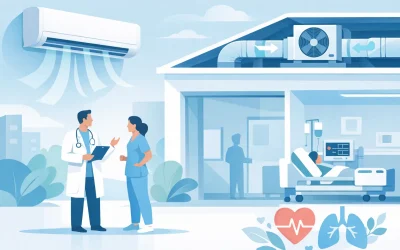
Commercial systems need a more structured approach. In most cases, servicing should be based on usage, criticality, and system type rather than a simple once-a-year reminder. A small office with limited operating hours has very different maintenance needs from a restaurant, medical site, school, or accommodation provider.
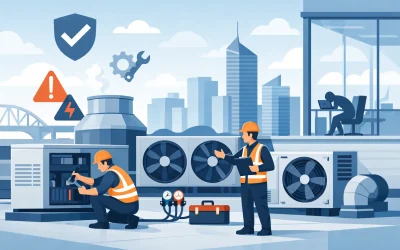
High-use commercial systems often require quarterly maintenance, and some environments need even closer monitoring. That is especially true where indoor comfort affects customers, staff performance, equipment, or compliance outcomes. If one failure can interrupt business operations or create tenant complaints, preventive maintenance is far cheaper than downtime.
Larger systems such as VRV, VRF, and central plant equipment also have more moving parts, more controls, and more points where issues can develop quietly. Planned servicing helps protect asset life, supports energy efficiency, and gives facility managers better visibility over system condition.
Signs your aircon needs servicing sooner
A calendar schedule matters, but condition matters too. If your system is showing warning signs, do not wait for the next planned service.
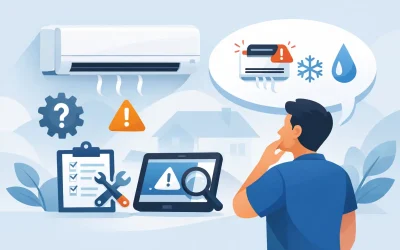
Weak airflow is a common one. If air is coming out but rooms are taking longer to cool, there may be a blockage, fan issue, coil contamination, or duct-related problem. Strange smells are another red flag, particularly musty odours, which can point to mould, bacteria, or trapped moisture in the system.
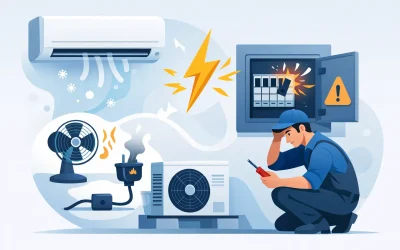
Higher power bills can also signal a unit that is working harder than it should. If your usage habits have not changed but energy costs have jumped, poor efficiency may be part of the problem. Unusual noises, water leaks, short cycling, uneven temperatures, and frequent resets also justify an inspection sooner rather than later.
In commercial settings, even minor inconsistencies are worth acting on early. One noisy indoor unit or one room that never quite reaches set temperature can be the first sign of a wider issue.
Why regular servicing matters in Queensland
Queensland conditions are hard on air conditioning. Heat, humidity, summer storm activity, airborne dust, and long cooling seasons all increase wear on filters, coils, fans, drains, and electrical components. Systems here often work harder for longer than people realise.
That is why delayed maintenance tends to show up fast. Dirty coils reduce heat transfer. Blocked filters affect airflow. Condensate drains can clog. Corrosion can develop. Electrical connections can loosen over time. None of these issues improve on their own, and each one can chip away at performance.
Regular servicing is not just about avoiding a complete breakdown. It helps maintain cooling capacity, improve indoor air quality, reduce excess power use, and extend the working life of the system. For businesses, it also supports operational continuity. For homeowners, it means fewer surprise failures when you need cooling most.
What a proper aircon service should include
A proper service should go well beyond a quick filter rinse. The exact scope depends on the system, but the goal is the same – make sure the unit is clean, safe, and operating as it should.
That usually includes checking filters, coils, fans, drain lines, refrigerant performance, electrical components, controls, airflow, and general operating condition. Hygiene cleaning may also be needed where mould, dust build-up, or odours are present. For ducted or commercial systems, servicing can also involve inspections across zones, motors, outdoor units, and control systems.
This is where technical experience matters. A basic clean-up might make a unit look better, but it will not always identify the issue behind poor performance or repeated faults. The value of servicing is in both the cleaning and the diagnosis.
New systems and older systems follow different patterns
A newer system in good condition may only need standard annual servicing, especially if it was correctly sized and installed in the first place. Even then, skipping maintenance can affect warranty conditions and shorten the life of the unit.
Older systems usually need a bit more attention. Parts wear down, efficiency drops, and small faults become more common. That does not always mean replacement is the right move, but it does mean regular servicing becomes more important. In some cases, a technician may recommend a repair plan, deeper clean, or upgrade path based on cost, age, and reliability.
There is no one-size-fits-all answer here. A well-maintained older unit can keep going reliably, while a neglected newer one can start underperforming much earlier than expected.
The cost of waiting too long
Putting off servicing often feels like saving money, right up until the unit stops on a 35-degree day. By then, you are not booking a routine check – you are dealing with an urgent repair, possible part delays, and a very uncomfortable property.
For businesses, the cost can go beyond the repair itself. Poor comfort affects staff, customers, tenants, and equipment. In some environments, it can also create hygiene, safety, or compliance concerns. For homeowners, delayed servicing usually shows up as higher running costs, weaker performance, and a bigger repair bill than necessary.
That is why preventative maintenance makes sense. It gives you control over timing, reduces surprises, and helps keep the system doing the job it is meant to do.
So, when should aircon be serviced?
If you want the practical answer, service residential air conditioning every 12 months and book it before summer where possible. If the system runs heavily, is older, or shows signs of trouble, bring that forward to every six months or arrange an inspection as soon as symptoms appear.
For commercial sites, base the schedule on risk and usage, not guesswork. Systems in high-demand or business-critical environments usually need routine maintenance several times a year. A planned program is the safest way to protect performance, control costs, and avoid downtime.
If your aircon has not been looked at in over a year, or it is already showing signs that something is off, now is the right time to act. A well-timed service is a lot easier than a mid-summer breakdown, and that is exactly the sort of problem a local team like Big Dog Mechanical is built to prevent.