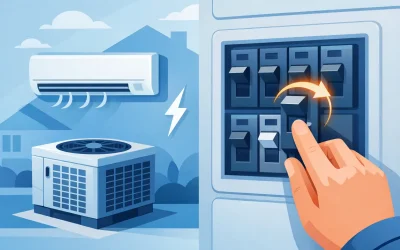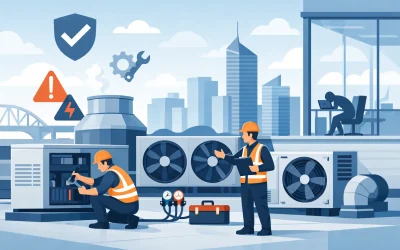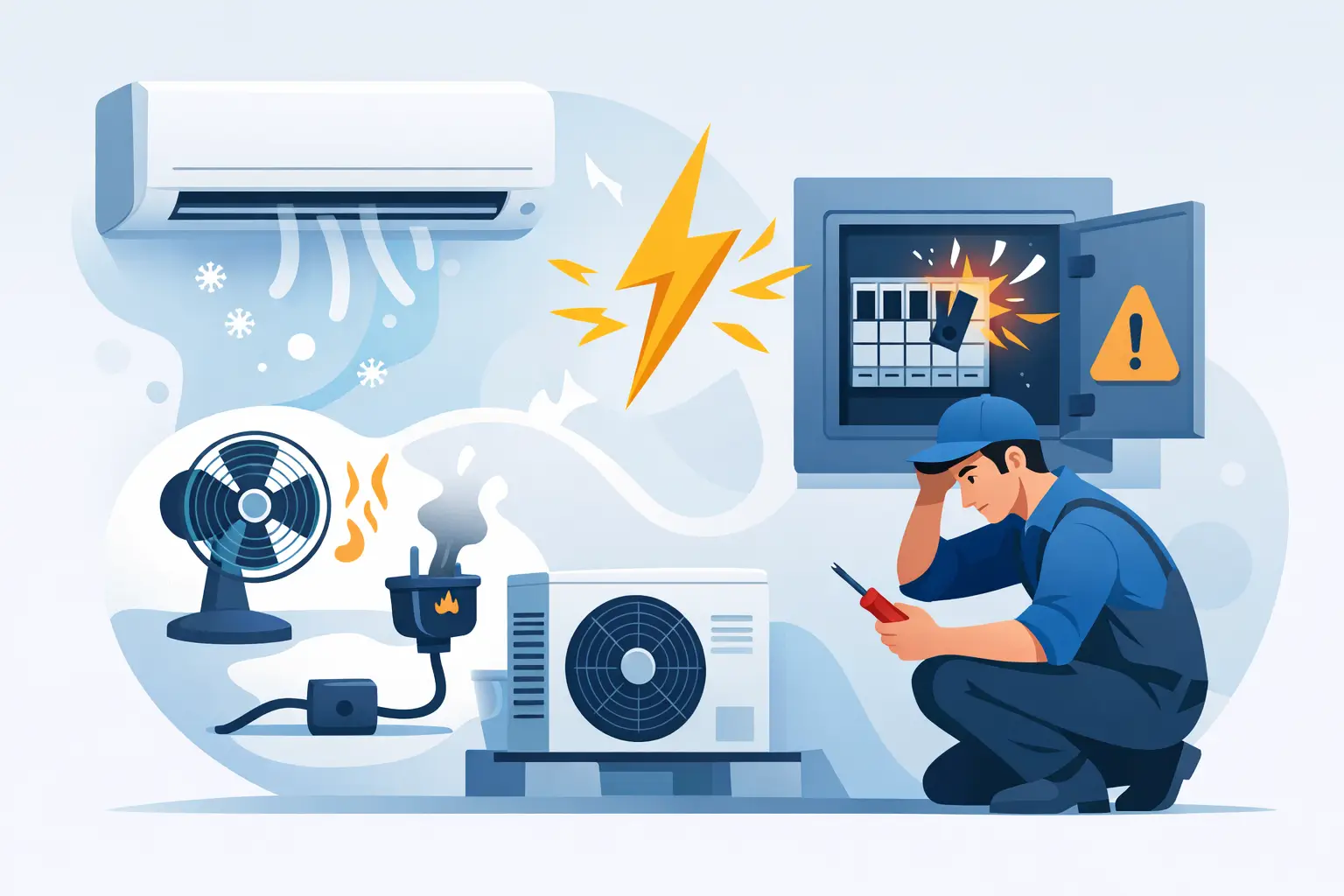
A hot Brisbane afternoon is a bad time for the air conditioner to shut down and the switchboard to trip. If you are searching for why aircon trips circuit breaker, the short answer is that the system is drawing power abnormally or an electrical safety device has detected a fault. The breaker is doing its job, but the cause needs attention before the aircon is switched back on.
A one-off trip can occasionally follow a storm, a power surge or a temporary overload. Repeated tripping is different. It can point to a fault in the air conditioner, its dedicated circuit, the switchboard protection or another appliance sharing the same circuit. Resetting it again and again is not a fix and can put more strain on electrical components.
Why Does an Aircon Trip the Circuit Breaker?
Your circuit breaker, RCD or RCBO is designed to disconnect power when it detects a condition that could damage equipment or create an electrical hazard. The exact reason it trips matters. A standard circuit breaker generally responds to excess current, while an RCD responds to current leaking to earth. Many modern switchboards use RCBOs, which provide both forms of protection.
Air conditioning systems have several components that place a high demand on the electrical supply, especially when starting. The compressor, outdoor fan motor, indoor fan, control board and, in ducted systems, zone motors all need to operate correctly. A problem with one part can trigger the safety device.
The timing of the trip gives useful clues. If the switch trips immediately when you turn the system on, the issue may be electrical or related to the indoor unit. If it trips after a few minutes, when the outdoor unit starts, the compressor, capacitor or outdoor fan may be involved. If it happens only during very hot weather, the unit could be struggling under load or the circuit may be undersized for the equipment connected to it.
Common Reasons an Aircon Trips a Circuit Breaker
A dirty filter or restricted airflow
A clogged return-air filter does not usually trip a breaker on its own, but it can contribute to a larger problem. Restricted airflow makes the system work harder, increases operating temperatures and can cause parts such as the fan motor or compressor to draw more current than normal.
This is one of the easiest issues to prevent. Clean reusable filters as recommended by the manufacturer and arrange regular servicing, particularly before summer. For commercial sites, blocked filters can also affect comfort across multiple rooms and add unnecessary energy costs.
A failing compressor or compressor capacitor
The compressor is the hardest-working component in most split and ducted systems. It uses a significant amount of power when it starts, and a failing compressor can draw excessive current and trip the breaker. This may happen intermittently at first, then become more frequent.
A weak start or run capacitor can produce similar symptoms. The unit may hum, struggle to start, trip shortly after the outdoor unit engages or work occasionally before failing again. Capacitors and compressor faults require proper testing. Do not attempt to access the outdoor unit’s electrical components yourself, as stored electrical charge can be hazardous even with the system switched off.
Faulty fan motors
Indoor and outdoor fans keep air moving across coils and through the system. When a fan motor wears, overheats, seizes or develops an electrical fault, it can overload the circuit or cause an earth leakage trip.
You may notice reduced airflow, unusual rattling, a burning smell, the outdoor fan not spinning or the system stopping before it cools properly. Continuing to run an air conditioner with a failed fan can cause further damage, including compressor overheating.
Electrical faults or damaged wiring
Damaged insulation, loose terminals, deteriorated cable, pest damage and moisture ingress can all create a short circuit or earth fault. In Queensland, outdoor units are exposed to heat, humidity and heavy rain. Over time, seals, conduit and electrical connections can deteriorate, especially where the unit has not been maintained.
This type of fault may cause the safety switch to trip as soon as the aircon is turned on. It can also be intermittent, appearing after rain or only when the system vibrates during operation. A licensed electrician or appropriately qualified air conditioning technician needs to test the circuit and equipment safely to locate the fault.
Water or moisture inside the system
Condensate drain problems are common in air conditioning, particularly during humid weather. A blocked drain can cause water to overflow from the indoor unit and reach electrical connections, controls or wiring. Storm-driven rain can also affect exposed outdoor electrical components if covers or seals are damaged.
If there is water dripping from the head unit, staining on the wall or ceiling, or obvious moisture around electrical equipment, switch the air conditioner off at the isolator if it is safe to do so. Leave the breaker off and arrange professional help. Water and electrical faults should never be treated as a wait-and-see issue.
An overloaded circuit
A properly installed air conditioner should generally have a circuit sized for its electrical load. Problems arise when a new system has been connected to an existing circuit that already supplies other high-demand appliances, or when property alterations have changed the electrical load without upgrading the circuit.
This is particularly relevant in older homes, renovated offices and retail spaces where electrical demand has grown over time. Portable heaters, dryers, kitchen appliances and additional air conditioning units can push a circuit beyond its limit. The answer may be a dedicated circuit or a switchboard upgrade, but that decision should follow electrical testing rather than guesswork.
A faulty breaker, RCD or RCBO
The air conditioner is not always the culprit. Circuit breakers and safety switches can wear out, become overly sensitive or develop faults themselves. This is less common than an issue inside the unit, but it is possible, particularly in older switchboards.
A technician can test whether the protective device is operating correctly and determine whether the trip originates from the air conditioner or elsewhere on the circuit. Replacing a breaker without finding the underlying cause is not a reliable repair.
What You Can Safely Check First
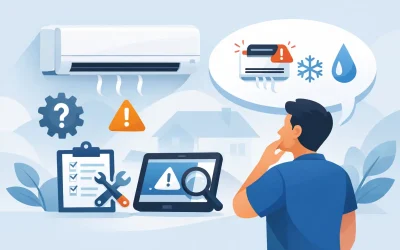
Before booking a repair, there are a few simple observations that can help narrow down the issue. Keep clear of electrical connections, do not remove covers and never bypass a breaker or safety switch.
Check whether the breaker trips immediately or only after the aircon has been running. Note whether it occurs in cooling, heating or both modes. Look for visible water leaks, unusual noises, burning smells, ice on pipework or an outdoor fan that is not turning. You can also clean accessible indoor filters if they are dirty and confirm whether other appliances have tripped at the same time.
If the system shares a circuit with other appliances, turn those appliances off before resetting the breaker once. If the breaker holds until the aircon is switched on, that is useful information for the technician. If it trips again, leave it off.
When to Stop Resetting the Breaker
One careful reset may be reasonable after an isolated outage or known power event. Beyond that, repeated resets are a poor gamble. Every trip is a warning that the protective device has detected a condition it should not ignore.
Do not reset the breaker if you smell burning, see smoke, hear crackling, notice damaged wiring, find water near the unit or switchboard, or receive an electric tingle from the system. Turn the air conditioner off, keep people away from the affected area and arrange urgent professional assistance.
For businesses, repeated trips can also affect more than comfort. In hospitality, education, aged care and commercial premises, an unreliable HVAC system can disrupt operations, affect occupants and place extra load on other equipment. A planned inspection is usually far less disruptive than waiting for a complete failure during peak demand.
How a Professional Diagnoses the Problem
A proper diagnosis involves more than resetting the switch and hoping it stays on. A qualified technician will inspect the system, assess electrical connections, test current draw, check insulation resistance and examine components such as capacitors, contactors, fan motors and compressor operation. They should also assess airflow, filter condition, drainage and signs of moisture damage.
Where the issue relates to the fixed electrical circuit or switchboard protection, licensed electrical work is required. Where the fault is within the air conditioning equipment, the repair may range from cleaning and drainage work through to component replacement or, in some cases, a recommendation to repair or upgrade an ageing system. The right option depends on the unit’s age, condition, repair cost and expected performance after the work is complete.
A breaker that trips once may be a nuisance. A breaker that trips whenever the aircon runs is the system asking for attention. Leaving it off and getting the cause tested is the safest way to protect your property, your equipment and everyone relying on cool air when it matters.