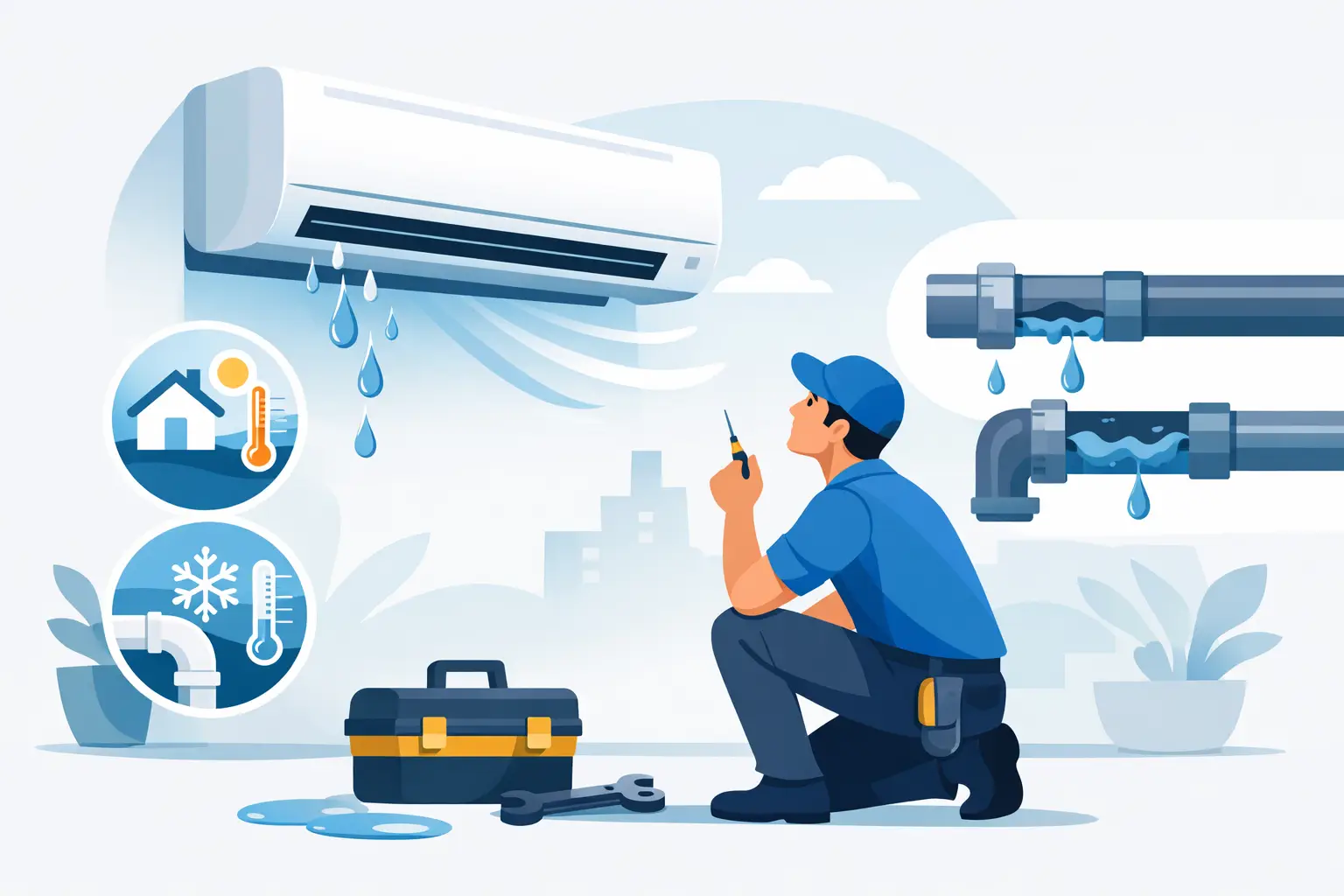
A puddle beneath an indoor unit, a brown patch spreading across the ceiling, or water dripping through a grille is not a problem to leave until next week. An air conditioner leaking water can quickly damage paint, plasterboard, flooring and furniture, particularly during Brisbane’s humid summer conditions. The right response depends on where the water is appearing and what the system is doing at the time.
A small amount of water draining outside while the system is cooling is usually normal. Water inside the home, office, shop or ceiling cavity is not. Switch the system off if water is entering the building or getting close to electrical fittings, then arrange a proper inspection before a simple drainage issue becomes a costly repair.
Why an air conditioner leaks water indoors
Your air conditioner removes heat and humidity from the air. That humidity turns into condensation on the indoor coil and should flow into a drain tray, then through a condensate pipe to a suitable external outlet. When any part of that process is blocked, damaged, poorly installed or overwhelmed, water finds another way out.
A blocked condensate drain is the usual culprit
Dust, airborne debris, mould growth and sludge can build up inside the drain tray and pipe. Once the pipe blocks, the tray fills and overflows from the indoor head unit or ducted system’s fan coil.
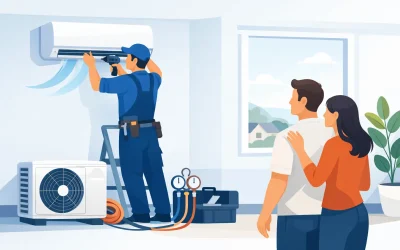
This is common in systems that have missed regular servicing. In humid conditions, the system produces more condensate, so a partially blocked line can turn into an overflow without much warning. A technician can clear the drain, clean the tray and confirm the pipe has the correct fall and discharge point.
Dirty filters can cause the coil to freeze
A blocked return-air filter restricts airflow across the indoor coil. The coil can become too cold and freeze, then release a large amount of water as the ice melts. You may notice weak airflow, reduced cooling, ice on pipework, or dripping that starts after the unit has been running for a while.
Cleaning washable split-system filters is a sensible homeowner task. Turn the system off, remove the filters as directed by the manufacturer, vacuum or wash them gently, and allow them to dry fully before refitting. If the coil is frozen, leave the unit off to thaw and book a service. Restarting it repeatedly can put unnecessary strain on the system.
Low refrigerant can also lead to ice and water
Low refrigerant pressure may cause the indoor coil to freeze, creating the same meltwater issue. Refrigerant does not get used up in normal operation, so low levels usually point to a leak or an installation fault.
This is not a DIY fix. Refrigerant work must be carried out by a licensed technician, who can test for leaks, repair the cause where practical and recharge the system correctly. Simply adding refrigerant without addressing a leak is a short-term answer that risks another breakdown.
A cracked tray, loose pipe or poor installation
Older systems can develop cracked drain trays, while joints can loosen and condensate pipes can sag or split. With wall-mounted split systems, an incorrectly pitched drain line may allow water to run back towards the unit instead of away from it.
Ducted air conditioning has more hidden pipework and components in the roof space, which can make leaks harder to spot. Ceiling staining beneath a fan coil, sagging plasterboard or water from ceiling vents should be treated as urgent. Continued use can damage insulation, create mould conditions and, in severe cases, affect ceiling integrity.
Condensate pumps can fail
Some commercial systems and installations without a gravity drain use a condensate pump. The pump collects water and pushes it to a drain point. If its float switch jams, the pump fails, or the discharge line blocks, the reservoir can overflow.
Pump issues are common in office fit-outs, hospitality venues and buildings with indoor units located away from an external wall. A maintenance check should include pump operation, float switches and drainage paths, not just filter cleaning.
Is water from the outdoor unit normal?
Often, yes. During cooling, condensation can form around refrigerant pipework or components and drain beneath the outdoor unit. This is generally harmless if the water is outside, clear and not causing a slip hazard, erosion or pooling near the building.
Reverse-cycle systems can also produce water while heating. During a defrost cycle, the outdoor coil melts accumulated frost and releases water. This can be more noticeable on cool winter mornings.
The concern is water coming from the indoor unit, ceiling grille or wall cavity. If you are unsure where the water began, turn the system off and check for obvious signs of overflow around the indoor equipment rather than continuing to run it.
What to do when your air conditioner is leaking water
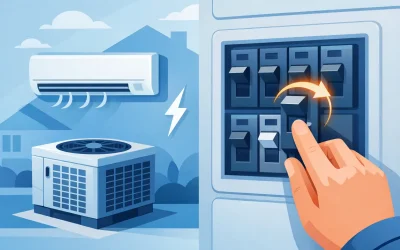
First, protect the area. Move electronics, rugs and furniture away from the leak, place towels or a bucket under drips where safe, and photograph any ceiling stains or visible water. If water is near lights, power points or electrical equipment, switch off the air conditioner at the isolator or circuit board only if it is safe to do so. Do not handle wet electrical fittings.
For a wall-mounted split system, you can check whether the filters are heavily clogged and whether the external drain outlet is visibly blocked. Avoid poking wire, high-pressure water or chemicals into the drain line. These methods can dislodge a fitting, damage the pipe or push contamination back into the unit.
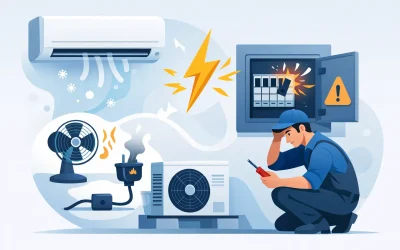
Do not remove ducted unit covers in the roof space or attempt to repair refrigerant lines, electrical controls or condensate pumps yourself. The immediate goal is to stop further water damage. The lasting fix is identifying why the water has not drained as designed.
When to call a technician straight away
An air conditioner water leak deserves prompt attention in any home or business, but some situations should not wait. Arrange urgent assistance if you see any of the following:
- Water dripping through a ceiling, light fitting or air grille
- A ceiling that is bowed, soft, discoloured or visibly wet
- Ice forming on the indoor unit, coil or refrigerant pipework
- Water near switchboards, power points, servers or stock
- Repeated leaking after filters have been cleaned and the system has thawed
For businesses, an overflowing air conditioner can interrupt trading, damage equipment and create a slip risk for staff and customers. In aged care, education and hospitality settings, it can also affect hygiene and compliance. Fast isolation and a qualified repair reduce downtime and prevent a small fault from spreading into a building-maintenance problem.
Preventing future air conditioner water leaks
Most drainage-related leaks are avoidable with regular servicing. The service interval depends on the type of system, how often it runs and its environment. A lightly used residential split system may need an annual service, while a busy commercial system, kitchen-adjacent unit or high-occupancy facility may need more frequent preventative maintenance.
A proper service goes beyond a quick filter rinse. It should assess airflow, clean filters and coils as needed, inspect the drain tray and pipework, clear condensate lines, check pumps where fitted, test operating performance and look for early signs of refrigerant or electrical faults. That work helps maintain cooling efficiency as well as preventing leaks.
For facility managers, scheduled maintenance also provides a clearer picture of asset condition. Ageing drain components, recurring blockages and failing pumps can be identified and planned for before they trigger an emergency callout during peak summer demand.
Big Dog Mechanical services split, ducted and commercial HVAC systems across Brisbane, with practical repairs and maintenance focused on reliable operation. If water is appearing indoors, especially from a ceiling system, switch the unit off and have the cause checked properly. Acting early protects the air conditioner, the building around it and the people using the space.