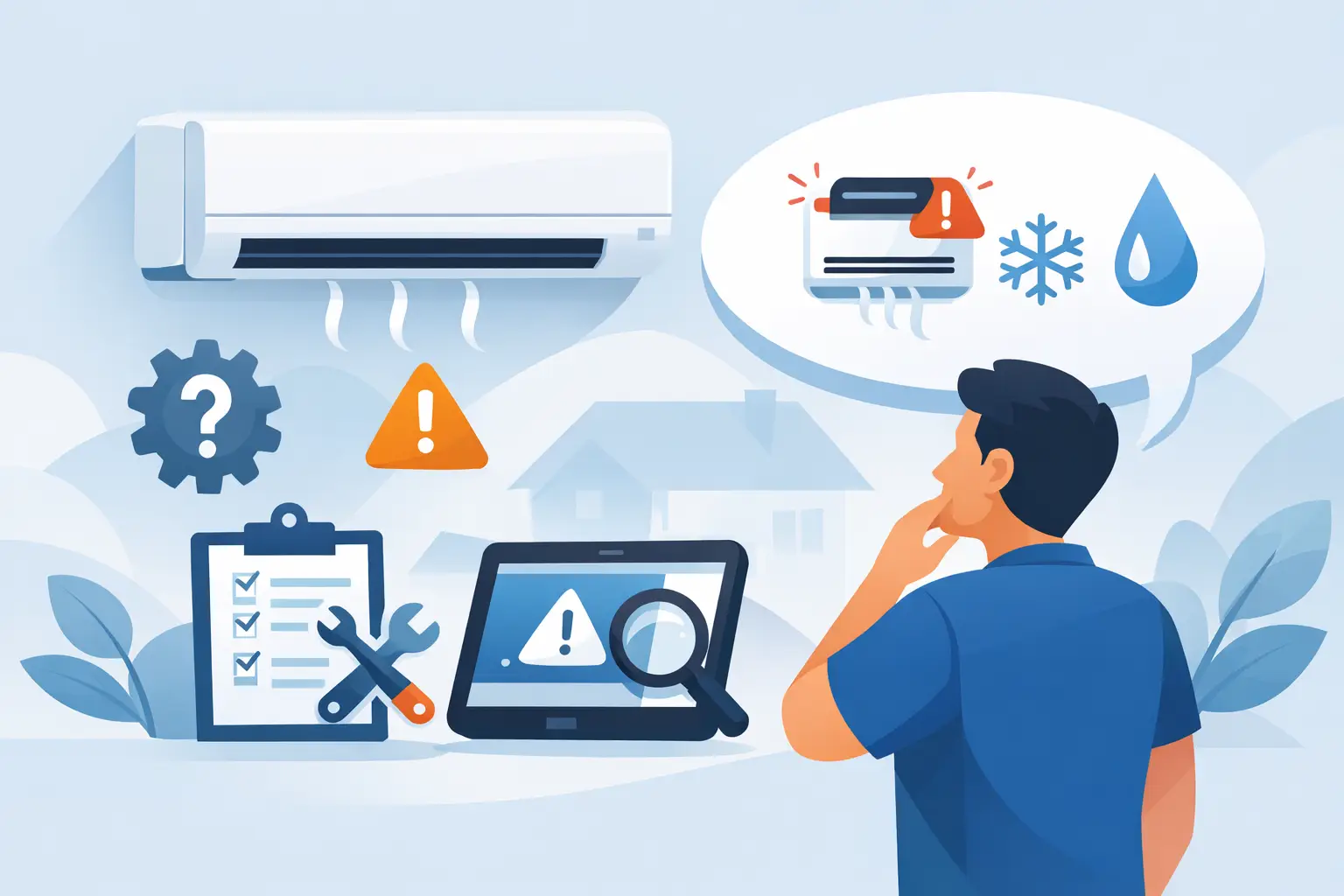
A working air conditioner can stop without much warning, then flash a letter and number on the controller. Knowing what aircon error codes mean can help you make the right next move – whether that is cleaning a filter, checking the power supply, or booking a qualified technician before a minor fault becomes a costly breakdown.
An error code is the system’s way of reporting that a sensor, component or operating condition is outside its normal range. It is useful information, but it is not a complete diagnosis. The same code can have different meanings across Daikin, Mitsubishi Electric, Fujitsu, ActronAir and other brands, while a code that points to a sensor fault may be caused by wiring, a control board or poor system conditions.
What aircon error codes mean in practical terms
Modern split, ducted, VRV/VRF and commercial systems use electronic controls to monitor temperatures, pressures, fan operation, communication and electrical performance. When the control detects a problem, it may shut down the system or limit operation to protect the compressor and other major parts.
The code generally points a technician towards the part of the system that needs testing. It does not automatically tell you which component needs replacing. That distinction matters. Replacing a sensor, board or fan motor without proper checks can waste time and money, particularly in larger commercial systems where several faults can produce similar messages.
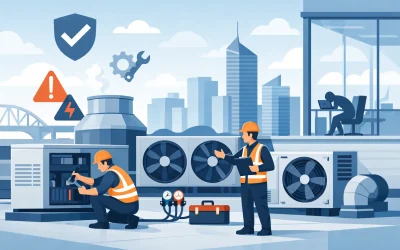
For homeowners, the immediate question is usually whether the unit is safe to run. For facility managers, it is also about protecting tenant comfort, stock, equipment and business continuity. In either case, repeated error codes deserve attention rather than a cycle of resets.
Common aircon error code categories
While the exact code must always be checked against the manufacturer’s documentation for the model installed, most faults fall into a few familiar categories.
Communication faults
Communication errors occur when the indoor unit, outdoor unit, wall controller or central controller cannot exchange the information they need. This may be caused by damaged cabling, loose terminals, incorrect wiring after installation work, a failed printed circuit board or a power interruption affecting one part of the system.
On a split system, this may look like the indoor unit powering up while the outdoor unit remains inactive. On a VRV/VRF system, one communication issue can affect multiple zones. Switching the system off and back on may clear a temporary glitch, but a code that returns needs electrical and control testing.
Sensor and temperature faults
Air conditioners rely on thermistors and other sensors to measure room temperature, coil temperature, discharge temperature and outdoor conditions. If a sensor reads an implausible value, the system cannot control heating or cooling accurately and may shut down as a precaution.
A sensor-related code does not always mean the sensor itself has failed. The sensor may be affected by a dirty coil, damaged wiring, moisture, poor airflow or a control-board issue. A technician will test the sensor reading and inspect the conditions around it before recommending repairs.
Fan motor and airflow faults
Indoor and outdoor fans move air across the coils so heat can be removed or absorbed properly. A fan error can indicate a failed motor, capacitor, fan driver, wiring fault, obstruction or a control issue. Reduced airflow from heavily blocked filters and coils can also place the system under strain.
If your system is making scraping noises, blowing weakly, icing up or stopping shortly after starting, turn it off and arrange a service. Continuing to run an air conditioner with poor airflow can cause secondary problems, including compressor stress.
Refrigerant, pressure and compressor protection faults
Codes relating to pressure, discharge temperature, compressor overload or refrigerant performance need professional attention. They can be caused by a refrigerant leak, blocked coil, failed fan, restriction in the refrigerant circuit, electrical fault or an issue with the compressor itself.
Do not assume a refrigerant top-up is the answer. Refrigerant operates in a sealed system, so low charge usually indicates a leak or a previous installation issue that needs to be found and rectified. Adding refrigerant without addressing the cause is a short-term fix at best.
Drainage and condensate faults
In Brisbane’s humidity, blocked drains and overflowing condensate trays are common causes of call-outs. Some systems display a drainage or float-switch error when water cannot leave the indoor unit correctly. You may notice dripping, staining on the ceiling, water around the unit or a musty smell before the code appears.
Switch the air conditioner off if water is leaking into a ceiling cavity, near electrical fittings or onto flooring. A professional clean and drain inspection can prevent water damage and improve hygiene at the same time.
What you can safely check before calling for help
There are a few sensible checks you can make without opening electrical panels or attempting repairs. Start by recording the exact code, including any flashing lights, and note whether it appears straight away or after the system has been running for a while. Take a photo of the controller display and write down the unit’s brand and model if available.
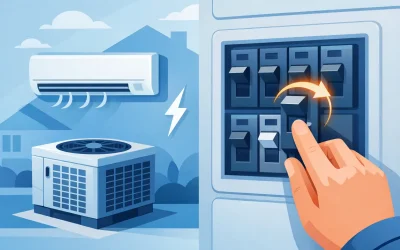
Then check the basics: the circuit breaker has not tripped, the isolator is on, the remote has fresh batteries, and the filters are not visibly blocked. If it is safe to do so, turn the system off at the controller, wait five minutes, then restart it once. A controlled reset can clear a temporary communications or power-related fault.
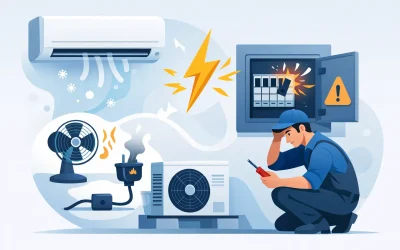
Do not repeatedly reset a system that trips, smells burnt, makes loud electrical noises, leaks heavily or displays the same code again. Repeated restarting can worsen damage, especially where a compressor, fan or electrical component is struggling.
Avoid removing covers, touching wiring or trying to access the outdoor unit internals. Air conditioning work can involve live electrical components and regulated refrigerant handling. It is not a DIY repair job.
Why the same code can lead to different repairs
Error codes are a starting point for fault-finding, not a repair quote in themselves. Consider an outdoor fan fault: it could be a seized motor, a faulty capacitor, a damaged fan blade, wiring damage, a failed inverter board or an overheating issue that has stopped the fan circuit. Each cause requires a different repair.
The same applies to high-pressure and low-pressure warnings. Dirty coils, poor ventilation around an outdoor unit, refrigerant problems and airflow restrictions can all affect operating pressures. A proper diagnosis involves checking electrical readings, airflow, coil condition, drain operation, refrigerant circuit performance and the system’s fault history.
For commercial sites, a technician may also review maintenance records and operating patterns. A unit that faults every afternoon in a busy kitchen, server room or sun-exposed tenancy may have a load, ventilation or sizing issue rather than an isolated component failure.
When an error code is urgent
Some faults can wait for a standard service appointment, particularly if the system is off and there are no signs of water or electrical damage. Others need a faster response. Arrange urgent assistance if an air conditioner is tripping the breaker, producing a burning smell, leaking through a ceiling, making severe mechanical noise or failing in a space where temperature control is critical.
This is particularly relevant for aged care, hospitality, education and commercial premises. Loss of cooling can affect customer experience, food storage areas, staff wellbeing and sensitive equipment. Early action can often reduce downtime and prevent a larger repair.
Preventing repeat aircon faults
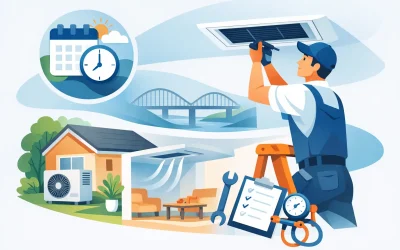
Not every error code is preventable, but routine maintenance significantly reduces the risk. Clean filters support proper airflow, while coil cleaning, drain clearing, electrical inspections and performance testing help identify issues before a system shuts down on a hot day.
The right maintenance schedule depends on how the system is used. A lightly used residential split system may need a different approach to a ducted home system, a busy retail tenancy or a multi-zone commercial installation. Sites with heavy use, dust, grease, humidity or long operating hours generally need more frequent attention.
Big Dog Mechanical can diagnose air conditioning faults across residential and commercial systems, then explain the issue in plain terms before work proceeds. That means practical advice based on the condition of your equipment, not guesswork from a code alone.
If an error code appears, take a photo, switch the unit off if there are any safety concerns, and avoid forcing it to keep running. A clear code record and a timely professional inspection give you the best chance of getting comfortable, reliable operation back with minimal disruption.