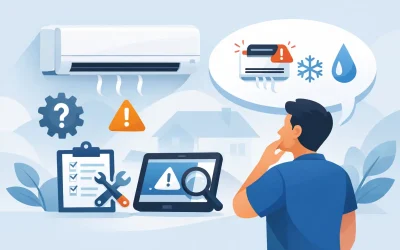
That first summer bill can be a shock. If you are asking, “why is electricity bill higher aircon?”, the answer is rarely just that you used it more. Brisbane heat, long run times, poor settings, ageing equipment and hidden faults can all push consumption up quickly – particularly when a system is working harder than it should.
Air conditioning is one of the larger electrical loads in a home or business, so even a small drop in efficiency can be noticeable on your bill. The good news is that many causes are straightforward to identify, and not every higher bill means you need to replace the entire system.
Why is your electricity bill higher with aircon?
Your bill is shaped by more than the air conditioner itself. Electricity rates, billing periods, weather, occupancy and other appliances all matter. But if the increase lines up with using the aircon, start by looking at how long it is running, the temperature you are asking it to achieve and whether it is maintaining that temperature without struggling.
In Queensland, air conditioners often work through hot, humid days and warm nights. On severe weather days, a correctly functioning unit will naturally run longer. A sustained jump in energy use across milder days, however, can point to inefficient operation, heat entering the building or a maintenance issue.
The thermostat setting is too ambitious
Setting a split system to 18°C does not cool a room faster than setting it to 24°C. It simply tells the unit to keep running until it reaches a much lower target, which may be difficult or impossible in extreme heat.
For cooling, around 24°C to 26°C is generally a sensible starting point for comfort and running costs. Use the fan setting to improve air movement before lowering the temperature further. In winter, avoid setting heating excessively high for the same reason. Each degree can add to the amount of work the system has to do.
Dirty filters restrict airflow
A clogged return-air filter is one of the most common and avoidable causes of high air conditioning costs. When dust builds up, the indoor unit cannot move enough air across its coil. Cooling output drops, the unit runs longer and comfort suffers.
For most residential split systems, filters should be checked regularly during heavy use and cleaned when visibly dusty. Commercial filters and larger ducted systems need a planned maintenance approach because access, filter types and operating hours vary. If filters are neglected for long periods, dirt can also build up on the coil, where a basic filter clean will not solve the problem.
The system is undersized, oversized or poorly matched
An undersized air conditioner may run almost constantly on hot days without ever properly cooling the space. That is frustrating for occupants and expensive to operate. It is common in rooms that have been extended, converted into offices or fitted with extra equipment that creates heat.
Oversizing is not automatically better. A unit that cools too quickly can cycle on and off, remove less moisture from the air and create uneven comfort. Correct system selection considers room size, ceiling height, insulation, windows, orientation, occupancy and heat-producing appliances. For commercial sites, operating hours and fresh-air requirements also need to be factored in.
Heat is getting into the building
Aircon cannot efficiently cool a building that is continually absorbing heat. Sun-facing glass, uninsulated roof spaces, gaps around doors, open doors in retail settings and damaged seals can make a system work far harder than necessary.
Before blaming the unit, look at the room. Are blinds or curtains closed through the afternoon? Are doors being left open? Is conditioned air escaping through a poorly sealed window or an open loading area? In a ducted system, damaged or disconnected ductwork can lose cooled air into the roof space, where it does nobody any good.
Outdoor units cannot reject heat properly
The outdoor condenser needs clear airflow to release heat. If it is boxed in, covered, surrounded by dense plants or clogged with leaves and debris, efficiency falls. The unit may continue operating, but it will use more energy to achieve the same result.
Keep vegetation and stored items clear of the outdoor unit, and never place a cover over it while it is running. The coil and fan should be inspected as part of professional servicing, particularly after storms, construction work or long periods of heavy use.
Faults that can make aircon use more power
A higher bill can be the first clue that a system has a developing fault. It is not always dramatic. The aircon may still feel cool, just not as cool as it used to, or it may take much longer to bring a room down to temperature.
Low refrigerant charge, for example, is not a normal maintenance item. Refrigerant does not get “used up”. If the charge is low, there may be a leak that needs to be found and repaired by a licensed technician. Running the system with low refrigerant can reduce capacity and place extra strain on components.
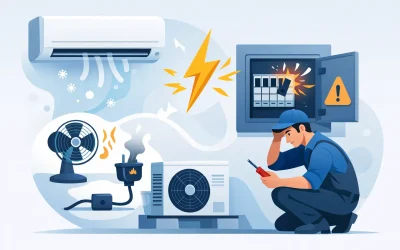
Electrical faults, failing capacitors, worn fan motors, sensor issues and compressor problems can also affect efficiency. In ducted and commercial systems, controls matter just as much as mechanical parts. A faulty thermostat, incorrect time schedule or zone damper issue can have air conditioning running when areas are empty, or cooling spaces that do not need it.
Watch for warning signs such as weak airflow, unusual noises, water leaks, ice on pipework, frequent cycling, bad odours, error codes or rooms that never reach the set temperature. These are good reasons to arrange a service rather than continuing to push the system harder.
Check your usage before assuming the aircon is at fault
A fair comparison starts with your bill details. Check whether the billing period is longer than the previous one, whether electricity rates have changed and whether the meter read is actual or estimated. Compare your daily usage, not only the total dollar amount.
Then consider what changed at the property. School holidays, more people working from home, a new appliance, a pool pump, electric hot water or a longer stretch of humid weather can all contribute. For businesses, changes to trading hours, occupancy, kitchen equipment or tenant fit-outs can alter HVAC demand significantly.
If your retailer provides interval data, it can be useful to see when consumption rises. A sharp increase during aircon operating hours supports the case for investigating the HVAC system. It does not prove the cause on its own, but it gives a technician useful context.
Practical ways to reduce aircon running costs
Start with the low-cost actions that make an immediate difference. Clean accessible filters, set a realistic temperature, use timers and close windows and external doors while cooling or heating. Use ceiling fans where available, as they can improve comfort without requiring a lower thermostat setting.
For a split system, use the correct mode. Cooling mode is generally the right choice for hot weather, while dry mode can help in humid conditions when the temperature is not extreme. Results depend on the unit and conditions, so do not expect dry mode to replace cooling on a typical Brisbane scorcher.
For ducted air conditioning, only condition the zones that are occupied where the system design allows it. Keep supply and return grilles clear of furniture, and do not close too many outlets unless your installer has confirmed the system can operate that way. Restricting airflow can create pressure issues and reduce performance.
Commercial properties benefit from reviewing schedules, setpoints and after-hours overrides. Cooling an empty office, classroom or function space is a direct operating cost with no comfort benefit. Preventative maintenance also helps identify dirty coils, worn belts, control faults and airflow problems before they become expensive breakdowns.
When a professional aircon assessment is worth it
Arrange an assessment if the bill has increased sharply without an obvious reason, the system runs for long periods, or comfort has declined. A proper service looks beyond a quick filter clean. It should assess airflow, coils, drainage, electrical connections, outdoor-unit condition, controls and overall operation.
For homes, this can identify whether the issue is maintenance, a repair or simply a setting and heat-gain problem. For facilities managers, an asset audit and preventative maintenance plan can reveal which units are costing the most to run, where replacement is justified and which faults need attention first.
Big Dog Mechanical works across Brisbane with residential and commercial systems, from single split systems to ducted, VRV/VRF and central plant equipment. The right solution is not always a new unit. Often, targeted servicing, repairs or control adjustments restore performance and reduce unnecessary energy use.
A higher electricity bill is worth investigating early. Clean filters and sensible settings may be all that is needed, but if your aircon is struggling, prompt attention can protect comfort, reduce wasted power and help prevent a small fault becoming a summer breakdown.