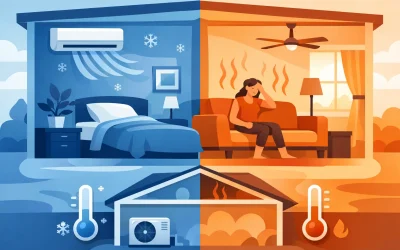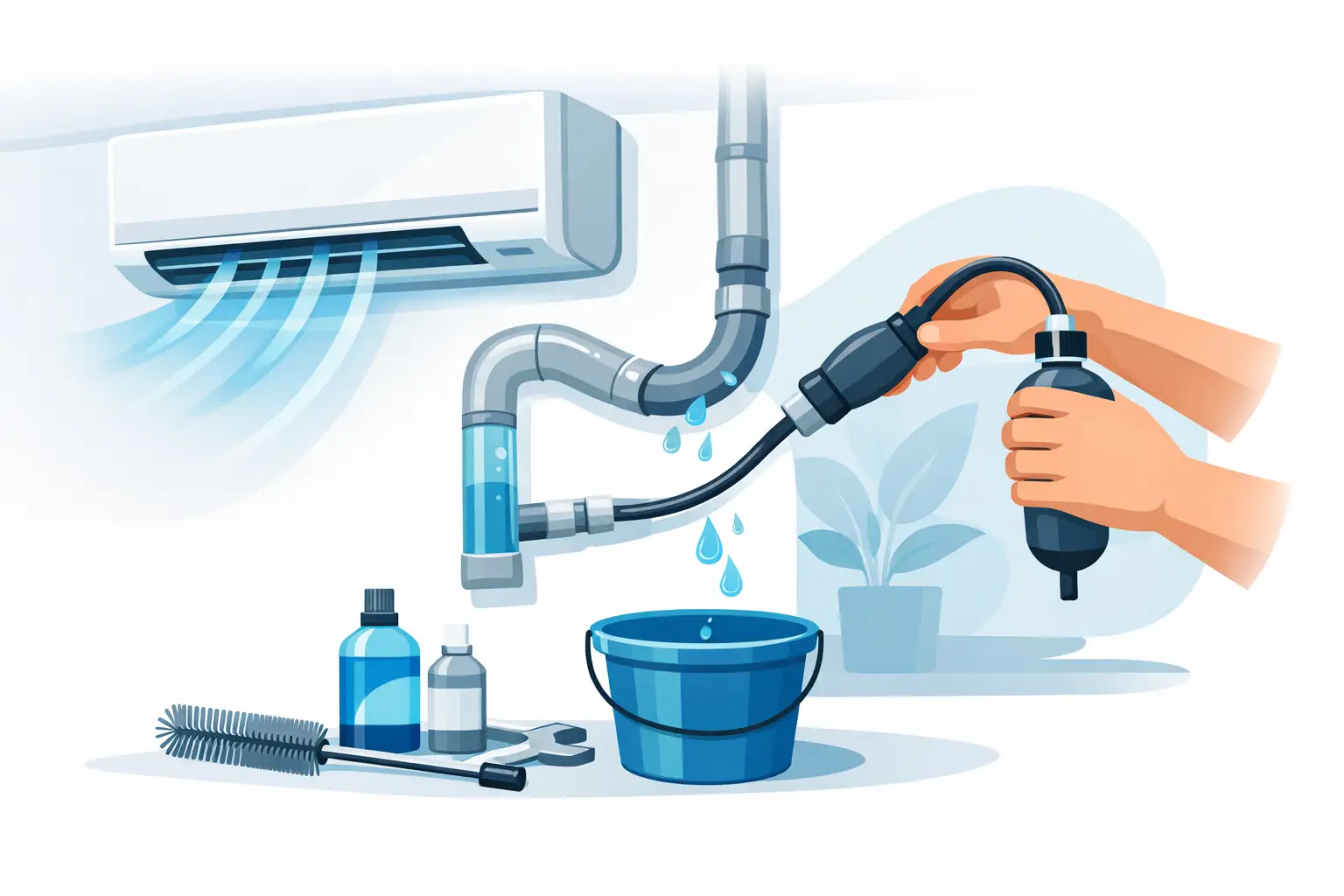
Water dripping from a wall-mounted split system, a musty smell when the aircon starts, or a stain spreading across the ceiling are not minor annoyances. They are common signs that a clean aircon condensate drain has become a blocked one. In Brisbane’s humid conditions, air conditioners remove a surprising amount of moisture from indoor air. That water has to go somewhere safely.
The condensate drain is designed to carry that moisture away from the indoor unit or fan coil. When it blocks, water can back up into the unit, overflow into the building and create avoidable damage. For homeowners, that can mean damaged plasterboard, flooring or furniture. For facility managers, it can mean tenant complaints, hygiene concerns, disrupted operations and an urgent repair callout.
What an aircon condensate drain does
As your air conditioner cools warm air, moisture condenses on the indoor coil and collects in a drain pan. From there, it travels through a condensate pipe to a suitable discharge point. On a split system, the pipe commonly runs alongside the refrigerant pipework to an outdoor location. Ducted and commercial systems may use longer runs, drains with traps, condensate pumps or multiple fan coil units connected to a common drainage arrangement.
The system relies on more than an open pipe. It needs the correct fall, secure connections, clean drain pan and, where required, a correctly installed trap or pump. A blockage may be caused by dust, biofilm, algae-like growth, insects, debris at the outlet, a sagging drain line or poor installation. In some systems, the drain pipe is clear while the issue sits in the tray, pump or float safety switch.
That is why cleaning the visible end of a pipe does not always solve the problem.
Signs your condensate drain needs attention
A blocked drain often gives warning before it becomes a water-damage issue. Keep an eye out for these signs, particularly through the warmer, wetter months when your system is working harder:
- Water dripping from the indoor unit, ceiling grille or ducted aircon return area.
- A damp or musty smell when the system operates.
- Poor airflow or the unit shutting down unexpectedly.
- Water stains, bubbling paint or mould near indoor air conditioning equipment.
- An outdoor drain outlet that has stopped dripping during long cooling cycles, despite high humidity.
Not every air conditioner will drip continuously outside. Output changes with humidity, temperature and how long the system has been running. But indoor water is never a normal result. Turn the system off and arrange an inspection if water is escaping inside.
How to clean an aircon condensate drain safely
For a straightforward residential split system with an accessible drain outlet, basic maintenance can help prevent build-up. The key word is accessible. Do not pull apart a wall-mounted unit, climb onto a roof or remove ceiling sections to reach concealed pipework. Those jobs are better handled by a qualified HVAC technician.
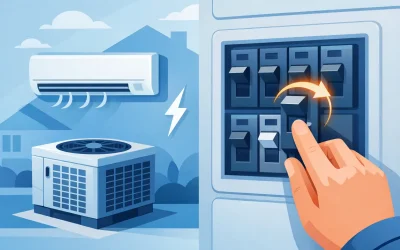
Start by switching the system off
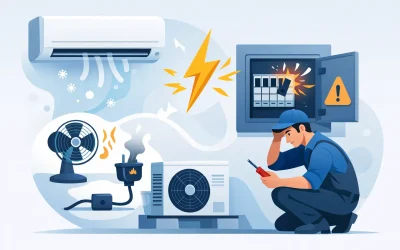
Turn the air conditioner off at the controller, then isolate power at the dedicated isolator or switchboard where practical and safe to do so. Air conditioners contain electrical components, and water around a fan coil unit is not something to work around casually.
Place towels or a shallow container beneath the indoor unit if there is evidence of dripping. This protects the area while you assess the problem and gives you a clear view of whether water continues to escape.
Check the outdoor drain outlet
Locate the condensate pipe outlet. It is often near the outdoor unit, but it may terminate over a garden, drain, roof area or another approved location. Check for mud, leaves, insect nests or obvious blockages around the opening. Clear loose debris by hand without forcing anything into the pipe.
If the outlet is accessible at ground level, a wet and dry vacuum can be used to gently draw debris from the pipe. Create a reasonable seal around the pipe with a cloth, run the vacuum briefly, then check whether dirty water or debris has been removed. Avoid using excessive suction on old or poorly secured pipework.
Do not shove wire, coat hangers or high-pressure water into the drain. It is easy to crack PVC pipe, dislodge a joint or push blockage material further into a bend. That can turn a simple clean into a concealed leak.
Clean what you can see, not what you cannot access
If your unit has an accessible drain pan or approved service point, wipe away visible sludge using a clean cloth. Use a manufacturer-approved condensate drain treatment if appropriate for the system. Avoid bleach, caustic drain cleaners and harsh household chemicals. They can damage components, create fumes and are not a reliable fix for a mechanical blockage.
A light flush with clean water may be suitable where there is a known service opening and a clear discharge path. Stop immediately if water does not drain freely. Overflowing a hidden tray is one of the quickest ways to create ceiling damage.
Test the drain after cleaning
Restore power and run the air conditioner in cooling mode. Check the indoor unit for drips and inspect the outlet after the system has operated long enough to produce condensate. If water still backs up, the pipe may be blocked further along, incorrectly graded or affected by a failed condensate pump.
At that point, professional servicing is the sensible next step. Repeatedly flushing an unresolved drain problem can mask the cause while water continues to collect where you cannot see it.
When a blocked drain needs a technician
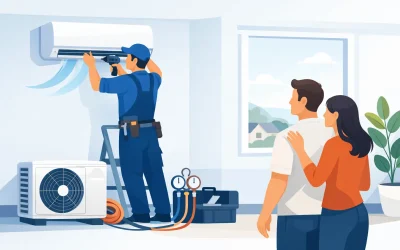
Some drain issues are not DIY maintenance problems. A technician should inspect the system when water is leaking from a ceiling-mounted cassette, ducted unit or wall split; when the drain line is concealed; when a condensate pump is fitted; or when the problem keeps returning after cleaning.
Commercial systems need particular care. A blocked drain in a café, school, aged care facility or office can affect more than comfort. Water near electrical equipment, wet ceilings, hygiene risks and interrupted trading all need a prompt, controlled response. Larger systems can also have common drains serving several units, so the location of the leak is not always the location of the blockage.
A proper service can include clearing the line with suitable equipment, cleaning the drain tray, checking the coil and filters, confirming pipe fall, inspecting traps and testing pumps or float switches. If mould or heavy biological build-up is present, a hygiene clean may also be appropriate. The goal is not simply to get water moving again. It is to make sure it drains reliably under normal operating conditions.
Preventing future condensate drain blockages
The best way to avoid an emergency drain issue is routine air conditioning maintenance. Dirty filters allow more dust to enter the indoor unit, where it can combine with moisture in the drain pan. A neglected coil and tray create the damp conditions that encourage biofilm build-up.
For most homes, a professional service before the heavy cooling season is a practical baseline, especially where the system runs frequently or occupants are sensitive to indoor air quality. High-use households, rental properties and systems in humid or dusty locations may benefit from more regular attention.
Commercial maintenance should be based on the asset type, operating hours, occupancy and risk profile. A lightly used office split system does not need the same programme as air conditioning in hospitality, education or aged care. Preventative maintenance lets facility managers identify blocked drains, pump faults and deteriorating insulation before they become a water-damage event.
It also pays to check that outdoor drain outlets remain clear after storms, landscaping work or pest activity. The outlet should discharge safely and not create a slipping hazard, nuisance to neighbours or ongoing moisture against the building.
Clean drainage supports better aircon performance
A condensate drain may be a small part of an air conditioning system, but it protects the areas people notice most: ceilings, walls, furnishings and indoor comfort. Keeping it clear reduces the chance of sudden leaks, unpleasant odours and avoidable downtime.
If your unit is leaking, smells damp or has a drain fault that keeps returning, do not wait for the next hot day to test it. Big Dog Mechanical can inspect the full system, clear the cause of the blockage and help keep your residential or commercial air conditioning operating cleanly and reliably.