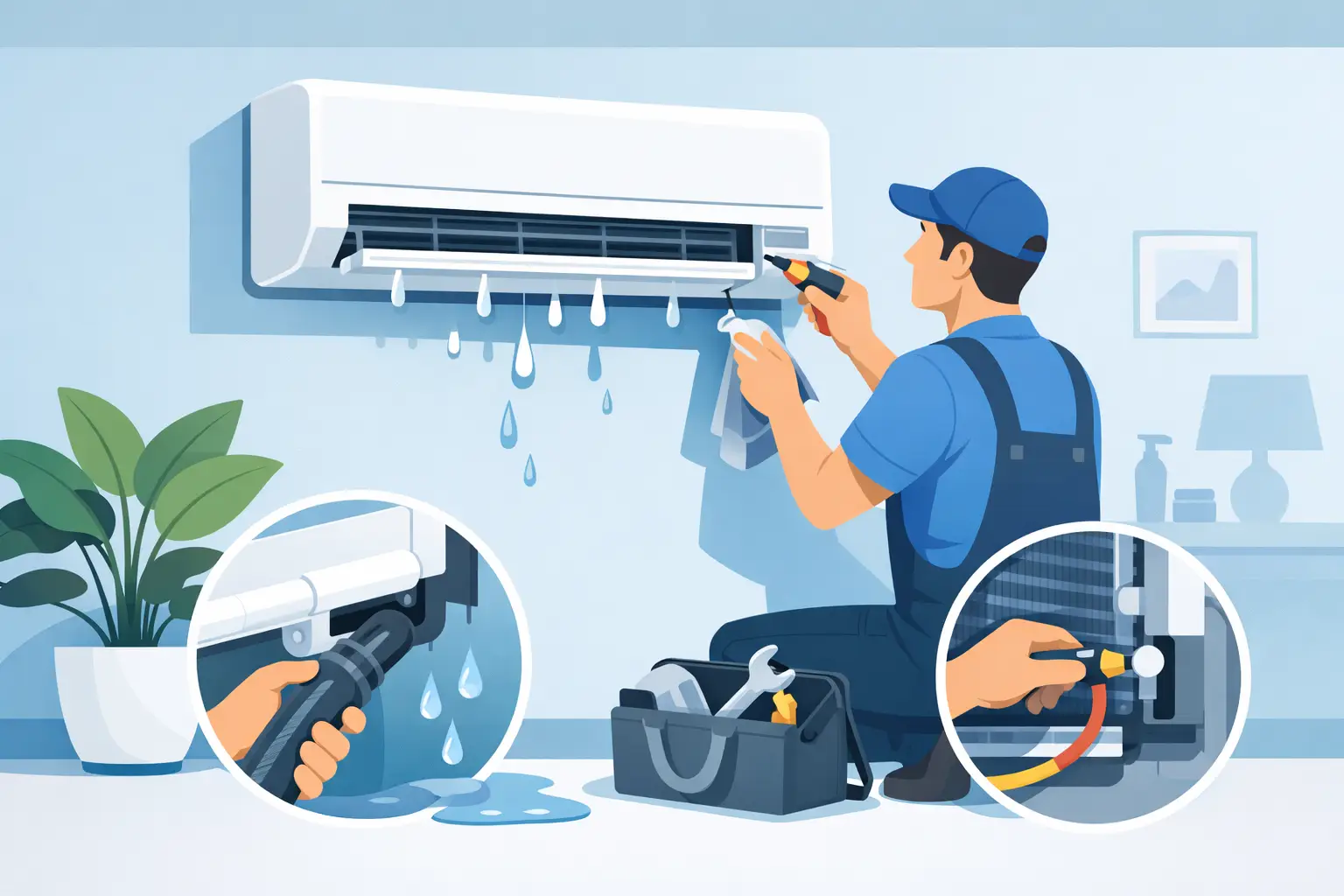
A puddle under an indoor air conditioning unit is not something to mop up and ignore. In Brisbane’s humid conditions, a small drip can quickly become ceiling damage, swollen plasterboard, mould growth or an unexpected system breakdown. Knowing how to fix leaking aircon starts with identifying where the water is coming from – because not every leak has the same cause or the same safe solution.
For most split-system and ducted systems, water around the indoor unit is caused by a drainage issue. But a frozen coil, poor installation, damaged insulation or a refrigerant fault can create similar symptoms. Start with the simple checks, protect the area below the unit and call a licensed technician when the cause is not obvious.
First, make the area safe
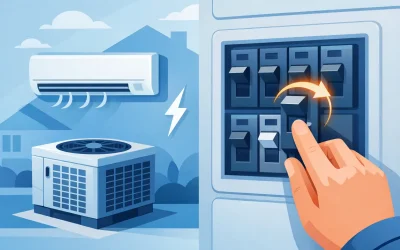
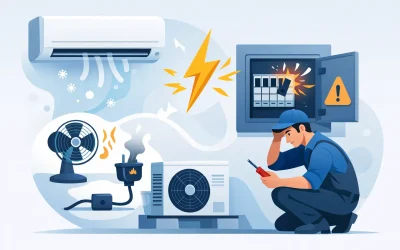
If water is dripping near a power point, light fitting, electrical wiring or the switchboard, turn the air conditioner off at the isolator or circuit breaker if it is safe to do so. Keep people clear of the area and do not continue running the unit to “see if it clears”. Water and electrical components are not a DIY combination.
Place towels or a shallow container beneath the drip to limit damage, then move furniture, electronics and soft furnishings out of the way. If water is coming through a ceiling rather than directly from a wall-mounted unit, treat it as urgent. A ceiling can hold a surprising amount of water before plasterboard fails.
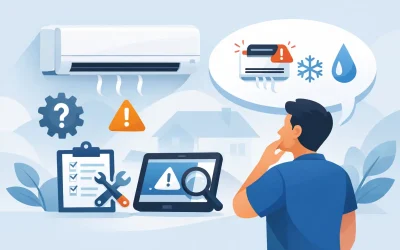
Once the area is protected, look for clues. Is the system leaking only while cooling? Is airflow weak? Can you see ice on the indoor coil or copper pipework? Does the unit smell musty, or has it been overdue for a clean? These details help narrow down the fault.
Why air conditioners leak water indoors
Your air conditioner removes heat and humidity from the air inside your home or building. That moisture condenses on the cold indoor coil and should drain through a condensate tray and pipe to the outside. When that path is blocked, damaged or poorly designed, the water has to go somewhere else.
A blocked condensate drain is the most common cause
Dust, airborne grime, algae and biofilm can build up inside a drain line. Eventually, water backs up into the drain tray and overflows through the indoor unit. This is particularly common after long periods of heavy use, or when a system has not received regular hygiene cleaning and servicing.
You may be able to see the external end of the drain line outside. If it is dry while the system is cooling and water is spilling indoors, a blockage is likely. Avoid poking wire, screwdrivers or high-pressure water into the pipe. It is easy to puncture a concealed drain line or push the blockage further into a bend.
A technician can clear the drain properly, flush it, check the fall of the pipe and confirm that water is discharging where it should. If the line repeatedly blocks, the fix may involve improving drainage design rather than simply clearing it again.
A dirty filter or coil can cause freezing
Restricted airflow is another regular culprit. When return-air filters are heavily loaded with dust, the indoor coil can become too cold and freeze. Once the ice melts, the volume of water may overwhelm the drain tray or run outside its normal path.
Remove and inspect the washable filters if your unit allows it. Vacuum loose dust, then wash them gently with lukewarm water and let them dry completely before reinstalling. Never operate the unit without filters fitted. They protect the coil and help maintain airflow.
If you can see ice on the coil, louvers or refrigerant pipework, switch the system off and leave it to thaw. Do not chip at ice or use a heat gun. After the unit has thawed, clean filters may restore airflow, but ongoing freezing needs professional attention. It could indicate a dirty coil, failed fan, faulty sensor or low refrigerant charge.
A cracked drain tray or disconnected pipe needs repair
Indoor drain trays can crack with age, and drain fittings can become loose or disconnected. These faults often produce a steady leak in the same spot whenever the unit runs. They are not usually visible without removing covers, which should be left to a qualified air conditioning technician.
For ducted systems, the issue may be inside the ceiling space. A displaced drain pipe, blocked tray or failed condensate pump can leak slowly for weeks before water marks appear on the ceiling. Early inspection is far cheaper than repairing water-damaged ceilings, insulation and cabinetry later.
Poor installation can create persistent leaks
A new or recently relocated system that has leaked from day one may have an incorrectly graded drain line, inadequate pipe insulation or a poorly positioned indoor unit. Condensate drains rely on gravity unless a pump has been installed. If the pipe runs uphill, sags in the middle or has too many tight bends, water can pool and back up.
This is one of the situations where a quick patch rarely solves the real problem. The pipework may need to be rerouted or supported properly. A licensed installer can assess the full drainage path and correct it cleanly.
How to fix leaking aircon safely at home
There are a few sensible checks homeowners and site teams can carry out before booking a repair. Keep the work limited to accessible, user-serviceable parts of the system.
Start by turning the system off and inspecting the filters. If they are dirty, clean and dry them before refitting. Check that doors, windows and vents around the unit are not restricting airflow, then restart the system and monitor it for a short period.
Next, inspect the outside drain outlet from ground level. You are looking for obvious debris around the end of the pipe, damage from gardening work, or a drain line that has become crushed or disconnected. Clear leaves and dirt from around the outlet only. Do not dismantle pipework or use chemical drain cleaners, as they can damage components and create a safety risk.
For a wall-mounted split system, also check whether the unit is level. If the indoor head has visibly shifted or is pulling away from the wall, turn it off and arrange a repair. The mounting and drainage may both need attention.
After these checks, run the unit on cooling and watch for normal drainage outside. If water continues to appear indoors, stop using the air conditioner. Repeated operation can turn a straightforward drain repair into a damaged wall, ceiling or electrical fault.
When a leaking air conditioner needs a professional
Some leaks are clear signs that it is time to call for help. Arrange a licensed technician promptly if there is ice on the system, weak airflow, a musty smell, water staining, repeated drain blockages or water near electrical fittings. The same applies if the unit is leaking refrigerant rather than water.
Refrigerant does not usually look like a puddle. You may notice poor cooling, hissing, frozen pipework or oily residue around fittings. Refrigerant work must be completed by an appropriately licensed technician. Topping up gas without finding and repairing the leak is not a proper repair and can leave the system inefficient and unreliable.
Commercial sites should act early. In hospitality, education, aged care and office settings, a small condensate leak can affect occupants, create slip hazards and interrupt operations. Planned maintenance helps identify drain, pump and coil issues before they become an emergency callout.
Prevent the next aircon leak
Air conditioners work hard through a Queensland summer, and their drainage systems need attention just like filters and fans do. Clean filters regularly during heavy-use periods, keep outdoor units clear of leaves and vegetation, and have the system professionally serviced at suitable intervals for its use and environment.
A proper service is more than a filter rinse. It can include checking the condensate tray and drain, inspecting pipe insulation, cleaning coils, testing airflow, assessing refrigerant performance and confirming that the system is draining correctly. For businesses with multiple systems, a preventative maintenance plan also creates a clearer picture of asset condition and replacement priorities.
If your aircon is leaking now, do the safe checks, protect the property and avoid taking apart the unit. Big Dog Mechanical can diagnose the cause and complete the right repair for residential, ducted and commercial air conditioning systems across Brisbane. Getting the drainage fault sorted early keeps your aircon working efficiently and keeps water where it belongs – outside.