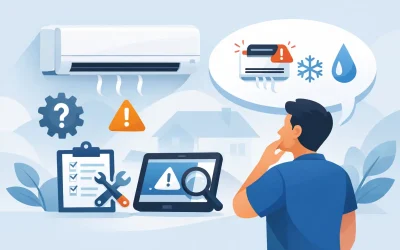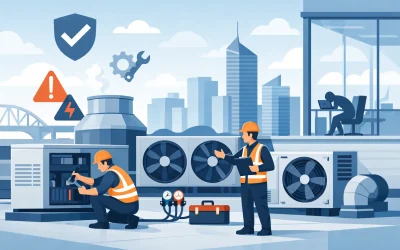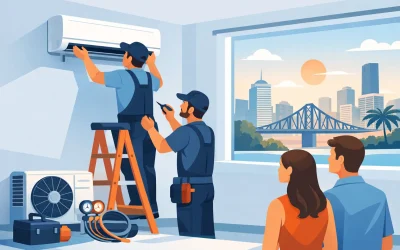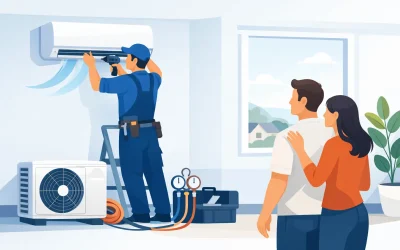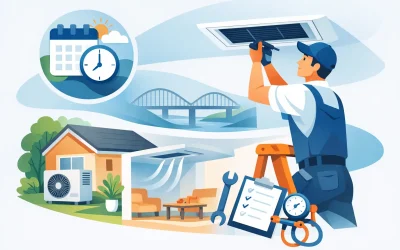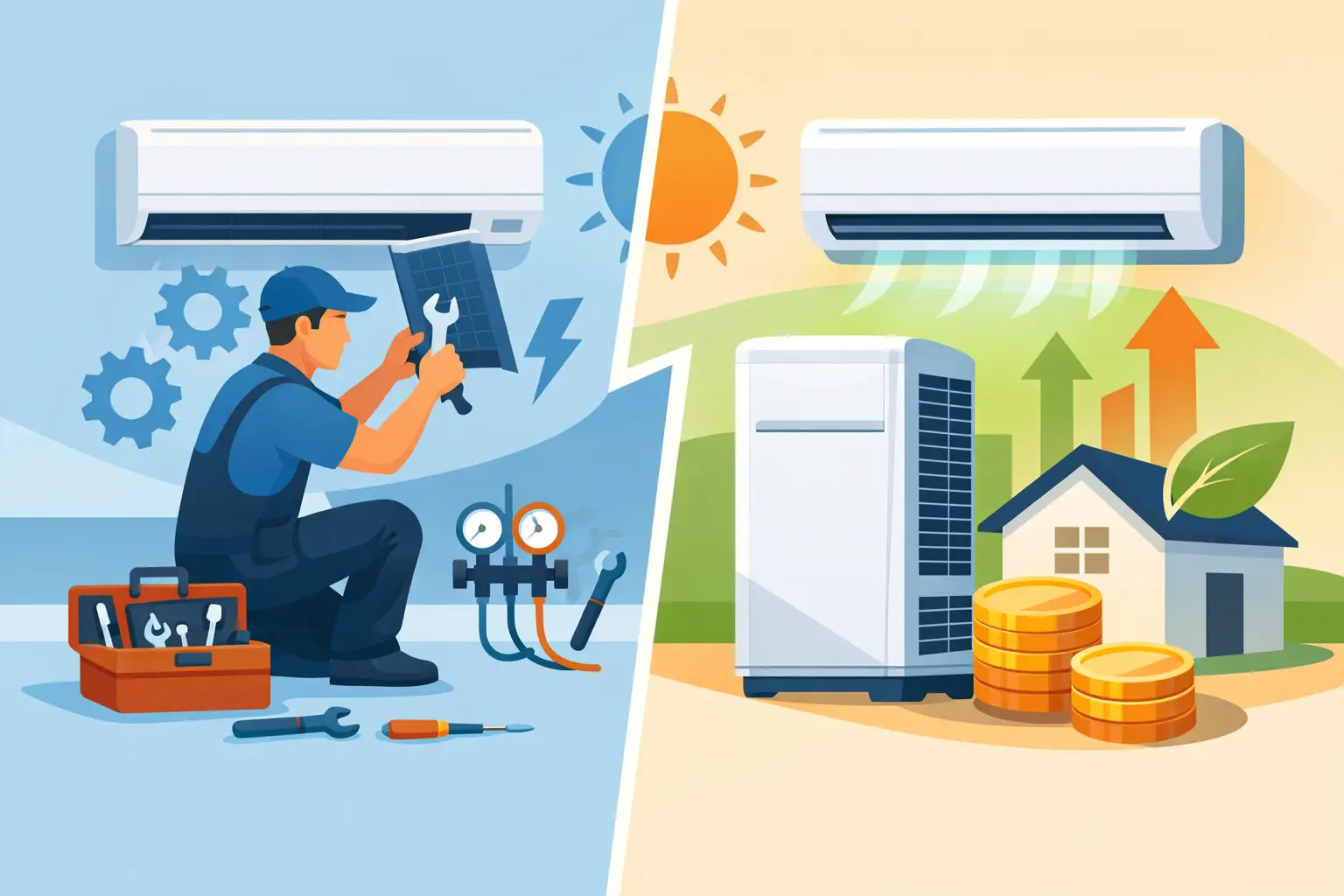
When your air conditioner starts tripping breakers, blowing warm air or struggling through another Brisbane summer, the real question is usually not whether it needs attention. It is whether aircon repair vs replacement makes better sense for your property, budget and long-term running costs.
That decision is rarely as simple as the cheapest quote on the day. A repair can be the right move if the fault is isolated and the system still has good life left in it. Replacement can be the smarter call when breakdowns are becoming regular, efficiency has dropped off, or the unit is no longer a good fit for the space.
Aircon repair vs replacement starts with the age of the system
Age is not the only factor, but it matters. Most residential and light commercial systems have a practical service life of around 10 to 15 years, depending on usage, installation quality, maintenance history and operating conditions. In Queensland, heavy summer demand can shorten that timeline if a unit has been under strain for years.
If your system is only a few years old and the issue is a failed capacitor, blocked drain, fan motor fault or control problem, repair is often worthwhile. These are common faults and can usually be addressed without turning the job into a major investment.
If the unit is pushing well past the 10-year mark, the conversation changes. Older systems are typically less efficient, may use outdated refrigerants, and can become harder or more expensive to keep running. One repair might get you through the season, but it will not always solve the bigger issue of an ageing system losing reliability.
When repair is usually the better option
A repair makes sense when the fault is specific, the rest of the system is in solid condition, and the expected result is dependable performance. That is particularly true if the unit has been serviced properly and has not shown a pattern of repeated problems.
For homeowners, this often applies to split systems with a single issue that can be diagnosed and fixed cleanly. For business operators or facility managers, repair may be the right call when downtime needs to be minimised and the plant still has strong remaining value.
There is also a cash flow reality. Not every failure justifies immediate capital replacement, especially in commercial settings where multiple assets need to be managed across a site. In those cases, a targeted repair can buy useful time, provided it is part of a clear maintenance and replacement plan rather than a stopgap with no strategy behind it.
When replacement is the smarter long-term move
Replacement becomes more attractive when the system is costing you in ways that go beyond the repair invoice. Frequent callouts, rising power bills, uneven cooling, poor humidity control and difficulty sourcing parts all point to a unit that is no longer delivering value.
If the same system has needed multiple repairs in the last 12 to 24 months, that is a warning sign. So is a system that still technically runs but cannot hold temperature during peak heat. For a household, that means poor comfort and wasted electricity. For a commercial site, it can mean complaints, operational disruption and risk to equipment or compliance depending on the environment.
An upgrade can also make sense when the original system was undersized, oversized or simply not suited to the layout. Replacing a poor-fit unit with the right solution can improve comfort, lower running costs and reduce strain on the equipment from day one.
The repair cost is only part of the equation
One of the biggest mistakes people make in the aircon repair vs replacement decision is looking only at the immediate quote. A cheaper repair is not always the lower-cost option over the next two or three years.
A system that needs a $700 repair today but is likely to need another major job in six months can become more expensive than replacing it now. The same applies if the unit is drawing more power than a modern equivalent or is causing regular downtime in a workplace.
A useful way to think about it is total ownership cost. That includes the repair itself, future repair risk, energy use, impact on comfort, and how critical the system is to the building. In a bedroom at home, you may tolerate a bit of inconvenience. In a server room, medical setting, hospitality venue or occupied office, unreliability comes at a much higher cost.
Signs your system is telling you it is near the end
Some systems fail suddenly. Most give warnings first. If your air conditioner is short cycling, making new noises, leaking regularly, struggling to cool certain zones or producing musty odours even after cleaning, there may be deeper wear inside the system.
Another sign is declining performance after service and repair work. If a technician restores operation but the improvement does not last, the issue may be broader than one failed part. Compressors, coils, boards and motors do not all wear at the same rate, but once multiple major components are ageing together, the system becomes harder to trust.
For ducted and larger commercial systems, poor airflow balance and repeated control faults can also point to a setup that needs more than patch repairs. In those cases, a proper assessment matters more than guessing based on one symptom.
Why energy efficiency can tip the balance
Modern systems are generally more efficient than older models, especially if your current unit is over a decade old. That matters in South East Queensland where cooling demand is high and running hours add up fast.
A newer unit can reduce energy use, improve zoning and deliver steadier temperature control. For commercial properties, efficiency gains can be even more meaningful across larger floor areas or multi-system sites. Better controls and more accurate capacity can also reduce unnecessary strain during peak demand.
That said, efficiency alone does not always justify replacement. If your current system is relatively modern and the repair is minor, fixing it can still be the sensible move. The key is whether the efficiency gains from a new unit will realistically offset the replacement cost within a reasonable timeframe.
Commercial sites need a broader view
For facility managers and business owners, this decision is rarely about one room being uncomfortable. It is about uptime, tenant experience, staff productivity and asset planning.
A repair may be the right short-term response, especially if a site needs immediate cooling restored. But if the asset is ageing, out of warranty and becoming unreliable, replacement should be considered as part of a broader maintenance strategy. Planned replacement is almost always easier and less disruptive than emergency replacement after a full failure.
This is where proper asset visibility matters. Understanding the age, condition and performance of each unit across a building or portfolio makes it far easier to decide what to repair, what to monitor and what to replace before it starts causing problems.
The value of a proper assessment
Good decisions come from diagnosis, not guesswork. Before choosing repair or replacement, you need to know what has failed, why it failed, what condition the rest of the system is in, and whether the unit is still appropriate for the space.
That assessment should include the fault itself, the system age, service history, part availability, energy performance and how critical the air conditioning is to the property. For homes, that gives you clarity and avoids spending twice. For businesses, it helps reduce reactive maintenance and protect operations.
In Brisbane and surrounding areas, where cooling systems work hard for much of the year, honest advice matters. A decent technician will not push replacement on a system that has good years left, and they should not pretend a tired unit is worth endless repairs either.
So, should you repair or replace?
If the system is relatively young, the fault is contained, and the unit has otherwise been performing well, repair is usually the practical choice. If the unit is older, inefficient, unreliable or no longer suited to the building, replacement is often the better investment.
There is no one-rule answer, because every property uses air conditioning differently. A family home, a small office, a retail tenancy and a large commercial facility all have different tolerance for risk, downtime and running cost.
The best call is the one that gives you dependable performance without wasting money on the wrong fix. If you are weighing up aircon repair vs replacement, get the system properly assessed, ask for the trade-offs in plain terms, and make the decision based on what will serve the property well through the next few summers – not just what gets you by this week.
A good air conditioning system should do its job without becoming a constant issue, and if yours is starting to fight you, that is usually the point where clear advice pays for itself.