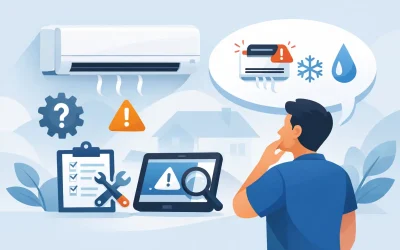
Ice on an indoor air conditioner is never a sign that it is working extra hard. It means the system has become too cold in the wrong place, and continuing to run it can lead to water leaks, poor cooling and unnecessary strain on key components. If you are wondering how to stop aircon freezing up, start by turning cooling mode off and allowing the unit to thaw fully before trying to use it again.
A frozen split system, ducted unit or commercial fan coil can be caused by something as simple as a blocked filter. It can also point to an airflow fault, dirty coil, refrigerant issue or failed component that needs a licensed technician. The right response depends on what is causing the ice, not just on getting the system running again.
Why does an air conditioner freeze up?
Your air conditioner removes heat from indoor air through the evaporator coil. For that process to work properly, a steady volume of warm air must pass across the coil. If airflow is restricted, or the refrigeration system is not operating within specification, the coil temperature can drop below freezing. Moisture in the air then freezes onto it.
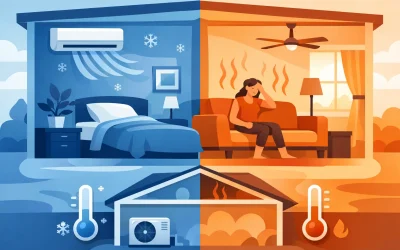
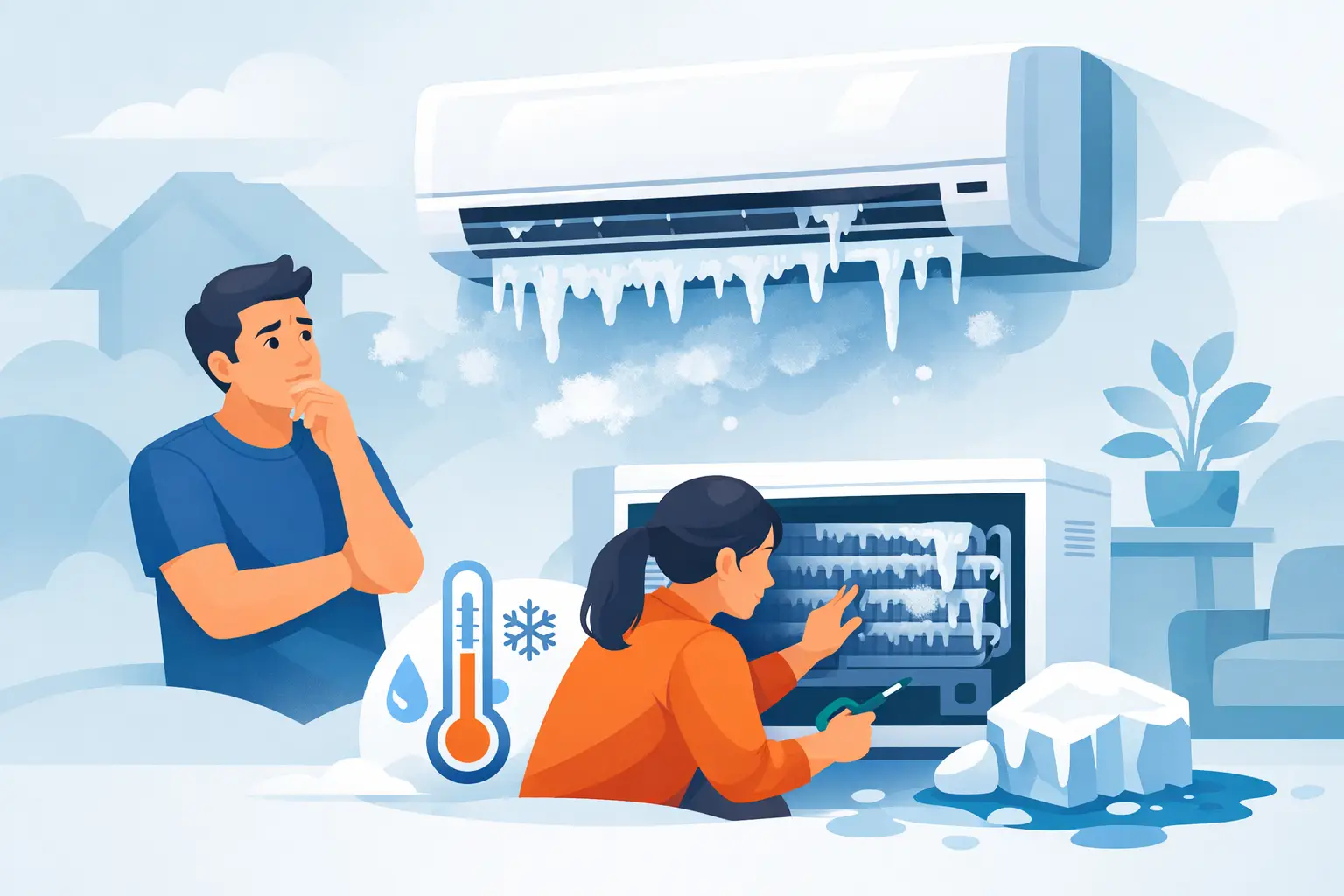
Once ice begins to form, it restricts airflow even further. That creates a cycle where the unit cools less effectively while more ice builds up. You may notice weak airflow, warm air from the vents, dripping water after shutdown, a musty smell or visible frost on the indoor unit or pipework.
In Brisbane’s humid conditions, a unit that is already underperforming can ice up quickly. Heavy moisture in the air gives frost more to build with, particularly when filters and coils have been neglected through a long cooling season.
How to stop aircon freezing up safely
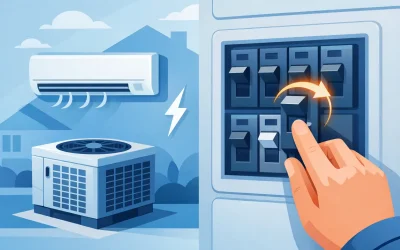
The immediate job is to stop the ice from getting worse. Switch the system off at the controller. If your system has a fan-only setting, you can run the fan to help thaw the indoor coil, provided airflow is normal and there is no water near electrical components. Otherwise, leave the unit off and allow it to defrost naturally.
Do not chip ice away with a screwdriver, knife or any sharp object. Evaporator coils and refrigerant pipes are easily damaged, and a small puncture can turn a manageable service call into a larger repair. Avoid pouring hot water into the unit too. Sudden temperature changes, excess water and electrics are not a good combination.
Once the ice has melted, check the air filter. For many wall-mounted split systems, this is a straightforward homeowner task. Remove the filters as directed in the manufacturer instructions, vacuum off loose dust and wash them gently with lukewarm water if suitable for the model. Let them dry completely before reinstalling them.
Then inspect the return air grille and supply vents. Furniture, curtains, stored stock and closed vents can reduce airflow enough to create problems. In a commercial space, check that ceiling grilles have not been blocked during a fit-out or by temporary displays. Restore clear airflow before restarting the system.
If the unit freezes again after these basic checks, turn it off and arrange a professional inspection. Repeated freezing is not something to manage by thawing and restarting the aircon every few days.
The common causes behind frozen air conditioning
Dirty filters, coils and fans
Blocked filters are the most common cause because they limit the air moving across the evaporator coil. But clean-looking filters do not guarantee the whole system is clean. Dust can also build up on the coil, blower wheel, ductwork, return grilles and outdoor unit. In high-use homes, hospitality venues, schools and offices, this build-up can happen faster than expected.
A proper service goes beyond a quick filter rinse. It checks air movement, cleans relevant components and identifies whether hygiene cleaning is needed. This matters for comfort, energy use and indoor air quality, not just for preventing ice.
Low refrigerant or a refrigerant leak
Low refrigerant pressure can make the evaporator coil run too cold and freeze. Refrigerant is not a fuel that an air conditioner normally uses up. If the charge is low, there may be a leak, an installation issue or another fault within the refrigeration circuit.
This is not a DIY top-up job. Refrigerant work must be completed by appropriately licensed technicians, who can test for leaks, repair the cause where practical and recharge the system to the manufacturer specification. Simply adding refrigerant without finding the fault can leave you with the same problem again, plus a higher repair bill later.
Faulty fan, controls or sensors
Your indoor fan needs to move enough air across the coil. A failing fan motor, worn capacitor, damaged blower wheel or control fault can reduce that airflow even when filters are clean. A faulty temperature sensor, thermostat or electronic control can also keep the compressor running when it should cycle off.
These faults are often less obvious than a blocked filter. The unit may start normally, then gradually lose airflow or produce frost after an hour or two. An experienced HVAC technician can test the electrical and control components rather than replacing parts on guesswork.
Ducted system airflow problems
With ducted air conditioning, the cause may sit out of sight. A blocked return air filter, collapsed flexible duct, closed zone damper, undersized return path or dirty indoor fan coil can all restrict airflow. Because the equipment is usually in the roof space, many property owners only notice the problem once rooms stop cooling or water stains appear around a ceiling grille.
For facilities managers, freezing can be a warning that an asset needs more than a reactive repair. A maintenance review can identify airflow restrictions, ageing components and control settings before they become a disruption for staff, tenants or customers.
What you can check before calling a technician
There are a few sensible checks that do not involve removing covers or touching refrigeration and electrical parts. Confirm the unit is set to cooling mode at a realistic temperature, usually around 23 to 25 degrees. Setting a system to its lowest possible temperature will not cool a room faster, but it can make a marginal airflow issue show up sooner.
Check that filters are clean and dry, vents are open, and there is no obvious obstruction around the indoor return air path. For a split system, look at the outdoor unit from a safe distance. Leaves, grass clippings and stored items should not be packed against it. Keep the area around the outdoor coil clear so it can reject heat properly.
Also take note of what happened before the freeze. Did airflow reduce first? Is the problem only occurring overnight? Did it start after building works, a power outage or a recent installation? These details help a technician diagnose the issue efficiently.
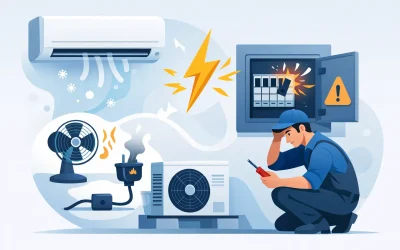
Do not remove electrical panels, try to straighten coil fins with improvised tools or use refrigerant cans. Those actions can cause damage, create safety risks and may affect warranty coverage.
When a frozen aircon needs urgent attention
Arrange a repair promptly if the unit keeps freezing after filter cleaning, if you can see ice on refrigerant pipework, or if it leaks heavily once thawed. Water overflowing from an indoor unit can damage walls, ceilings, flooring and electrical fittings.
For commercial sites, treat a frozen system as urgent where it affects critical spaces such as aged care areas, kitchens, classrooms, server rooms or customer-facing premises. Loss of cooling is one issue. The risk of water damage, mould growth and unplanned downtime can be just as costly.
A technician should assess refrigerant pressures, coil condition, condensate drainage, fan operation, electrical components and system controls. On larger systems, they may also review zones, ductwork and the broader mechanical plant operation. The objective is to fix the reason the unit froze, not merely clear the ice.
Prevent freezing with regular aircon servicing
Most aircon freezing faults are easier and cheaper to prevent than to repair. Home systems benefit from regular filter cleaning and professional servicing based on usage, environment and manufacturer recommendations. Homes with pets, renovation dust or high daily use often need more frequent attention.
Commercial systems need a planned maintenance approach. Filters, coils, drains, belts, motors, controls and operating temperatures should be checked at suitable intervals for the building and equipment type. Preventative maintenance supports reliable cooling during Queensland’s hottest periods, helps manage energy costs and reduces the chance of a breakdown when the site is busiest.
If your aircon has frozen once, do not ignore a repeat episode. A clean filter may solve it, but recurring ice is your system asking for a proper diagnosis. Acting early protects the equipment, the property and the comfort of everyone relying on it.