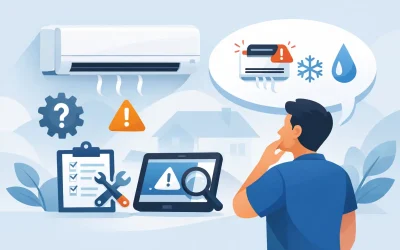
You notice a drip near the indoor unit, then a small puddle on the floor, and suddenly the question becomes urgent – why is my aircon leaking, and is it about to fail completely? In Brisbane’s heat and humidity, a leaking system is more than an annoyance. It can damage ceilings, walls, flooring and insulation, and it usually means the unit is not operating the way it should.
The good news is that water leaking from an air conditioner is a common fault, and in many cases the cause is straightforward. The less good news is that “common” does not mean “harmless”. Some leaks come from a simple drainage issue. Others point to airflow problems, dirty components, low refrigerant or installation faults that will keep coming back until they are fixed properly.
Why is my aircon leaking from the indoor unit?
Most indoor aircon leaks come back to condensation. Your system pulls moisture from the air as it cools, and that water is meant to drain away through a condensate line. If that process is interrupted, the water ends up where it should not – inside the unit, down the wall, through the ceiling or onto the floor.
In split systems and ducted units, the usual causes are a blocked drain, a cracked drain pan, a dirty filter, an iced-up coil or poor installation. In commercial settings, especially where systems run hard for long hours, leaks can also be tied to neglected maintenance, pump faults or drainage design issues.
That is why the exact answer depends on the type of system, how old it is, how often it is serviced and whether the leak is constant or only happens in certain conditions.
Blocked condensate drain
This is one of the most common reasons an air conditioner leaks water indoors. Dust, mould, sludge and debris can build up in the drain line over time. Once the line blocks, condensation backs up into the unit and overflows.
In homes, this often shows up as dripping from the front of a split system or staining around the wall below it. In commercial systems, it may present as ceiling moisture, sagging tiles or intermittent overflow near fan coil units.
A blocked drain is not always a one-off issue. If the system is dirty inside, or if maintenance has been skipped, the blockage may return until the unit is properly cleaned and the drainage path checked end to end.
Dirty filter or restricted airflow
If the return air filter is clogged, airflow drops. That can cause the evaporator coil to get too cold and freeze. When the ice melts, the system may produce more water than the drain can handle, or the water may drip in the wrong place.
This is a common example of a small maintenance issue turning into a bigger fault. A dirty filter does not just affect comfort. It can reduce efficiency, strain components and create conditions for water leaks.
For homeowners, checking the filter is a sensible first step. For businesses, especially sites with multiple systems, regular preventative maintenance is the better option because one blocked filter can quickly become a leak, a breakdown or a complaint from staff or customers.
Cracked or rusted drain pan
Older systems can develop corrosion or cracks in the drain pan that collects condensation. Once that pan is damaged, water starts escaping before it reaches the drain line.
This is more common in ageing units, coastal environments and systems that have not been cleaned regularly. If the pan has failed, patching it may only be a short-term fix. Depending on the condition of the unit, repair versus replacement needs to be weighed properly.
Low refrigerant or other coil issues
If refrigerant is low, pressure inside the system can drop and the evaporator coil can freeze. Once it thaws, you may see leaking water around the indoor unit.
This is not a DIY job. Low refrigerant usually means there is a leak somewhere in the sealed system, and simply topping it up without finding the cause is not a real fix. It may cool again for a while, but the fault remains, and performance, efficiency and reliability all suffer.
Why is my aircon leaking only when it’s very humid?
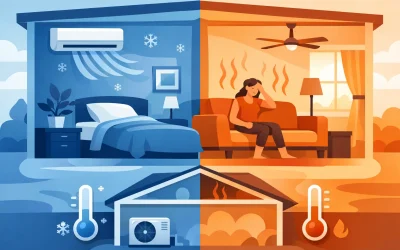
Queensland conditions play a big role here. On very humid days, your system pulls a lot more moisture from the air. If the drain line is partially blocked, the unit is slightly out of level, or the fan speed and temperature settings are putting extra demand on the system, that extra condensation can push it over the edge.
This is why some leaks seem to come and go. The system may cope in mild weather but fail during heavy humidity, long run times or peak summer load. That does not mean the problem has gone away. It just means the fault is sitting close to the limit.
Poor installation can also show up this way. If the indoor unit is not properly levelled or the drain line lacks the correct fall, water may not clear as intended. In that case, the aircon can leak from day one or only leak under heavier moisture loads.
What you can safely check first
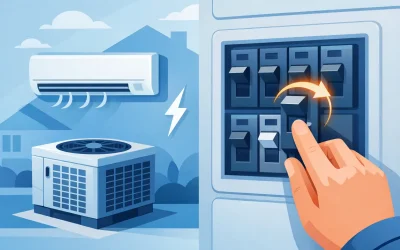
There are a few practical things you can do before booking a repair, provided you do so safely. Turn the system off if water is dripping near power points, light fittings or any electrical components.
Check whether the air filter is visibly dirty. If it is washable and your manufacturer allows cleaning, clean and dry it properly before refitting. Have a look for obvious signs of overflow around the indoor unit. If you can access the outdoor end of a condensate drain, see whether water is draining at all when the unit has been running.
Also pay attention to what the system has been doing. Was airflow weak before the leak started? Was the cooling poor? Did you notice icing, unusual noises or a musty smell? Those details help narrow down the cause quickly.
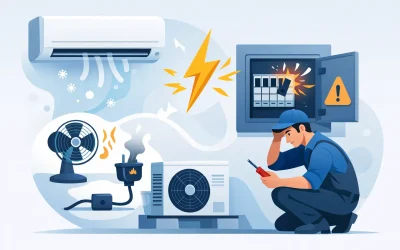
What you should not do is start pulling covers off, poking wires, opening refrigerant components or forcing blockages through the drain without the right tools. A simple water leak can sit alongside electrical risk or a bigger system fault.
When a leaking aircon needs a technician
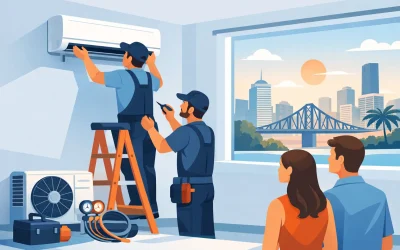
If the leak keeps returning, if the system is not cooling properly, or if there is any sign of ice, mould, ceiling damage or electrical exposure, it is time to get it checked by a licenced technician.
For commercial properties, the threshold should be even lower. A leak above a ceiling grid, in a comms room, in a retail tenancy or near occupied areas can quickly become an operational issue. Water ingress, downtime and customer impact cost far more than a timely repair.
A proper service call should not just mop up the symptom. It should identify the root cause, whether that is drainage, airflow, refrigerant, hygiene build-up, pump failure or installation error. That matters because aircon leaks often repeat when only the visible water is dealt with.
How to stop aircon leaks from coming back
The best fix is prevention. Regular servicing keeps filters, coils, drains and pumps clean and working as they should. It also picks up wear before it becomes water damage.
For residential systems, that usually means routine servicing before peak summer demand, along with basic filter cleaning between visits. For commercial sites, a structured maintenance program makes more sense, particularly where there are multiple units, high occupancy spaces or compliance requirements around asset performance and hygiene.
A good maintenance approach does more than prevent leaks. It supports efficiency, extends equipment life and reduces the chance of emergency callouts in the middle of a heatwave.
Why acting early saves money
A leaking air conditioner is easy to put in the too-hard basket if the unit still seems to be cooling. That is where property damage starts. A slow drip can stain plaster, damage carpet, swell cabinetry, affect insulation and create the kind of damp conditions mould likes.
There is also the system side of the equation. If the cause is restricted airflow, low refrigerant or internal contamination, the unit is already working harder than it should. Delaying repairs can turn a manageable service job into a larger component failure.
For Brisbane homes and businesses, speed matters. The sooner the cause is identified, the better the chance of keeping repair costs down and avoiding avoidable damage.
If you are asking why is my aircon leaking, the most useful next step is not guessing – it is getting the system checked before a small water issue turns into a larger repair. Big Dog Mechanical works with homeowners, businesses and facility managers across Brisbane to keep air conditioning systems clean, efficient and reliable, especially when Queensland conditions are putting them under pressure.