A building manager should not have to find out about an air conditioning problem from a tenant complaint, a hot meeting room or an unexpected spike in the power bill. The most useful smart building HVAC trends give owners and facility teams earlier warning, better control and clearer evidence for maintenance decisions. For Brisbane properties dealing with long cooling seasons, humidity and varied occupancy, that can mean less downtime and a more predictable operating budget.
Smart HVAC does not simply mean putting an app on the wall or connecting every piece of equipment to the internet. It means using the right data, controls and maintenance practices to keep a system working efficiently for the people who rely on it.
Smart building HVAC trends changing property operations
The shift is away from reactive maintenance and fixed schedules alone. A quarterly service remains valuable, but many commercial sites now want a clearer picture of what is happening between visits. Sensors, building management systems and connected controllers can identify patterns that are easy to miss during a one-off inspection.
For homeowners, the same direction is appearing in simpler forms: Wi-Fi controls, zoning, scheduling and energy monitoring. The technology is different in scale, but the aim is the same – comfortable rooms without running more equipment than necessary.
Condition-based maintenance is replacing guesswork
A system does not always fail without warning. Rising compressor run time, repeated high-temperature alarms, unusual power draw, poor airflow and frequent controller overrides can all point to a developing issue. Condition-based maintenance uses these signals to target work before a minor fault becomes a costly shutdown.
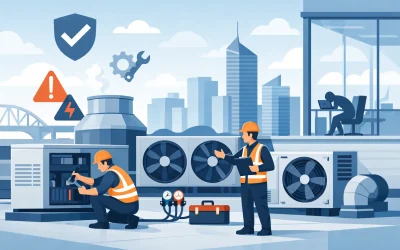
This is particularly valuable for VRV/VRF systems, central plant and larger ducted installations where a fault can affect multiple rooms or tenants. Instead of waiting for a complete breakdown, a technician can investigate a declining component, blocked coil, refrigerant issue or control fault while there is still time to plan the repair.
The trade-off is that data needs review and context. A sensor reading on its own is not a diagnosis. Poor commissioning, incorrectly placed sensors or a controller that has not been configured properly can create misleading alerts. The best results come when monitoring is supported by experienced HVAC technicians who understand how the equipment should operate on site.
Energy management is becoming more targeted
Energy efficiency is no longer just about selecting a high-efficiency unit at installation. Smart controls can reduce waste every day by matching operation to occupancy, weather conditions and the actual needs of each area.
In a commercial building, that may mean reducing conditioning in unused meeting rooms, starting systems at the right time rather than running them all night, or adjusting zones that receive strong afternoon sun. In a home, it can mean scheduling cooling before the family returns, using zoning to avoid conditioning empty bedrooms, and checking whether a system is regularly being pushed beyond its intended load.
The goal is not to run a building warmer or make occupants put up with poor comfort. It is to stop conditioning empty spaces, over-cooling rooms and running plant longer than required. A well-set system should hold a stable, comfortable temperature with less unnecessary cycling.
Indoor air quality is now part of HVAC planning
Comfort has always mattered, but indoor air quality is receiving closer attention across offices, schools, aged care settings, hospitality venues and homes. Property managers are increasingly asking how ventilation, filtration, humidity and hygiene cleaning affect the spaces people use every day.
Smart sensors can track factors such as carbon dioxide, temperature and relative humidity. These readings help operators understand whether a busy room needs more outside air, whether a ventilation schedule is suitable, or whether humidity is creating conditions for mould and odours.
There is no single setting that suits every building. Increasing outside air can improve ventilation, but it can also increase cooling loads in a humid Queensland summer. Higher-grade filtration can capture more particles, but it may affect airflow if the system is not designed or maintained for it. Site-specific assessment matters, especially where occupants have particular health needs or the building has strict operational requirements.
Better controls are making zoning more useful
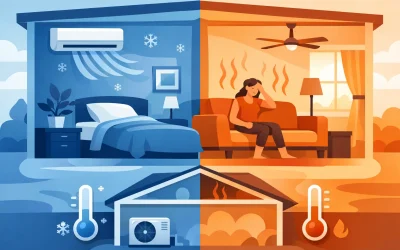
Zoning has been available for years, but smarter controls are making it more practical. Instead of treating an entire floor or house as one space, systems can respond to individual areas with different occupancy and heat loads.
A west-facing office, for example, may need different cooling from an internal meeting room. A home office used three days a week should not dictate the temperature of the whole house. Properly designed zoning can improve comfort and reduce energy use, provided the system capacity, ductwork and controls are suited to the building.
Adding zones is not always the right answer. Poorly balanced ductwork or too many small zones can cause airflow problems and reduce system performance. Before upgrading controls, it is worth checking the condition of the existing equipment and whether the original design supports the outcome you want.
The practical value of smart HVAC data
Facility teams are often surrounded by information but short on useful answers. The worthwhile trend is not collecting more data for its own sake. It is turning system information into clear actions: service this unit, investigate that alarm, adjust this schedule, budget for that asset replacement.
An asset audit is a sensible starting point for many commercial properties. It establishes what equipment is installed, its age and condition, known fault history, maintenance requirements and likely replacement priorities. Once that baseline exists, monitoring and planned maintenance can focus on the equipment that presents the biggest operational risk.
For multi-site operators, standardising this approach can make a major difference. A café, medical practice, school or retail group can compare recurring faults, energy patterns and asset condition across locations instead of relying on separate records and last-minute callouts.
Remote monitoring supports faster response
Remote access can help identify whether an issue is likely to be a settings problem, a communication fault or a mechanical failure before a technician arrives. It can also help after-hours teams respond faster when a critical space is affected.
That does not remove the need for on-site expertise. A remote alarm cannot clean a blocked drain, repair a failed fan motor or inspect a refrigerant leak. It does, however, help prioritise the job and provide technicians with useful fault information before they attend.
For sites that need continuous operation, the most valuable setup usually combines remote alerts with a preventative maintenance plan and a clear escalation process. Staff should know who receives alarms, what requires urgent action and when to call for support.
Choosing upgrades that suit the building
The best smart building HVAC trends are not necessarily the most complex ones. A small office with ageing split systems may benefit more from replacing inefficient units, improving controls and setting up scheduled servicing than from installing an extensive building management system. A larger property with central plant may justify more detailed monitoring because the potential savings and failure risks are higher.
Before investing, consider the age of the equipment, current maintenance history, utility costs, occupancy patterns and whether occupants are regularly reporting comfort issues. Also consider compatibility. New controls may not communicate effectively with older equipment, and a partial upgrade can create more complexity if it is not planned properly.
A practical rollout often starts with the biggest pain point. That might be an unreliable plant room, a high-energy tenancy, repeated after-hours alarms or poor air quality in a heavily used area. Measure the current position, make the targeted change, then review whether it delivered a real result.
Smart systems still need hands-on maintenance
No control platform can replace clean filters, clear drains, correctly tensioned belts, sound electrical connections and properly operating fans. Sensors and software are only as reliable as the equipment they monitor.
Preventative servicing remains the foundation of efficient HVAC operation. It keeps hygiene issues, airflow restrictions and developing mechanical faults from undermining the benefits of smart controls. It also helps ensure the data being relied on reflects a system that is operating as intended.
For property owners and facility managers, the right question is not, “How smart is this system?” It is, “Will this setup make the building more comfortable, efficient and reliable?” Big Dog Mechanical can help assess the equipment already in place and recommend improvements that match the site, budget and operational priorities. Start with the problems that cost your property the most, then build a maintenance and upgrade plan that keeps them from returning.