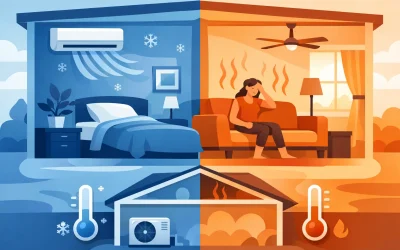
That back bedroom that turns unbearable by mid-afternoon is not just a Queensland summer annoyance. If you are asking, why is one room hotter than others, there is usually a clear reason – and it is often a combination of sun exposure, poor airflow and an air conditioning system that is not delivering capacity where it is needed.
The good news is that an uneven temperature does not automatically mean you need to replace your whole system. A few checks can identify simple fixes. Where the cause is inside the system or building fabric, a qualified air conditioning technician can pinpoint the problem before it becomes an ongoing comfort and energy-cost issue.
Why is one room hotter than others in your home or workplace?
Every room gains and loses heat differently. In Brisbane, a room facing west or north-west can absorb significant afternoon heat through its roof, windows and external walls. Add a closed door, limited return airflow or a ducted outlet that is not correctly balanced, and that room can sit several degrees warmer than the rest of the building.
In offices, classrooms, shops and hospitality spaces, people, lighting, computers and kitchen equipment can add another layer of heat load. A meeting room that feels fine when empty may run hot once eight people, laptops and a display screen are in use. The system needs to be designed and maintained for the actual load, not just the size of the room on a floor plan.
Direct sun and poorly protected windows
Sunlight is one of the most common reasons for a hot room. Large unshaded windows let radiant heat into the space, particularly during the afternoon. Dark roofs, uninsulated external walls and rooms directly below the roofline can make the effect stronger.
Curtains, blinds and external shading can reduce heat gain, but they have different results. External awnings, screens or shade structures stop more heat before it reaches the glass. Internal blinds still help with glare and comfort, but much of the heat has already entered the room. For a persistently hot west-facing room, improving shade may make a bigger difference than turning the thermostat down.
Insulation gaps and roof-space heat
Ceiling insulation slows heat transfer from a hot roof space into the room below. If insulation is thin, compressed, missing or disturbed by electrical work, the room may heat up quickly even while the air conditioner is operating properly elsewhere.
This is especially common in upstairs bedrooms, extensions and converted garages. In a commercial building, heat can also enter through exposed ceilings, poorly insulated walls or areas adjoining plant rooms and commercial kitchens. An air conditioner can only remove heat as fast as it enters. Reducing the load often delivers a more comfortable and more efficient result.
Restricted airflow from a ducted system
Ducted air conditioning relies on balanced airflow. If one room receives too little conditioned air, it will struggle to reach the same temperature as rooms closer to the indoor unit.
Possible causes include a closed or partially closed supply grille, crushed or disconnected ductwork, leaking ducts in the roof space, an incorrectly set zone damper, or a system that was never balanced correctly. Some rooms may have been added or altered after the original installation, changing the way air needs to be distributed.
Avoid closing multiple vents to force more air into one hot room. This can increase pressure in the ductwork and reduce overall performance. It may also put unnecessary strain on the indoor fan. A technician can measure airflow and adjust the system properly, rather than shifting the problem to another room.
A dirty filter or poorly maintained unit
A blocked return-air filter reduces the amount of air moving through the system. The air conditioner may still run for long periods, but it cannot circulate enough cooled air to serve every room evenly. Dusty indoor coils, dirty outdoor coils and worn components can also reduce capacity.
For split systems, check whether the hot room is served directly by its own unit. If it is, weak airflow, inconsistent cooling, water leaks, unusual noise or ice around the indoor unit are signs it needs attention. Cleaning the filter is a sensible first step, but deep hygiene cleaning and fault diagnosis should be handled by a licensed professional.
The thermostat is in the wrong place
A ducted system measures temperature from one location, not every room. If the thermostat sits in a cool hallway, shaded living area or near a supply grille, it may decide the home has reached the set temperature while a sunny bedroom remains too warm.
Zoning can help, but only when it is designed around how the building is used. A single zone serving a large living area and a hot bedroom may not provide enough control. In some cases, relocating a sensor, adjusting zone settings or adding a separate solution for the problem room is more practical than making major changes to the whole system.
Doors, return air and room pressure
Cool air needs a path into the room and a path back out to the return-air grille. A bedroom with the door shut tightly, no return-air pathway and a supply vent pushing air in can become pressurised. That limits airflow, and the room feels stuffy even when the vent is blowing cold air.
Door undercuts, transfer grilles and correctly planned return air can make a real difference. This matters in homes, but it is just as relevant in commercial fit-outs where enclosed offices, storage rooms and meeting rooms have been created after the HVAC system was installed.
Quick checks before booking an air conditioning service
Start with the easy, safe checks. Set all rooms to similar conditions, then give the system time to run on a hot day. A room that is only warmer when the afternoon sun hits points towards heat gain. A room that is warm at every time of day is more likely to have an airflow, zoning or system issue.
Check these four areas:
- Make sure the room’s supply vent is fully open and not blocked by furniture, curtains or stored items.
- Clean accessible split-system filters according to the manufacturer instructions and check ducted return-air filters if they are designed for homeowner access.
- Compare airflow at the hot-room vent with a nearby room while the system is running.
- Look for obvious gaps around windows, damaged seals, missing insulation access covers or doors that are always kept closed.
Do not climb through roof spaces, dismantle ductwork or adjust electrical components yourself. Queensland roof spaces become extremely hot, and air conditioning equipment should be inspected safely and correctly.
When a hot room needs professional diagnosis
Book an inspection if the room stays hot despite clean filters, open vents and sensible shading, or if cooling has noticeably worsened across the property. A professional assessment can check refrigerant performance, fan operation, duct condition, airflow volume, zoning controls, thermostat readings and system capacity.
For older systems, the answer may be a repair or rebalance. For a renovated home, a duct upgrade, extra outlet or revised zoning arrangement may be needed. In a room with heavy afternoon heat load, insulation and window treatments may be the better investment. The right fix depends on the cause, which is why guesswork can become expensive.
For business operators and facility managers, uneven temperatures should also be treated as an operational issue. Hot offices affect staff comfort, hot classrooms affect concentration, and hot customer areas can affect how people experience your premises. Preventative maintenance helps identify declining performance before a complaint turns into a breakdown call.
Big Dog Mechanical can assess residential and commercial temperature issues across Brisbane, from straightforward split-system faults to ducted and larger HVAC airflow problems. A proper inspection focuses on what is actually causing the hot room, then recommends a practical fix that suits the building and budget.
If one room is consistently hotter, take note of when it happens, where the sun is falling and how the airflow compares with nearby spaces. Those details give a technician a useful starting point and bring you closer to a room that is comfortable when you need it most.