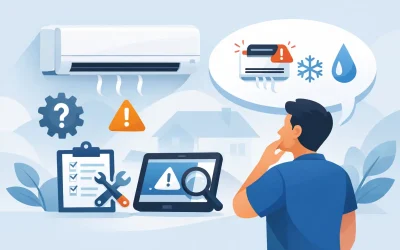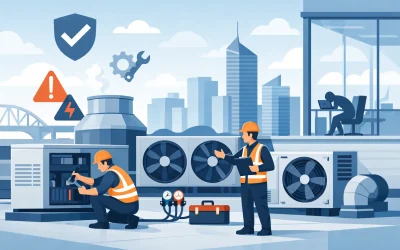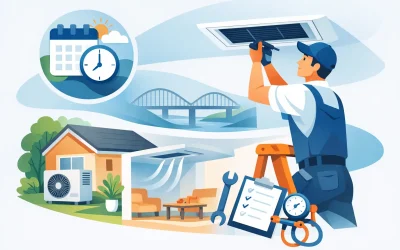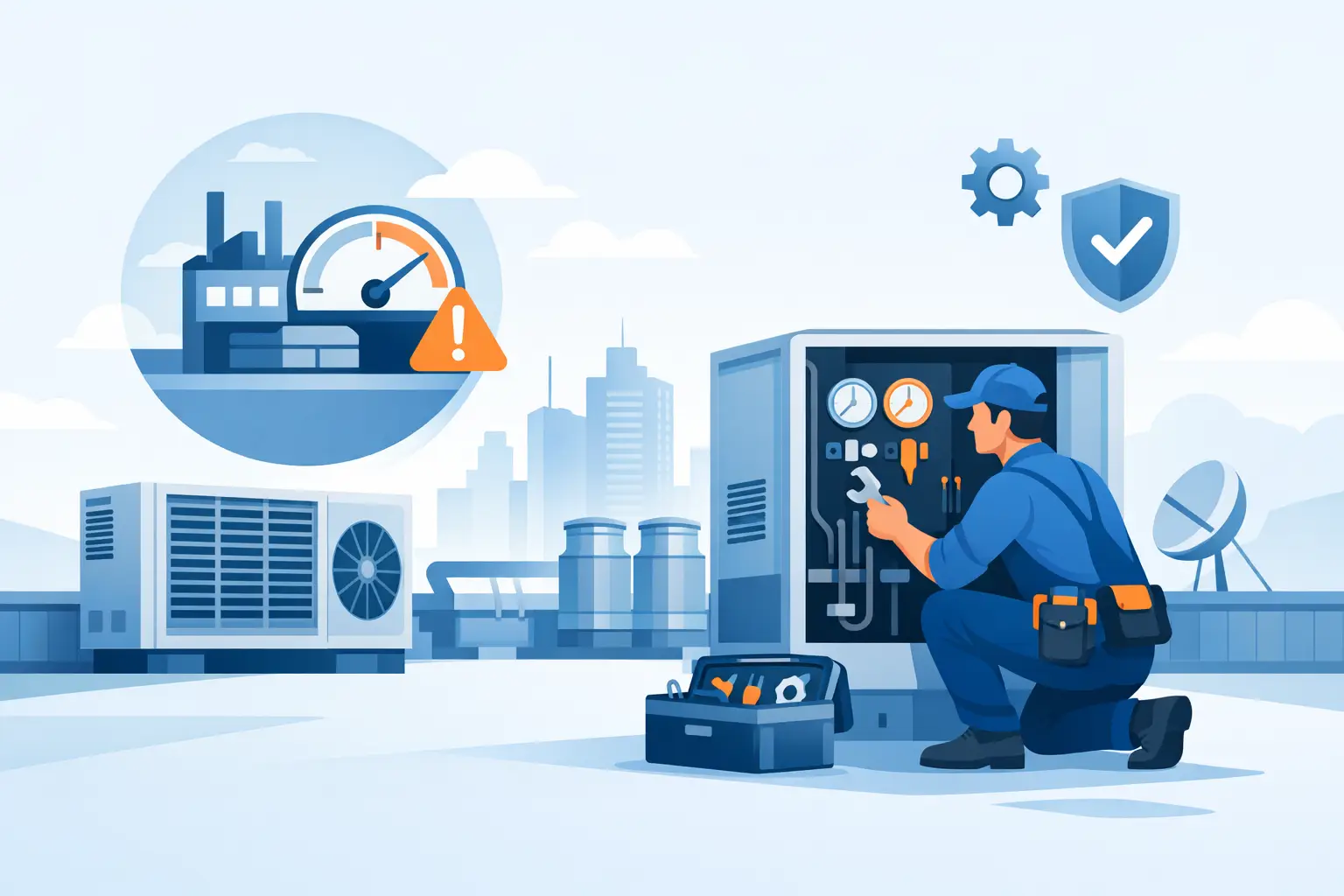
A failed air con system in the middle of a Queensland summer rarely gives you much warning. One day the building feels fine. The next, staff are complaining, tenants are calling, equipment rooms are heating up, and you are trying to book an urgent repair while operations keep moving. That is why commercial HVAC maintenance is not just a service item on a budget. It is a risk-control measure that protects comfort, compliance, and business continuity.
For commercial properties across Brisbane and the wider region, HVAC systems work hard for long stretches of the year. Offices, schools, retail spaces, medical sites, hospitality venues, and aged care facilities all have different operating demands, but the pressure on the plant is the same. If maintenance is reactive, faults build quietly in the background. If maintenance is planned properly, most of those faults are picked up before they become expensive outages.
Why commercial HVAC maintenance matters
The biggest cost of poor maintenance is usually not the part that fails. It is the disruption that follows. A blocked drain can turn into water damage. A dirty coil can push energy bills higher for months before anyone notices. A worn belt or failing fan motor can take out a critical area at the worst possible time.
Commercial HVAC maintenance helps reduce that exposure by keeping systems clean, stable, and operating within design intent. It also gives property owners and facility managers a clearer picture of asset condition. That matters when you are planning budgets, managing compliance obligations, or trying to extend the life of existing equipment without sacrificing reliability.
There is also the energy side of the equation. HVAC is one of the biggest power users in most commercial buildings. When filters are loaded up, coils are fouled, refrigerant charge is off, or controls are drifting, the system has to work harder to deliver the same result. Energy waste often starts small, but across a full season it adds up quickly.
What good maintenance actually includes
A proper maintenance program is more than a quick visual check and a tick on a report. It should be structured around how the site is used, what equipment is installed, and how critical each area is to operations.
At a practical level, that usually means inspecting and servicing filters, fans, coils, belts, drains, electrical connections, compressors, controls, and safety devices. It can also include testing temperatures, pressures, air flow, and overall system performance so you are not relying on guesswork.
For larger sites, commercial HVAC maintenance should also cover asset audits, hygiene cleaning where needed, and early identification of components nearing end of life. That is where maintenance becomes genuinely useful. Instead of waiting for a breakdown, you can make repair and replacement decisions on your terms.
Not every building needs the same maintenance plan
This is where a lot of businesses either overspend or leave themselves exposed. There is no single maintenance schedule that suits every commercial site.
A small office with standard operating hours will not need the same level of attention as a restaurant, an aged care facility, or a building with server rooms and extended occupancy. High-use environments, high-humidity areas, and sites with strict indoor air quality expectations usually need more frequent servicing. Equipment type matters too. Split systems, ducted systems, VRV or VRF installations, and central plant all have different service requirements.
The right plan depends on operating hours, equipment age, building use, occupancy levels, and the consequences of failure. If downtime would affect patient care, food service, tenant satisfaction, or business-critical operations, maintenance needs to be more proactive.
Common issues caught through commercial HVAC maintenance
Most major failures start as smaller faults. The value of routine servicing is in catching those faults while they are still manageable.
Dirty filters and coils are among the most common issues, and they do more damage than many people realise. They reduce air flow, lower efficiency, and can put extra strain on motors and compressors. Drain blockages are another repeat offender, especially in humid conditions, where they can lead to water leaks and hygiene concerns.
Electrical wear is also a major factor. Loose connections, failing contactors, worn capacitors, and deteriorating insulation can all affect performance long before a complete breakdown occurs. Controls and sensors can drift over time as well, which means the system may still run, but not accurately or efficiently.
Then there is the simple reality of ageing equipment. Bearings wear. Belts stretch. Fan assemblies go out of balance. Refrigerant issues develop slowly. None of these are unusual. What matters is whether they are found early or left to fail in service.
Compliance, hygiene and duty of care
For many commercial sites, HVAC maintenance is also tied to broader compliance and duty-of-care responsibilities. Building owners and operators need to provide a safe and functional indoor environment. That includes ventilation performance, temperature control, and, in some settings, cleanliness of system components.
Schools, healthcare spaces, aged care environments, and hospitality venues often have a lower tolerance for system issues because occupants are more vulnerable or operations are more sensitive. In these environments, poor maintenance can create more than comfort complaints. It can affect health outcomes, food safety, or service delivery.
Hygiene cleaning is worth special attention here. If coils, filters, and drain trays are not cleaned properly, biological growth and debris can become a recurring issue. That affects air quality and can lead to odours, reduced performance, and a less healthy indoor environment.
The difference between reactive and preventative maintenance
Reactive work has its place. Parts fail unexpectedly, storms hit, systems trip, and urgent repairs are sometimes unavoidable. But if most of your HVAC spend goes on emergency callouts, after-hours labour, and rushed part replacements, the strategy is working against you.
Preventative maintenance shifts the focus from response to control. It gives technicians time to inspect properly, track trends, and deal with defects before they escalate. It also reduces the pressure of making fast decisions during a breakdown, when cost, disruption, and urgency are all at their peak.
That does not mean preventative maintenance eliminates every fault. It does mean fewer surprises, better system performance, and a much better chance of keeping the building operational during high-demand periods.
What to expect from a dependable maintenance partner
A good commercial HVAC contractor should be easy to deal with, but technically sharp. You need clear communication, realistic recommendations, and reporting that tells you what was found, what was done, and what needs attention next.
That reporting matters. If a technician flags a deteriorating component, recurring drain issue, or control fault, you should be able to use that information to plan works and avoid repeat disruptions. The best maintenance support is not vague. It is specific, practical, and tied to asset condition and site priorities.
Responsiveness matters too. In commercial environments, maintenance and breakdown support often go hand in hand. If the contractor knows your site, your plant, and your operational requirements, response times tend to be more effective because less time is spent figuring out the basics during an urgent callout.
This is where working with a local specialist can make a real difference. Big Dog Mechanical supports commercial clients with preventative maintenance, repairs, asset visibility, and practical advice that reflects how buildings actually operate in Queensland conditions.
Signs your maintenance approach needs work
If your site is seeing repeat breakdowns, uneven temperatures, rising power costs, water leaks, poor air flow, or increasing tenant complaints, the maintenance plan may be too light or too reactive. The same applies if service visits feel rushed, reports are generic, or no one can give you a clear picture of system condition.
Another warning sign is when replacement decisions are always made under pressure. If assets are regularly failing without notice, the issue may not be bad luck. It may be a lack of inspection depth, poor servicing frequency, or missing asset planning altogether.
The fix is usually not more paperwork. It is better maintenance, tailored to the building and backed by technicians who know what to look for.
A smarter way to manage long-term HVAC costs
Trying to save money by minimising maintenance often does the opposite. Systems run less efficiently, faults build up, emergency repairs become more common, and equipment life shortens. On the other hand, over-servicing low-demand assets is not efficient either.
The goal is balance. A smart maintenance program matches service intervals to site risk, system type, and operational importance. It keeps critical assets under closer watch, deals with hygiene and efficiency issues early, and gives you useful information for repair-versus-replacement decisions.
That approach usually leads to lower whole-of-life cost, not just lower short-term spend. More importantly, it reduces the kind of disruption that affects staff, customers, residents, and tenants when the system fails at the wrong time.
If your HVAC system only gets attention when something stops working, you are probably paying for the problem already. A well-managed maintenance plan gives you more control, fewer surprises, and a building that performs the way it should when conditions are at their toughest.