The first 35-degree day in Brisbane is not the time to find out your air conditioner is struggling. If you are wondering how to prepare aircon summer properly, the goal is simple – make sure it cools fast, runs efficiently and does not quit when you need it most.
A lot of summer breakdowns do not come out of nowhere. They build from dirty filters, blocked drains, worn components and systems that have been left idle since the cooler months. For homeowners, that means poor comfort and higher power bills. For businesses, it can mean complaints, downtime and pressure on staff trying to work around a system that cannot keep up.
How to prepare aircon for summer without the last-minute rush
The best time to prepare your system is before the heat settles in for good. Once demand spikes, service bookings fill quickly and small issues have more chance of turning into urgent repairs.
Start with the basics you can see and access safely. Check whether the system turns on normally, whether it reaches the set temperature, and whether airflow feels strong and even. Listen for rattles, buzzing or any change in noise level. If the unit smells musty when it starts, that is usually a sign it needs cleaning rather than another season of being left alone.
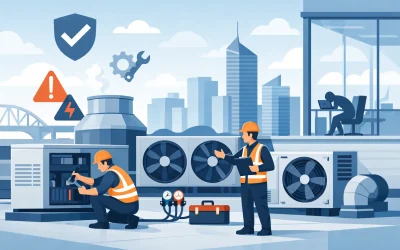
If you manage a commercial property, do not rely on a quick switch-on test alone. A system can technically run and still perform poorly under real summer load. That is where preventative maintenance matters. It gives you a clearer picture of coil condition, refrigerant performance, electrical integrity and drainage before those weak points become failures.
Start with filters, airflow and cleanliness
Dirty filters are one of the most common reasons an air conditioner underperforms at the start of summer. When airflow is restricted, the system has to work harder to deliver less cooling. That pushes up energy use and can shorten component life.
For a standard residential split system, cleaning the filters is usually a straightforward first step. If they are coated in dust, wash and dry them properly before reinstalling. If the filters are damaged, replace them. A clean filter improves airflow, helps indoor air quality and gives the system a fair chance of doing its job.
Cleanliness does not stop at the filter. Dust and grime can build up on indoor coils, fan barrels and outlet louvres, while outdoor condensers collect leaves, dirt and debris. That build-up affects heat transfer, which means the unit has to run longer to achieve the same result. In Queensland conditions, hygiene cleaning can make a noticeable difference, especially where humidity, dust and regular use combine.
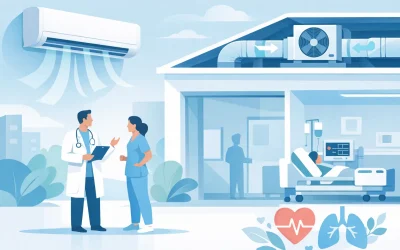
For commercial sites, poor cleanliness can affect more than comfort. In hospitality, education and aged care settings, hygiene and airflow quality matter to occupants as much as temperature control. A proper service goes further than a surface wipe-down and addresses the parts that directly influence performance.
Give the outdoor unit space to breathe
The condenser needs clear airflow around it. If it is boxed in by overgrown plants, stored items or general clutter, heat cannot escape efficiently. That makes cooling harder and can increase wear on the system.
Clear away leaves, trim back vegetation and make sure there is adequate space around the unit. Also check that the fins are not visibly bent or packed with dirt. If they are, leave that to a technician rather than trying to force a clean with the wrong tools.
Check for warning signs before summer exposes them
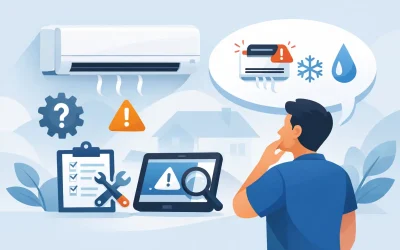
If your system has been slowly getting worse, summer will bring that problem forward quickly. Weak airflow, inconsistent room temperatures, water leaks, frequent cycling and rising energy bills are all signs the unit needs attention.
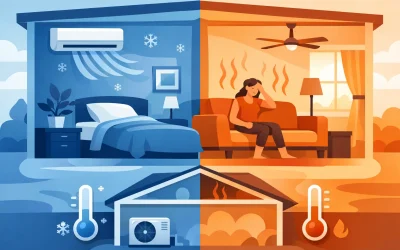
One of the biggest mistakes people make is assuming a system only needs service once it stops. In reality, air conditioners often keep running while delivering far less than they should. You might notice one bedroom never cools properly, or an office area stays warm late in the day even though the thermostat is set low. That kind of uneven performance can point to blocked coils, zoning faults, sensor issues or duct leakage.
Water around the indoor unit is another red flag. A blocked condensate drain can start as a minor maintenance issue and turn into internal water damage if left unchecked. Likewise, odd smells can indicate mould growth, stagnant moisture or electrical issues. None of those improve with time.
Electrical and control issues are worth taking seriously
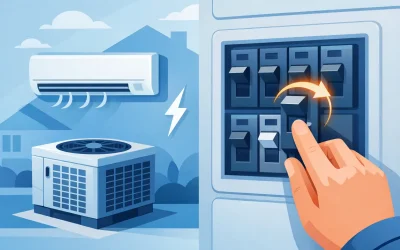
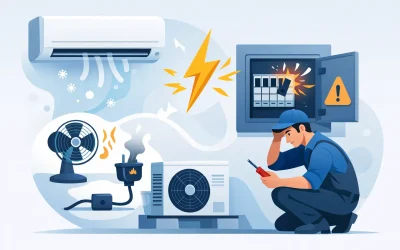
If the system trips power, struggles to start, drops out unexpectedly or does not respond properly to controls, do not ignore it. Electrical faults can worsen under summer load, especially when the system is running for longer periods.
For businesses, this is also the time to confirm timers, controllers and zoning settings are configured correctly. It is easy for schedules to drift out of line with actual occupancy, especially after seasonal changes, tenancy changes or operational adjustments. Cooling empty spaces all afternoon is wasted money. Cooling occupied areas poorly is just as costly in another way.
Why professional servicing matters when demand is about to peak
Knowing how to prepare aircon for summer includes knowing what not to DIY. Basic cleaning and visual checks are useful, but they do not replace a proper service. A qualified technician can inspect refrigerant pressures, coil performance, fan operation, drain condition, electrical components and overall system health in a way that a surface check cannot.
This matters because many summer failures come from components that were already stressed. Capacitors weaken, connections loosen, drains build up sludge and motors begin to labour. The system may still run on a mild day, then fail during a run of heat when demand is highest.
A professional service is also the best time to pick up issues with system sizing or ageing equipment. If the air conditioner has always struggled through hot spells, the problem may not be maintenance alone. The unit could be undersized for the space, the duct layout may be inefficient, or the building load may have changed over time. More people, more equipment, more glazing or altered room use can all affect cooling demand.
For commercial properties, preventative maintenance is less about reacting and more about control. It helps reduce downtime, supports compliance requirements and gives facility managers more confidence that the plant will hold up through peak season.
Residential and commercial systems need different preparation
A household split system and a larger commercial setup do not carry the same risk profile, even if the principles are similar. At home, the focus is usually comfort, running cost and avoiding a breakdown in the middle of a hot night. In a commercial setting, poor HVAC performance can affect customers, staff, stock, equipment and operational continuity.
That is why a residential pre-summer check might centre on filters, coil cleanliness and cooling performance, while a commercial inspection may also include asset condition, controls, fresh air performance, drain integrity and service planning across multiple units.
If you are responsible for a business premises, school, clinic or multi-room site, now is also the time to look beyond the unit that already causes trouble. A broader audit can identify systems nearing end of life, recurring faults and opportunities to improve efficiency before summer demand ramps up.
Energy efficiency starts before the hottest day
When people think about preparing for summer, they often think only about avoiding breakdowns. Running cost deserves just as much attention. An inefficient system can still cool the space, but it will do it at a higher cost and with more wear.
Clean components, healthy airflow and accurate controls all help the system reach temperature faster and cycle properly. So does making sure doors, windows and insulation are not working against it. If conditioned air is escaping or heat gain is excessive, the unit ends up carrying a load it was never meant to handle alone.
For some properties, a service may reveal that an upgrade is the smarter option. If the current system is ageing, unreliable or expensive to run, putting more money into repeated repairs may not stack up. That depends on the age of the unit, fault history, parts availability and how critical cooling is to the site.
In Brisbane and surrounding areas, where long hot periods put real pressure on air conditioning, taking action early usually costs less than waiting for a failure. A responsive local specialist like Big Dog Mechanical can help identify what is routine maintenance, what is a warning sign and what needs a proper plan before summer hits hard.
The best prep is not complicated – clean what you can, pay attention to early warning signs and get the system serviced before the heat turns a minor issue into a major one. When summer arrives, you want your air conditioning ready to work, not ready to explain why it cannot.