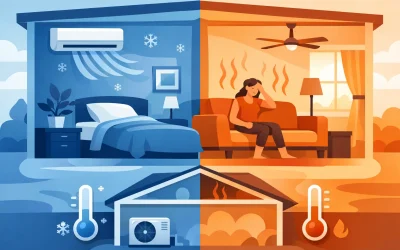
When the air con gives up in the middle of a Brisbane heatwave, it stops being an inconvenience and becomes a problem that needs action. Emergency air conditioning repairs matter because lost cooling affects comfort at home, staff productivity at work, customer experience, equipment performance and, in some settings, health and compliance.
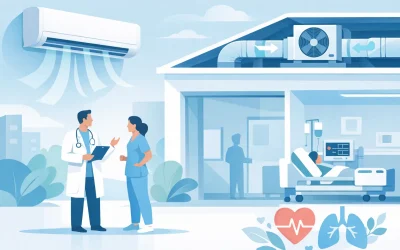
Not every fault needs a middle-of-the-night callout, but plenty do. A system that is blowing warm air through a family home on a 35-degree day is urgent. A failed unit in a server room, medical setting, aged care facility, restaurant or busy retail space can be more than urgent – it can disrupt operations, create risk and start costing money by the hour.
What counts as emergency air conditioning repairs?
The short answer is this: if the system failure creates immediate risk, major disruption or a significant loss of comfort during extreme conditions, it is probably an emergency.
For homeowners, that usually means total breakdowns, no cooling during high heat, electrical smells, water leaking into ceilings or walls, or a unit that keeps tripping power. For commercial sites, the bar is often lower because the consequences are bigger. If air conditioning failure affects customers, tenants, critical equipment, food storage areas, staff safety or compliance requirements, waiting a few days is rarely a good option.
There is also a practical difference between urgent and routine. A noisy unit that still cools might be booked quickly without being treated as a full emergency. A dead ducted system in a house full of young kids, elderly residents or anyone with health concerns is a very different call.
The first signs your system is about to fail
Most emergency breakdowns do not come completely out of nowhere. The warning signs are usually there first, but they get ignored because the system is still limping along.
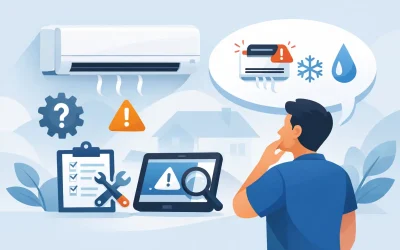
If airflow drops off, cooling becomes uneven, the unit starts short cycling, the outdoor section sounds rough, or power bills jump without explanation, the system is telling you something. Water around the indoor unit is another common warning. So is a split system that takes much longer than usual to cool a room, or a commercial system that struggles to hold set temperature during business hours.
These faults can stem from anything from failed capacitors and control issues to blocked drains, dirty coils, refrigerant loss, fan motor problems or ageing components. The exact cause matters, but the main point is simple – once performance drops, breakdown risk rises.
Why quick response matters
With air conditioning, delay usually makes the job bigger. A small fault can push extra strain onto other components. That means what could have been a straightforward repair turns into a more expensive one.
In homes, quick response helps avoid uncomfortable nights, ceiling damage from leaks and the frustration of losing cooling when you need it most. In commercial buildings, the stakes are often higher. Poor internal temperatures can affect trading conditions, staff concentration, stock, tenant satisfaction and equipment reliability. In some sectors, including hospitality, education and aged care, downtime has operational consequences well beyond comfort.
That is why emergency work is not just about speed. It is about proper fault finding, safe isolation where required and getting the system stable as quickly as possible.
What to do before the technician arrives
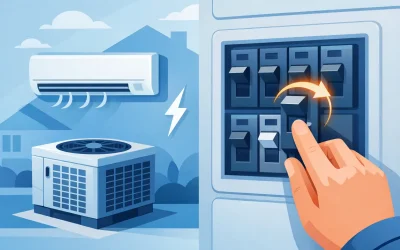
A few checks can help, provided it is safe to do so. Start with the obvious. Make sure the controller settings are correct and the system is actually calling for cooling. Check whether the circuit breaker has tripped. Look at the filter if it is easily accessible and safe to remove. If the unit is leaking, turn it off to limit damage.
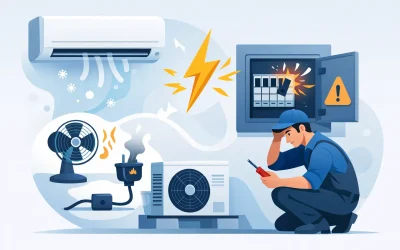
What you should not do is start opening covers, touching wiring or forcing a restart over and over. That can make the fault worse, create an electrical hazard and complicate the diagnosis when the technician gets there.
If you are managing a commercial site, it also helps to gather the basics before the callout: system type, location of the faulty unit, what the fault is doing, when it started and whether the issue is affecting one area or the whole site. That saves time and helps the repair team arrive prepared.
Emergency air conditioning repairs for homes
Residential breakdowns are rarely convenient, but some are more pressing than others. Ducted systems that stop cooling the whole house, split systems that leak heavily, units that trip safety switches, or air conditioners that produce burning smells should be assessed quickly.
Older residential systems can be especially tricky in an emergency. Sometimes the repair is simple and worth doing. Other times the failed part is one piece of a bigger reliability problem. If the unit is ageing, inefficient or using outdated refrigerant, a repair may only buy short-term relief. A good technician should tell you that plainly rather than patching it up and disappearing.
That is where experience matters. Good emergency service is not just turning up fast. It is identifying whether the best outcome is a repair, a temporary stabilisation or a recommendation to replace the system before the next failure.
Emergency air conditioning repairs for commercial sites
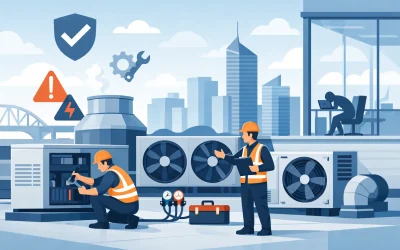
Commercial HVAC faults need a different level of planning and response. A failure in a small office is one thing. A fault in a restaurant, school, apartment complex, retail tenancy or plant room is another.
Commercial systems are often more complex, with multiple zones, larger loads and controls that interact with other services. VRV and VRF systems, package units, ducted networks and central plant all bring different fault patterns and different consequences when something goes down.
In these environments, emergency response needs to account for access, safety, business continuity and the speed of getting critical areas back online. Sometimes the immediate goal is full repair. Sometimes it is partial restoration to keep operations moving while parts are sourced or a larger rectification is planned.
That balance matters. The fastest option is not always the smartest if it ignores the bigger fault or creates repeat callouts next week.
Common causes of sudden air conditioning failure
A lot of urgent breakdowns come back to a relatively small group of issues. Electrical component failure is high on the list, especially in peak summer when systems are under heavy load. Capacitors, contactors, relays and fan motors all wear out over time.
Poor maintenance is another big one. Dirty filters and coils restrict airflow, increase operating pressure and force the system to work harder than it should. Blocked condensate drains can lead to leaks and internal shutdowns. Refrigerant problems can reduce cooling and damage compressors if ignored.
Then there is simple age. Even well-maintained systems reach a point where breakdown frequency starts to climb. For businesses relying on constant performance, that is often the tipping point where reactive repairs stop making financial sense.
How to reduce the chance of another emergency
The most reliable way to avoid emergency callouts is regular servicing with proper inspection, testing and cleaning. That sounds basic, but it is where many systems are let down. Too many units get a quick once-over when what they really need is a thorough check of airflow, electrical components, drain condition, coil cleanliness and operating performance.
For homes, a scheduled service can catch small faults before they knock the system out on the hottest day of the year. For commercial sites, preventative maintenance is even more important because the cost of downtime is usually much higher than the cost of planned servicing.
Asset audits and condition reporting also have a place, especially across multi-site or larger commercial portfolios. If you know which systems are ageing, underperforming or likely to fail, you can plan repairs or upgrades before they become urgent.
Choosing the right team when time matters
When you need urgent help, you want a team that can do more than just attend quickly. You want licenced technicians who understand both residential and commercial systems, can diagnose faults properly, communicate clearly and carry out clean, safe work under pressure.
That local capability matters in South East Queensland. Fast response is easier when the team knows the region, works across the full range of system types and has the technical depth to handle both straightforward split system faults and more complex commercial breakdowns. That is where a specialist operator like Big Dog Mechanical earns trust – not by making big promises, but by turning up, finding the fault and getting the job handled properly.
Price matters too, but emergency repairs should never be judged on callout fee alone. The cheaper option is not cheaper if the diagnosis is poor, the fault returns or the repair causes more downtime later. Good service means clear advice, practical options and work that stands up once the weather turns rough again.
Air conditioning failures have a habit of showing up at the worst possible time. The best response is not panic – it is getting the right people onto it quickly, protecting the space in the meantime and treating the breakdown as a sign to look at the bigger picture, not just the immediate fix.