When a commercial system is undersized, badly placed or rushed through install, the problems show up fast – hot spots, rising power bills, tenant complaints and breakdowns right when the site is busiest. A proper commercial air conditioning installation guide starts well before the units arrive on site. The best outcomes come from solid planning, the right system design and an install team that understands performance, compliance and how the building actually operates.
For property owners, facility managers and business operators, that matters because commercial HVAC is not just about keeping people comfortable. It affects energy use, equipment life, indoor air quality and whether your site can keep trading without disruption. In sectors like hospitality, education, retail and aged care, mistakes at installation stage usually cost more later.
What a commercial installation really involves
Commercial air conditioning is rarely a simple swap-over job. Even where an old system is being replaced, the existing layout may no longer suit the load, occupancy or hours of operation. Changes to tenancy fit-out, equipment, glazing, server loads or room use can all shift what the site actually needs.
That is why the first step is not choosing a brand. It is understanding the building. A good installer looks at floor area, heat load, fresh air requirements, ceiling space, access, electrical capacity, noise constraints and how different zones are used through the day. A café kitchen, a classroom and an open-plan office can sit in similar-sized spaces and still need very different HVAC solutions.
The right system also depends on the scale and complexity of the site. Split systems may suit smaller tenancies or individual rooms. Ducted systems can work well where consistent coverage is needed across defined areas. Larger buildings may need VRV or VRF systems, packaged units or central plant integration. There is no one-size-fits-all answer, and anyone treating it that way is usually pricing for speed, not for long-term results.
Commercial air conditioning installation guide: planning first
If you want the installation to run smoothly, planning needs to cover more than capacity. Timing, access and site coordination are just as important. In an operating commercial building, install works often have to happen around staff, customers, patients, students or tenants. That can affect staging, after-hours work and the sequence of trades.
A proper scope should account for where indoor and outdoor equipment will go, how pipework and duct runs will be managed, what structural supports are needed, and whether cranes, lifts or roof access are involved. It should also deal with condensate drainage, controls, switchboards and any building management system connection.
This is the stage where experienced contractors save clients a lot of grief. They identify problems before they become delays. For example, limited ceiling void space may rule out one option entirely. Existing electrical infrastructure may need upgrading. A roof location that looks fine on paper may create servicing issues later or expose equipment to avoidable weather impact.
Cost matters, of course, but installation value is not just the cheapest quote. A lower upfront price can mean weaker design, reduced access for maintenance, poor zoning or equipment that struggles through peak summer demand. That tends to show up as higher operating costs and more callouts over the life of the system.
Choosing the right system for the building
The best system is the one that fits the building and the way it is used. That sounds obvious, but it is where plenty of commercial installs go wrong.
Split and multi-split systems
These can be a practical option for smaller commercial spaces, single tenancies, consulting rooms or fit-outs where individual control is useful. They are often quicker to install and can be cost-effective, but they are not always ideal if the site has many separate areas, long operating hours or expectations around integrated control.
Ducted systems
Ducted air conditioning suits businesses wanting cleaner aesthetics and broader coverage across a defined tenancy. It can deliver a neater finish and consistent comfort, though performance depends heavily on design quality. Poor duct layout, weak zoning or inadequate return air planning can leave parts of the space too warm, too cold or wasteful to run.
VRV and VRF systems
For larger or more complex sites, VRV and VRF systems offer flexibility, zoning control and good efficiency when designed properly. They suit offices, education spaces, mixed-use areas and buildings where different rooms need different loads at different times. The trade-off is that design, commissioning and future servicing all need a higher level of technical capability.
Compliance, safety and installation standards
A commercial air conditioning installation guide would be incomplete without compliance. In Queensland, commercial HVAC work has to line up with licensing requirements, Australian standards, electrical rules and building-specific obligations. Depending on the project, that can also involve ventilation requirements, mechanical services coordination, fire penetrations and access standards for maintenance.
This is not paperwork for the sake of it. Compliance protects the building owner and the occupants. If penetrations are not sealed correctly, if drainage is poor, or if electrical works are not properly coordinated, the risk sits with the client long after the installer has left site.
It is also worth paying attention to commissioning. Installation is only part of the job. Systems need to be tested, balanced where required, checked under load and set up for the way the site will actually operate. Controls should be explained clearly, and handover should include the practical details the client needs to manage the system day to day.
Why installation quality affects running costs
A commercial HVAC system can look fine on day one and still perform badly over time if the install quality is poor. Incorrect refrigerant charge, bad airflow, weak duct sealing, poor controller setup or oversized equipment can all drag down efficiency.
That matters in Brisbane and across the wider region because systems work hard through long warm periods and humidity puts extra pressure on performance. A system that short cycles, struggles to dehumidify or runs harder than it should will cost more every month. It may also wear out faster.
Good installation gives you a better starting point for maintenance as well. Service access should be practical, filters should be reachable, condensers should have proper clearance, and the layout should support routine inspections. If technicians cannot access components easily, maintenance often takes longer, costs more and gets skipped until something fails.
Commercial air conditioning installation guide: common mistakes to avoid
The biggest mistake is treating commercial air conditioning like a commodity. It is easy to compare unit prices, but that misses the bigger picture. Design, controls, zoning and workmanship have more impact on long-term performance than many buyers realise.
Another common issue is underscoping the job. A quote that excludes electrical upgrades, roof supports, access equipment, after-hours work or controls integration may look competitive at first, then climb once the real site conditions are dealt with.
Oversizing is another trap. Some clients assume bigger means safer. In reality, oversized systems can cycle poorly, waste energy and provide weaker humidity control. On the other hand, undersized equipment will run flat out and still struggle during peak load. Proper heat load assessment matters.
There is also the question of future use. If a tenancy is likely to expand, change fit-out or add heat-generating equipment, that should be discussed up front. It may affect system selection, controls or how pipework and wiring are staged for later upgrades.
What to expect during the installation process
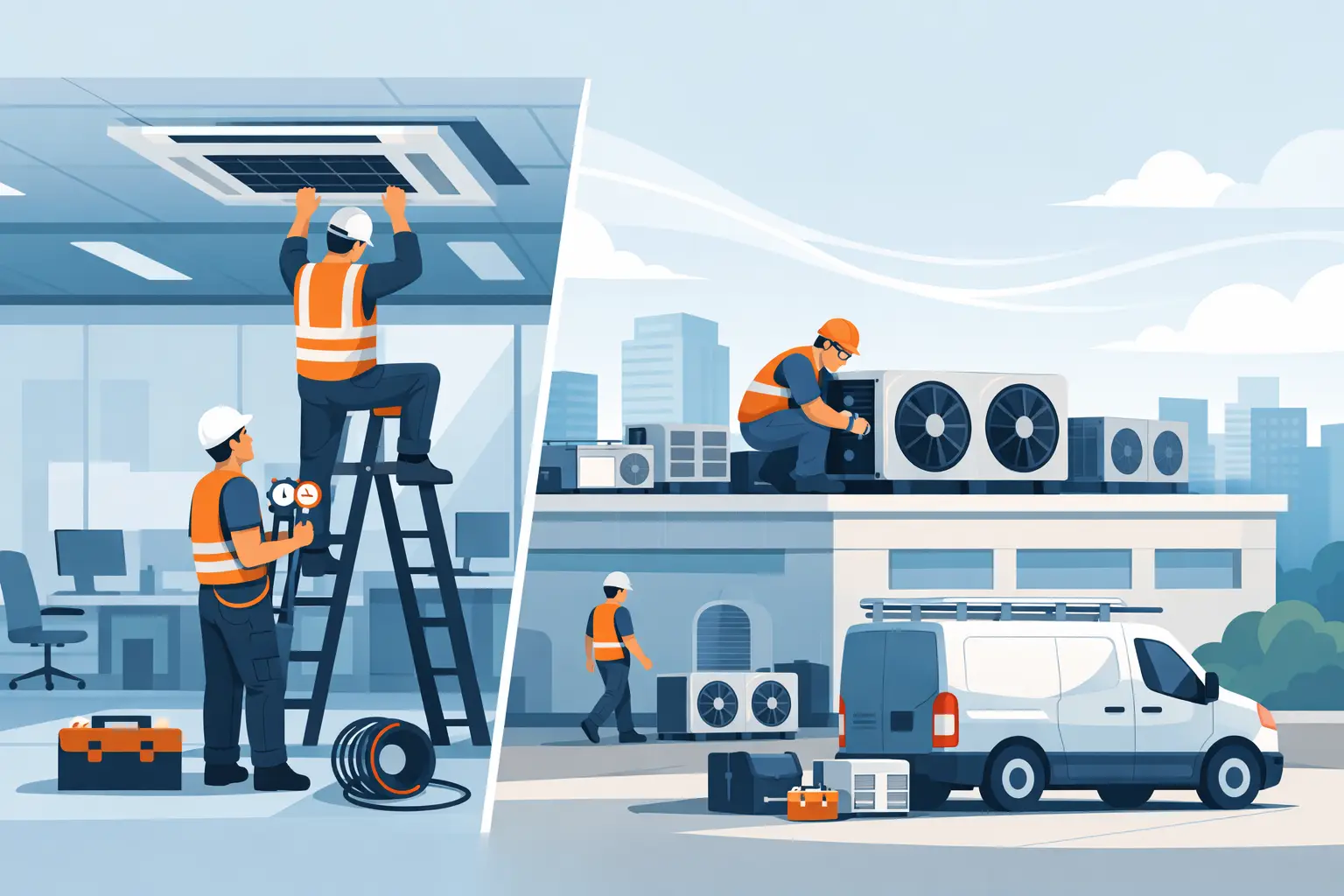
Most commercial projects follow a similar path, even if the scale varies. First comes site inspection and system design. Then the scope, equipment selection and programme are confirmed. Once works begin, the install team coordinates equipment placement, pipework, ducting, drainage, electrical connections and controls. After that, the system is commissioned, tested and handed over.
On occupied sites, communication is just as important as technical work. Businesses need clear timing, site access arrangements and realistic advice about noise, outages or temporary disruptions. A dependable contractor does not leave clients guessing.
If the job is being completed in a live environment, staging can make a big difference. It may be better to replace one area at a time, keep critical rooms operational or complete noisier works outside trading hours. That approach is not always the cheapest line item, but it is often the smarter commercial decision.
Getting better value from day one
The best installation decisions usually come from asking better questions. Not just what system is cheapest, but what system will be efficient to run, easy to maintain and suited to the building for years, not months.
Ask how the load has been assessed. Ask what access will be like for servicing. Ask how zoning will work in practice. Ask what happens if your operating hours change or one area of the building runs hotter than another. And ask who will support the system after handover, because install quality and ongoing service are closely linked.
For many businesses, the strongest result comes from working with a local HVAC team that can handle the full picture – design, installation, maintenance and urgent repairs when needed. That continuity matters. It means the people installing the system are also thinking about reliability, not just completion.
A commercial air conditioning install should leave you with more than cool air. It should give you a system that suits the site, controls costs and keeps the building working the way it should. Get that part right, and everything that follows becomes easier.