When your power bill jumps after a run of hot Queensland days, the air con usually gets the blame. Fair enough too. For most homes and many businesses, cooling is one of the biggest energy costs through summer. The good news is the best ways to lower cooling costs are usually practical, achievable and far less complicated than people expect.
Some fixes are quick. Others need a bit of planning. The main point is this: if your system is working harder than it should, you are paying for it every day it runs.
The best ways to lower cooling costs start with system performance
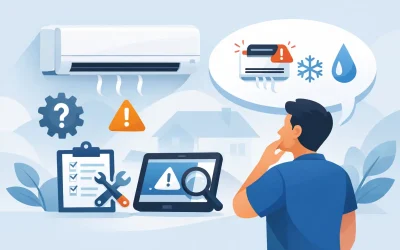
A lot of people look at usage first and forget about condition. If the system is dirty, low on performance or overdue for service, it can chew through power without delivering the comfort you expect. That means longer run times, uneven temperatures and more strain on parts.
A proper service is often the fastest way to improve efficiency. Filters, coils, fan components, drains and electrical connections all affect how well the unit performs. In commercial settings, small performance losses across multiple systems can add up quickly. In homes, even one struggling split system can push bills up across the season.
Preventative maintenance also matters because poor efficiency and breakdown risk usually go together. If a unit is already under stress, it is more likely to fail during peak demand when you need it most.
Don’t ignore dirty filters and coils
Dirty filters are one of the most common causes of wasted energy. Restricted airflow forces the system to run longer to move the same volume of cooled air. Dirty indoor or outdoor coils create the same problem from another angle by reducing heat transfer.
For homeowners, regular filter cleaning is a simple habit that can make a real difference. For business operators and facility managers, scheduled maintenance is the better option because it keeps performance consistent across the whole site rather than relying on ad hoc checks.
Set temperatures properly, not aggressively
One of the most effective ways to cut cooling costs is also one of the easiest. Don’t set the thermostat far colder than necessary. It will not cool the space faster, but it will increase energy use and can create that familiar cycle where rooms become too cold, the system gets adjusted again, and efficiency goes out the window.
For most occupied spaces, a steady setting around 24 to 26 degrees is a sensible starting point in summer. It depends on the building, humidity, occupancy and the type of system, but the principle stays the same. Every degree lower can push energy consumption higher.
In commercial environments, this is often more of a management issue than a technical one. If different people keep changing settings throughout the day, costs creep up fast. Locked controls, programmed schedules or zoning strategies can help keep usage under control without affecting comfort.
Use zoning to cool the rooms that matter
Cooling empty space is one of the easiest ways to waste money. If you have a ducted system with zoning, use it properly. If you do not, it may be worth reviewing whether your current setup suits how the property is actually used.
In homes, that might mean cooling living areas in the evening rather than the whole house. In offices, classrooms, hospitality venues or aged care spaces, zoning lets you match operation to occupancy, which is where the savings usually are.
There is a trade-off here. More control generally means more planning, and in some systems zoning needs to be set up correctly to avoid airflow issues. But when it is done properly, targeted cooling can reduce unnecessary run time without compromising comfort.
Improve insulation and seal air leaks
If cooled air is escaping, your system is spending money to condition the outdoors. That sounds obvious, but it is one of the most common reasons buildings stay uncomfortable even with the air con running flat out.
Poor insulation, gaps around doors and windows, worn seals, unshaded glass and draft points all add load to the system. In Brisbane conditions, solar heat gain is a major factor, especially in west-facing rooms or commercial spaces with large glazed areas.
The fix is not always a full building upgrade. Sometimes it is as simple as sealing gaps, improving window coverings or addressing one problem area that causes the whole system to work harder. In other cases, insulation upgrades are worth serious consideration because they reduce both cooling and heating costs over time.
Window coverings can make a bigger difference than expected
Blinds, curtains, awnings and external shading help reduce heat gain before it builds up indoors. This is especially useful in older homes and commercial tenancies where glazing performance is not ideal. It is not a replacement for efficient air conditioning, but it can significantly reduce the load placed on the system during the hottest part of the day.
Check whether your system is the right size
Bigger is not always better, and smaller is rarely cheaper in the long run. An oversized unit may short cycle, which affects comfort, humidity control and efficiency. An undersized unit can run continuously and still struggle to hold temperature. Both situations lead to unnecessary operating costs.
This is a common issue in properties where the air conditioning was selected years ago, before renovations, layout changes or occupancy changes. A room extension, new equipment, altered operating hours or increased foot traffic can all change the cooling load.
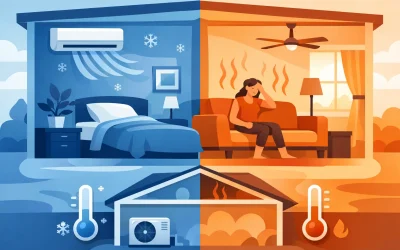
If your system never seems to stop, or if some areas are always too warm while others are freezing, it is worth getting the setup reviewed. Correct system selection is one of the best ways to lower cooling costs because it addresses the problem at the source rather than trying to manage around it.
Upgrade older equipment when repairs become a pattern
There is a point where keeping an old system alive costs more than replacing it. That point arrives sooner if the unit is inefficient, unreliable or uses outdated technology.
Modern systems are generally better at controlling output, managing energy use and maintaining stable temperatures. Inverter technology, better controls and improved component efficiency can make a noticeable difference to operating costs, particularly in properties where the system runs for long periods.
That does not mean every older unit should be replaced immediately. If a system is still in good condition and performs well after service, replacement may not stack up yet. But if repair callouts are becoming regular, or if power bills remain high despite reasonable usage habits, an upgrade is often the more practical decision.
Use timers, scheduling and smart controls properly
Running the system only when needed sounds basic, yet plenty of properties still rely on manual operation. That often means units are left on longer than necessary, started too early or run after everyone has left.
Timers and programmable controls help create consistency. In homes, they can prevent overnight overuse or stop the unit from running while the house is empty. In commercial buildings, scheduling is even more valuable because it aligns cooling with business hours, staff movement and occupancy patterns.
Smart controls can help, but only if they are set up sensibly. Technology on its own does not guarantee lower bills. The benefit comes from using data and automation to reduce wasted run time, not from adding complexity for the sake of it.
Keep outdoor units clear and airflow unrestricted
Outdoor condensers need space to reject heat effectively. If they are boxed in by overgrown plants, blocked by storage or covered in grime, performance can drop and power use can rise.
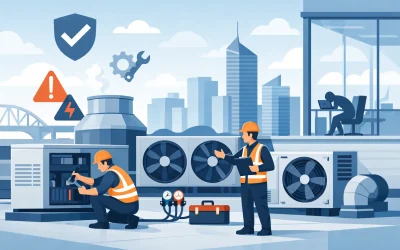
This is a simple check that gets missed all the time. The unit should have clear airflow around it, and the surrounding area should be kept tidy. In commercial sites, access can be harder due to plant locations or rooftop setups, which is another reason routine inspections matter.
Don’t overlook ductwork and air distribution
A high-performing air conditioner can still waste energy if the ducting is leaking, poorly insulated or badly balanced. Conditioned air lost in roof spaces or plant areas is money gone. Uneven distribution also causes people to over-adjust controls, which drives usage up again.
This matters most in ducted residential systems and larger commercial installations. If some rooms never get enough airflow, or if the system seems to be working hard without consistent results, ductwork should be part of the conversation.
The best ways to lower cooling costs depend on the building
There is no single fix that suits every property. A family home with one ageing split system has different issues from a retail tenancy, a school or an aged care facility. The right approach depends on the equipment, the building envelope, the layout and how the space is used day to day.
That is why the most reliable results usually come from looking at cooling costs as an operating issue, not just a thermostat issue. Servicing, setup, controls, insulation and system suitability all work together. If one piece is off, the whole system becomes more expensive to run.
For property owners and managers across Brisbane, that practical approach is where real savings tend to happen. Big Dog Mechanical sees it regularly – once the system is clean, correctly set up and matched to the space, comfort improves and wasted energy drops.
If your cooling bills feel too high, start with the basics and be honest about what the system is doing. A unit that runs longer, cools unevenly or needs constant adjustment is usually telling you something. Fix the cause, and the savings tend to follow.