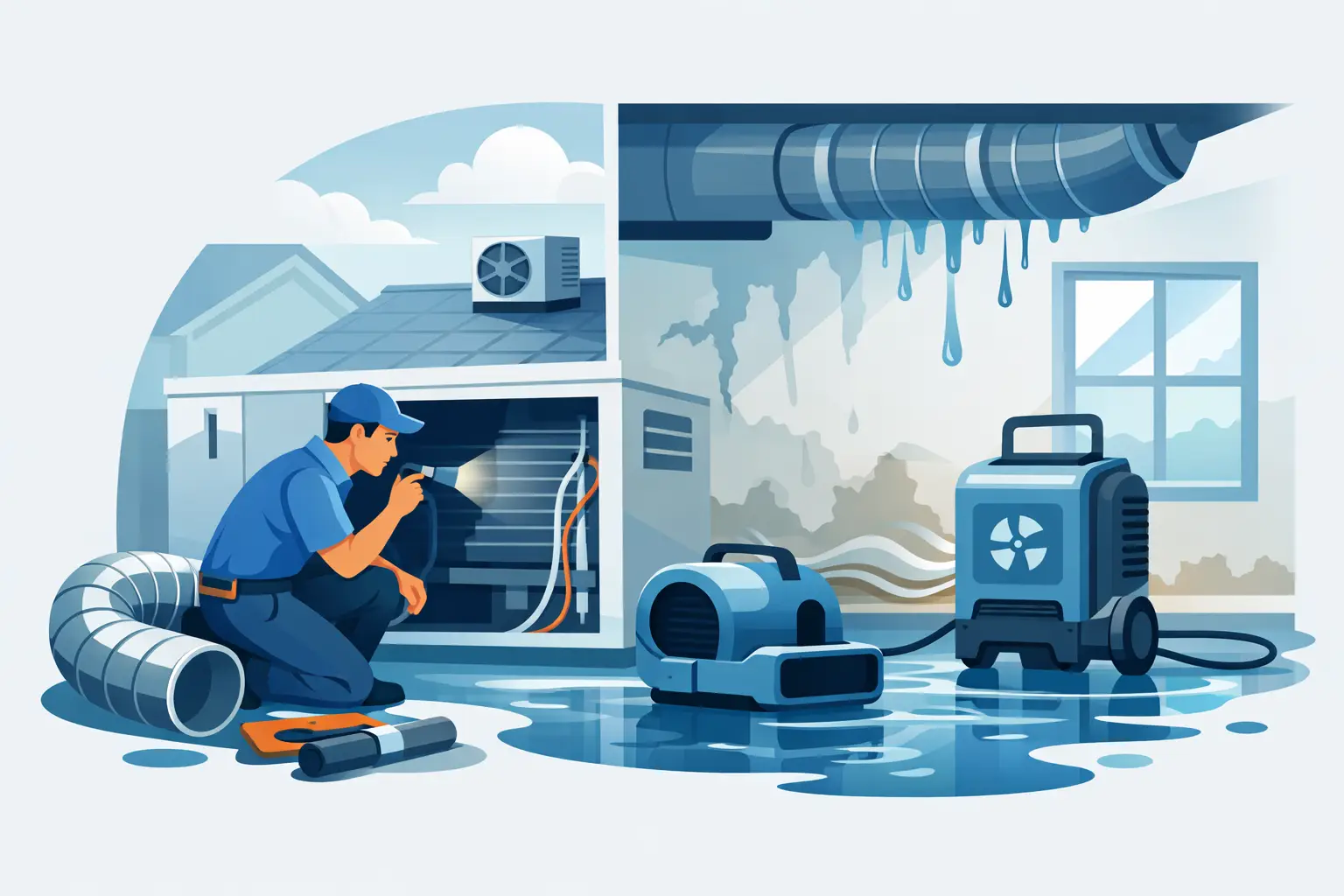
Water in an HVAC system is never a small issue. What looks like a bit of moisture around a ceiling cassette, duct run or plant room unit can quickly turn into electrical faults, mould growth, corrosion and poor indoor air quality. That is why HVAC restoration after water damage needs a proper assessment, not a quick restart and a bit of hope.
For homeowners, that can mean avoiding an expensive breakdown a few weeks after a leak. For facility managers and business operators, it can mean reducing downtime, protecting occupants and staying on top of compliance. The right response depends on where the water came from, how far it spread and which parts of the system were exposed.
What water damage does to HVAC systems
HVAC equipment is built to manage temperature, airflow and condensation within normal operating limits. It is not designed to handle floodwater, roof leaks, burst pipes or storm ingress moving through electrical components, insulation and ductwork.
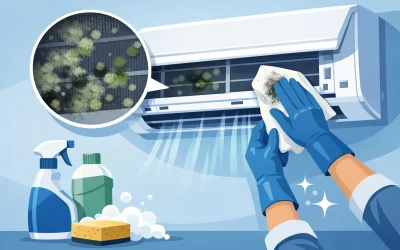
Once water gets into the system, the risks stack up quickly. Motors, control boards, contactors and sensors can short out or fail later due to corrosion. Wet insulation around ducts or pipework can lose performance and become a mould risk. Filters and internal linings can hold moisture and contaminants. If floodwater is involved, there is also the issue of contaminated water entering the system, which changes the cleaning and replacement approach completely.
A common mistake is assuming the unit is fine because it still turns on. That is not a reliable test. A system may operate after exposure, then fail once corrosion sets in or hidden moisture affects wiring and controls.
HVAC restoration after water damage starts with safety
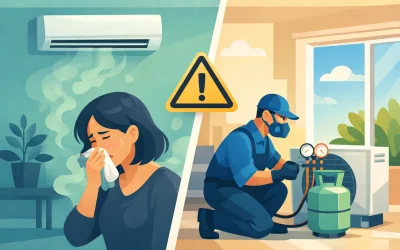
Before anything else, the system needs to be isolated and assessed safely. If there has been significant water entry, especially around powered equipment, switching the unit back on can create a serious electrical hazard.
The first step is to identify the source of water and stop it. A roof leak, blocked drain, burst flexi hose, overflowing condensate tray or storm event all need to be dealt with before restoration begins. Otherwise, any cleaning or repair work is likely to be wasted.
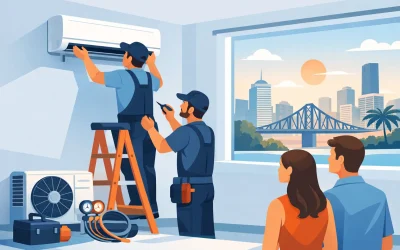
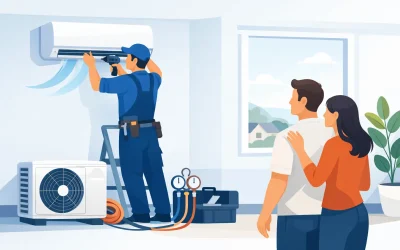
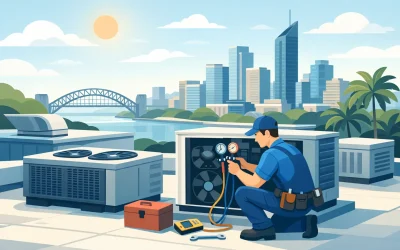
From there, a technician should inspect the affected equipment and surrounding areas. That includes indoor units, outdoor units if they were inundated, ductwork, grilles, insulation, return air paths, electrical isolators, switchboards serving the system and any building materials that may have absorbed water around the installation.
Not every water event is the same
The right restoration plan depends heavily on the type of water involved.
Clean water from a supply line leak is one thing. It may still damage electrical parts and insulation, but the contamination risk is lower. Rainwater ingress from a storm can be less predictable, particularly if it has travelled through ceiling cavities carrying dust, insulation fibres and debris. Floodwater is the biggest concern because it can contain silt, sewage, chemicals and biological contaminants. In those cases, restoration often means replacing affected porous materials rather than trying to salvage them.
This is where trade-offs matter. In some cases, targeted cleaning and component replacement is the sensible option. In others, especially with older equipment or contaminated water exposure, full replacement of sections of the system is the safer and more cost-effective call.
Key areas that need inspection
A proper restoration job goes beyond the visible water mark on the casing.
Electrical components are high on the list. Printed circuit boards, relays, capacitors, terminals and wiring can all be compromised by moisture. Even if they dry out, residue and corrosion can affect long-term reliability.
Fans and motors also need close attention. Water can damage bearings, affect lubrication and lead to noisy or inefficient operation later. Coils should be checked for contamination and cleaned where appropriate. Drain pans and condensate lines need inspection too, especially if poor drainage caused the issue in the first place.
Ductwork is often where hidden problems sit. Flexible duct with wet internal lining, soaked insulation or sagging sections can become a hygiene and performance issue. Sheet metal ductwork may be recoverable if cleaned and dried properly, but internal insulation or acoustic lining may not be.
Filters are generally replaced, not dried and reused. If the system has been running while wet, contamination may have spread further than expected through return and supply air paths.
HVAC restoration after water damage in ducted systems
Ducted systems usually need more careful investigation because water can travel a long way before it shows up. A leak near one section of ceiling can affect branches, insulation and return air components across a larger area.
If duct insulation has become saturated, its thermal performance drops and microbial growth becomes more likely. In commercial settings, this can quickly turn into complaints about odours, comfort and air quality. In residential settings, people often notice the smell first, then rising running costs and uneven cooling.
In many cases, sections of ducting or insulation will need replacement rather than surface cleaning alone. The goal is not just to get air moving again. It is to restore clean airflow, proper efficiency and confidence that hidden moisture is not sitting above the ceiling causing a second problem.
Cleaning, drying and replacement – what actually works
Restoration should be based on material type and contamination level. Non-porous components such as some metal surfaces may be cleaned, disinfected where required and dried thoroughly. Porous materials such as insulation, some internal liners and heavily contaminated filters are usually replaced.
Drying matters, but drying alone is not restoration. Blowing air through a system without addressing wet insulation, dirty coils or affected controls can spread contaminants and make the problem worse. Equally, aggressive cleaning is not always enough if water has penetrated layered materials.
A sound process usually involves isolating affected areas, removing unsalvageable materials, cleaning recoverable components, verifying dryness, testing electrical integrity and then recommissioning the system. For commercial sites, documentation may also be important for maintenance records, insurers or compliance requirements.
When replacement is the better option
There are times when repairing water-damaged HVAC equipment is false economy. If a unit is older, has major electrical exposure or was affected by contaminated floodwater, replacement can be the smarter move.
That is particularly true when the cost of labour, parts and hygiene restoration starts approaching the value of a new system. New equipment may also improve efficiency and reliability, which matters for businesses managing operating costs and homeowners tired of repeat callouts.
This is one of those situations where a straight answer matters. A good contractor should tell you whether restoration is realistic or whether you are better off starting fresh.
Why fast action makes a difference
Time matters with water damage. The longer moisture sits in equipment, ducts and surrounding materials, the higher the chance of corrosion, mould and secondary building damage.
In Brisbane and surrounding areas, humidity can make that window even tighter. Materials do not always dry quickly on their own, especially in ceiling cavities and plant spaces with limited airflow. A prompt inspection can stop a smaller issue becoming a full system hygiene problem.
For commercial properties, speed also affects business continuity. Restaurants, care facilities, schools and offices do not have much room for extended HVAC downtime, especially in warm conditions. A fast, practical response helps reduce disruption while keeping safety front and centre.
Choosing the right team for the job
HVAC restoration after water damage sits across several areas at once – electrical safety, mechanical performance, hygiene, airflow and, in some sites, compliance. It is not just a cleaning task and it is not just an air con repair.
You want a team that can inspect the full system, explain what can be salvaged, identify hidden issues and carry out repairs or replacement properly. That includes split systems, ducted systems, VRV or VRF setups and larger commercial plant where downtime and documentation matter just as much as the repair itself.
For Queensland property owners and facility managers, local response also counts. When leaks, storms or internal water events hit, you need technicians who can move quickly and make practical decisions on site. That is where an experienced specialist like Big Dog Mechanical adds value – not with guesswork, but with a clear plan to make the system safe, clean and reliable again.
If your HVAC system has been exposed to water, do not wait for a burning smell, a mould complaint or a full breakdown to confirm there is a problem. The best result usually comes from acting early, getting the system checked properly and fixing what is needed before hidden damage gets expensive.