If your air con is still running but struggling through a Brisbane summer, you are already in the danger zone where small issues turn into expensive ones. This air conditioning system upgrade guide is built for property owners, facility managers and homeowners who need to decide whether to repair, retrofit or replace – and want to get it right the first time.
An upgrade is not always a full replacement. Sometimes it means replacing ageing equipment with a more efficient system. Sometimes it means improving controls, zoning, ventilation or ductwork so the system you already have can perform properly. The right path depends on age, condition, running costs, building layout and how the space is actually used.
When an air conditioning system upgrade makes sense
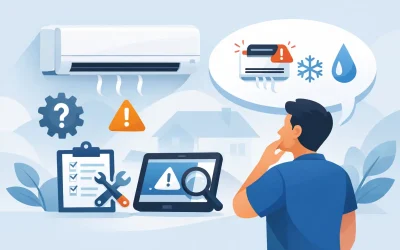
The clearest sign is when your system still works, but no longer works well enough. That might look like rooms that never reach set temperature, energy bills creeping up, frequent breakdowns, noisy operation or poor airflow. In commercial sites, it often shows up as complaints from staff, tenants or customers, along with maintenance costs that keep landing on your desk.
Age matters, but it is not the only factor. A ten-year-old system that has been serviced properly may still have life in it. A younger system that was undersized, poorly installed or worked hard in a harsh environment may already be costing you more than it should. If replacement parts are becoming harder to source, refrigerant is outdated, or repairs are getting repeated rather than resolved, an upgrade usually deserves serious attention.
For commercial buildings, compliance and operational risk are also part of the picture. If failure would disrupt trading, tenant comfort, food storage, patient care or equipment rooms, delaying an upgrade can become more expensive than planning one properly.
Start with the problem, not the product
A lot of bad upgrade decisions start with one question: what unit should we buy? The better question is: what is not working in the current setup?
If the issue is capacity, a bigger unit might help. If the issue is poor duct design, air leakage or bad zoning, a bigger unit may only mask the real problem while driving up running costs. If the issue is controls, sensors or inconsistent usage across different areas, smarter control may deliver better results than a full system swap.
That is why a proper assessment matters. For homes, this means looking at room sizes, insulation, orientation, occupancy and usage patterns. For commercial properties, it usually goes further – plant condition, load changes, tenancy fit-outs, fresh air requirements, access constraints, after-hours demand and maintenance history all come into play.
Air conditioning system upgrade guide for homes
For homeowners, the main drivers are usually comfort, efficiency and reliability. If your split system takes too long to cool, struggles in peak heat or sounds like it is about to rattle off the wall, it is probably time to look at options.
Split system upgrades are often straightforward when the home layout still suits the current setup. The gains usually come from improved efficiency, quieter operation and better temperature control. If your household has changed, though, a like-for-like replacement may not be enough. Renovations, enclosed patios, extra bedrooms or more people at home can all change the load.
Ducted upgrades need a closer look. It is common to focus on the indoor and outdoor units and ignore the ductwork, grilles and zoning. That is a mistake. If the ducts are undersized, damaged or poorly laid out, new equipment will still underperform. A quality upgrade should look at the full system, not just the box with the brand name on it.
There is also the comfort trade-off. Higher efficiency systems can deliver better control and lower power use, but the cheapest option up front is rarely the cheapest over time. If you plan to stay in the house, it often pays to choose a system sized properly for the space and installed cleanly, rather than chasing the lowest quote.
What commercial upgrades need to consider
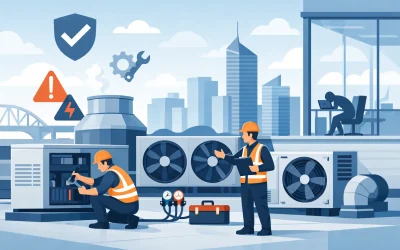
Commercial air conditioning upgrades are less forgiving because downtime has a cost. In hospitality, poor cooling can affect customers and staff. In education and aged care, comfort and air quality are not optional. In office and retail environments, inconsistent temperatures create complaints quickly and can impact tenancy satisfaction.
The right upgrade approach depends on the building and the plant. Some sites suit staged replacement to spread capital cost and reduce disruption. Others are better served by a full upgrade because patching sections of an ageing system only extends the problem. VRV and VRF systems may offer flexibility where different zones have different demands, while central plant upgrades can make sense in larger facilities where efficiency and control improvements deliver strong long-term value.
Controls are often overlooked. If your site is heating and cooling at the wrong times, conditioning empty areas, or lacking visibility over faults and performance, a controls upgrade can deliver real savings. It can also make maintenance more proactive instead of reactive.
Repair, retrofit or replace?
This is where experience counts. A repair makes sense when the fault is isolated, the system condition is otherwise good and the repair cost is proportionate to the remaining life of the unit. A retrofit suits situations where the core system is viable but one part of the setup is holding it back – think controls, zoning, ventilation or selected components.
Replacement is usually the smarter move when the unit is unreliable, inefficient or no longer suited to the space. It also makes sense when repair costs are stacking up across multiple visits. One big invoice is frustrating. Four medium ones over a summer, plus lost comfort and downtime, are worse.
A simple rule helps here: do not judge the decision by the last breakdown alone. Look at the full pattern over the past few years.
The biggest upgrade mistakes to avoid
Undersizing and oversizing both cause problems. A unit that is too small will run hard and still struggle. A unit that is too large can short cycle, control humidity poorly and wear components faster. Correct sizing is not guesswork.
Another common mistake is replacing equipment without addressing the rest of the system. Dirty or damaged ducts, poor return air, failed dampers, blocked drains and neglected maintenance will keep causing issues no matter how new the unit is.
Timing matters as well. Waiting until total failure in the middle of peak season limits your options. You may end up taking what is available rather than what is best suited to the site. Planned upgrades usually mean better equipment selection, cleaner installation and less disruption.
For businesses, the other mistake is focusing only on install cost. Energy performance, maintenance access, spare parts availability and after-hours support all affect the true cost of ownership.
How to plan an upgrade properly
Start with an inspection and honest assessment. You need to know what equipment you have, how it is performing, what condition it is in and whether the current layout still suits the building. For larger sites, asset audits and maintenance records can reveal patterns that single callouts miss.
From there, weigh up three things: capital cost, operating cost and risk. A cheaper option may suit a short-term hold property or a tenancy in transition. A higher-quality upgrade may be the better decision for an owner-occupier, family home or commercial site where failure would create major disruption.
It also helps to ask practical questions early. How much downtime is acceptable? Will works need to happen after hours? Is access difficult? Will the upgrade need to be staged? Are there compliance or ventilation issues that should be tackled at the same time? These are the questions that shape a smooth job rather than a messy one.
In Brisbane and across surrounding suburbs, system performance is tested hard by long cooling seasons, high humidity and heavy summer demand. That is why local conditions matter. A system that looks fine on paper still needs to suit the building, the load and the way the space is used day to day.
What a good upgrade should deliver
A proper upgrade should do more than cool the space again. It should improve reliability, reduce avoidable running costs and give you better control over comfort. In commercial settings, it should also support continuity – fewer emergency callouts, less downtime and clearer visibility over system condition.
Just as importantly, it should leave you with a system that can be maintained properly. Clean access, sensible layout and a serviceable design make a real difference over the life of the equipment. That is where experienced contractors separate themselves from box-swappers.
If you are weighing up whether to repair or move forward with an upgrade, the best next step is not rushing into a replacement. It is getting clear on what your current system is really costing you – in power, in repairs, in complaints and in risk. Once you know that, the right decision usually becomes a lot easier.