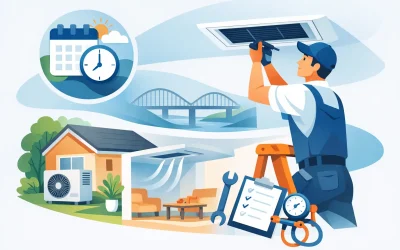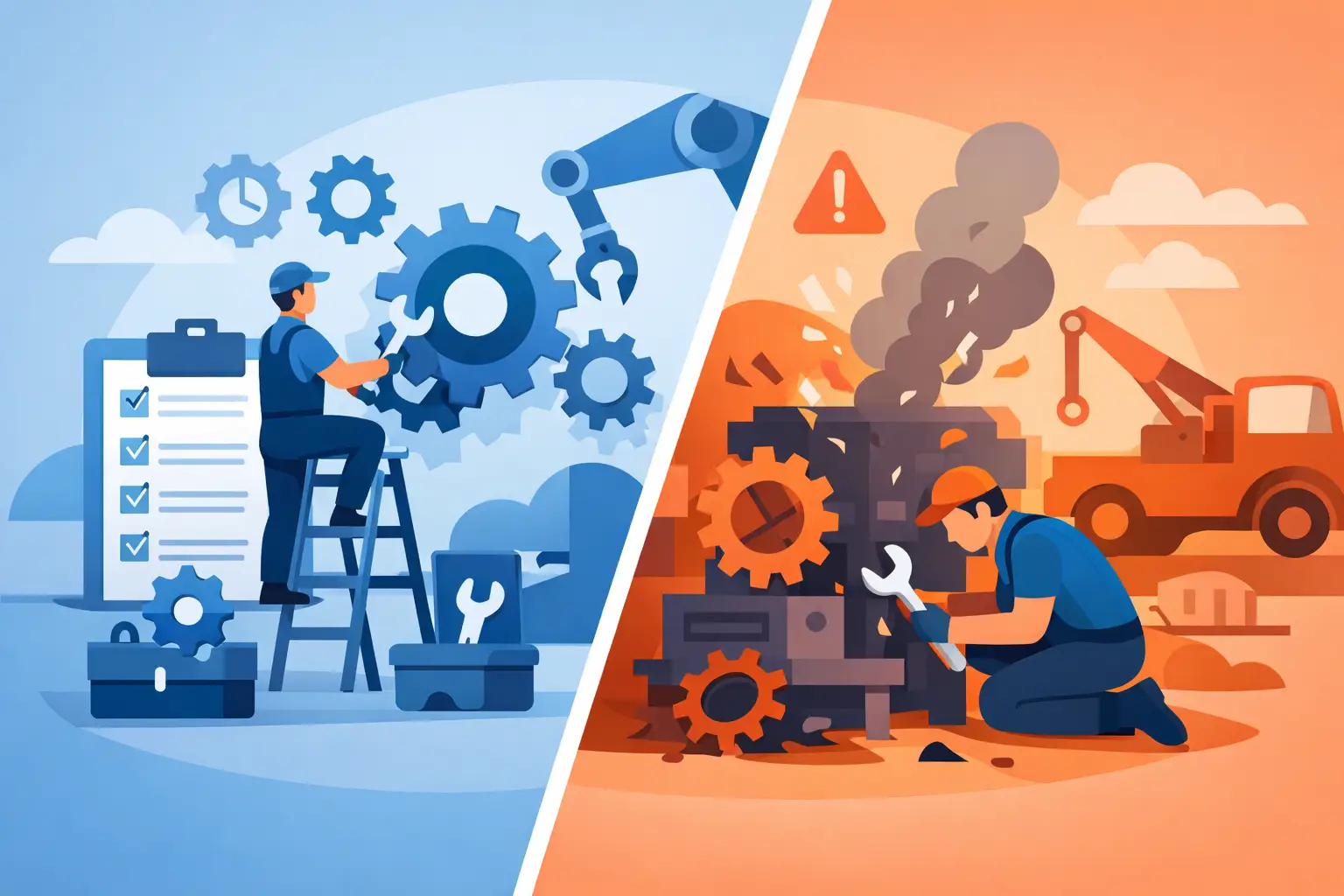
When an air conditioner fails on a 34-degree Brisbane afternoon, nobody cares about maintenance theory. They care that the office is heating up, the house is uncomfortable, customers are noticing, and productivity is dropping by the minute. That is exactly why planned maintenance vs breakdown repairs matters – because the cheapest-looking option on paper often becomes the most expensive one when a system stops without warning.
For both commercial sites and homes, the real question is not whether repairs will happen. They will. The question is whether you want to deal with problems on your terms or the system’s.
Planned maintenance vs breakdown repairs: what’s the difference?
Planned maintenance is scheduled servicing designed to keep HVAC equipment running properly, safely and efficiently. It usually includes inspecting components, cleaning coils and filters, checking electrical connections, testing controls, confirming refrigerant performance, and picking up wear before it turns into failure.
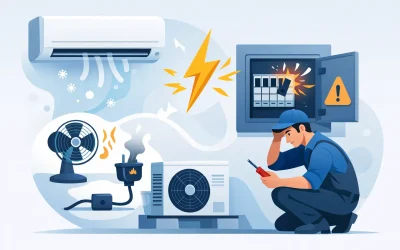
Breakdown repairs happen after something has already gone wrong. A fan motor burns out, a drain blocks, a compressor trips, a board fails, or a unit loses cooling in the middle of peak demand. At that point, the focus shifts from prevention to response.
Neither approach exists in isolation. Even well-maintained systems can still need repairs as they age. But there is a big operational difference between a repair found during servicing and a repair discovered when the unit has already stopped working.
Why breakdown-only thinking usually costs more
A lot of owners and managers delay servicing because the system seems fine. That logic makes sense right up until it doesn’t. Air conditioning equipment can lose performance gradually, which means problems often build in the background before anyone realises there is an issue.
A dirty coil, failing capacitor, loose terminal or blocked condensate line may not shut a system down straight away. What it does do is force the unit to work harder, run longer and use more power. Over time, that extra strain can push a minor defect into a major repair.
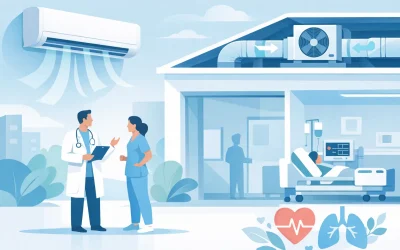
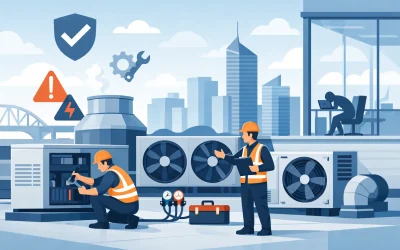
For commercial sites, breakdown-only maintenance creates more than a repair bill. It can affect staff comfort, customer experience, stock conditions, tenancy obligations and compliance requirements. In hospitality, education and aged care settings, a loss of cooling is not just inconvenient. It can disrupt operations fast.
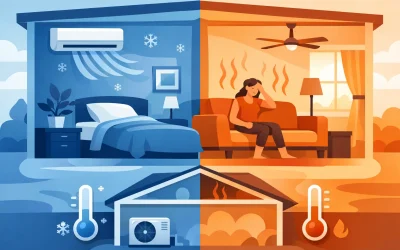
At home, the same pattern shows up differently. The unit starts taking longer to cool, energy bills creep up, airflow drops, and then one hot day it gives up completely. The repair is now urgent, and urgency rarely comes at the lowest cost.
The real value of planned maintenance
Planned maintenance is not about servicing for the sake of it. It is about reducing avoidable downtime and getting more reliable performance from the system you have already paid for.
A well-run maintenance program helps in three main ways. First, it improves reliability. If worn parts, airflow issues or electrical faults are identified early, there is a better chance of fixing them before failure. Second, it supports efficiency. Clean heat exchange surfaces, proper airflow and correct operating conditions help a unit cool as intended without wasting energy. Third, it extends equipment life. Systems that are cleaned, checked and adjusted regularly are generally under less strain than systems left to run until something gives out.
That does not mean every system needs the same schedule. A ducted unit in a family home has different demands to a VRF system serving a busy commercial property. Usage patterns, environment, age, access and criticality all matter. A site with long operating hours, high occupancy or dusty conditions will usually need more attention than a lightly used unit in a cleaner setting.
Planned maintenance vs breakdown repairs for commercial HVAC
For facility managers and business operators, planned maintenance vs breakdown repairs is really a risk management decision. The cost of a maintenance visit is visible, which is why it gets scrutinised. The cost of downtime is often less visible until it hits.
A failed unit can mean after-hours callouts, disrupted tenants, uncomfortable staff, lost trade and pressure on internal teams. If a part is not immediately available, the issue can stretch well beyond one day. In larger systems, a single unresolved fault can also affect broader plant performance.
Planned maintenance gives you more control. Issues can be identified during business planning rather than during an operational crisis. Repairs can often be scheduled around occupancy. Asset condition becomes clearer, which helps with budgeting and replacement planning. That matters if you are responsible for multiple tenancies, education spaces, healthcare settings or any site where indoor conditions directly affect people and operations.
There is also the compliance side. Commercial HVAC systems often need to meet maintenance, hygiene and performance expectations that go beyond simple comfort. Ignoring the system until it breaks can leave gaps in records, condition visibility and basic duty-of-care obligations.
What homeowners should know
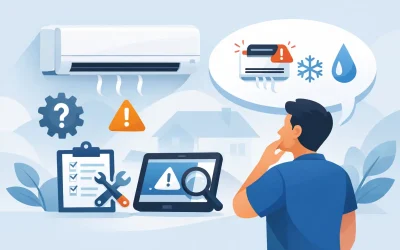
Homeowners tend to look at air conditioning more simply: if it cools, it’s fine. The problem is that residential systems often show small warning signs long before a breakdown. Weak airflow, strange smells, noisy starts, water leaks, patchy temperatures and rising power bills are all clues that servicing is overdue.
Planned maintenance can be especially worthwhile before summer and after periods of heavy use. It helps keep the system clean, checks that it is operating correctly, and gives you a better chance of avoiding a failure when you need it most.
That said, not every home needs an intensive maintenance regime. A newer split system used occasionally will not have the same needs as an older ducted system cooling a large family home every day. Good advice should be matched to the equipment, not pushed as a one-size-fits-all package.
When breakdown repairs still make sense
There are situations where a repair-first approach can be reasonable. If a system is near the end of its life, due for replacement soon, or used very lightly, heavy investment in a detailed maintenance program may not stack up. In some cases, a simple annual service and reactive repairs are enough.
The same applies where replacement is the smarter spend. If an ageing unit needs major parts, has poor efficiency and is becoming unreliable, planned maintenance will not turn it into a new system. It can reduce risk, but it cannot erase age, corrosion or obsolete components.
That is where honest advice matters. The right answer is not always more maintenance. Sometimes it is a targeted repair. Sometimes it is replacement. Sometimes it is continuing to maintain a solid system because it still has good service life left.
How to decide which approach suits your property
Start with the role the system plays. If the air conditioning is critical to business operations, staff welfare, customer comfort or vulnerable occupants, waiting for breakdowns is a gamble. Planned maintenance is usually the safer and more cost-effective option.
Then look at age and usage. Older systems and heavily used systems need closer attention. Also consider environment. Dust, grease, outdoor exposure and long run times all accelerate wear.
Finally, think about what failure would actually cost you. Not just the invoice for the repair, but the downtime, disruption and stress around it. That is often the part people underestimate.
For many Brisbane properties, the sensible middle ground is straightforward: regular preventative servicing, quick response when faults are found, and a clear plan for repair versus replacement when equipment starts showing its age. That approach keeps costs more predictable and avoids the cycle of neglect followed by expensive emergency work.
If there is one practical rule worth following, it is this: do not judge an HVAC system by whether it is still running today. Judge it by how reliably, efficiently and safely it is likely to keep running tomorrow. A good maintenance plan will not stop every fault, but it gives you a far better chance of staying ahead of the ones that can be prevented.