A Brisbane air conditioner can collect a surprising amount of dust, moisture and airborne grime between one summer and the next. When the filters clog or the indoor coil becomes dirty, the system has to work harder to cool the same room. That can mean weaker airflow, higher power bills, unpleasant smells and a greater chance of a breakdown when you need cooling most.
So, how often should aircon be cleaned? For most homes, filters need attention every one to three months and professional cleaning or servicing should be booked at least once a year. Commercial systems usually need a more frequent, planned maintenance schedule because they run longer hours, serve more people and have greater compliance and operational demands.
The right interval depends on the system, how often it runs, who uses the space and how clean the surrounding environment is. A split system in a quiet spare room has very different needs to ducted air conditioning in a busy family home, café, office or aged-care facility.
What “cleaning the aircon” should actually include
Aircon cleaning is not one job. It ranges from simple filter care that a homeowner can manage through to professional hygiene cleaning that addresses the parts you cannot safely access.
The washable filters behind the front cover of a split system catch dust before it reaches the indoor coil. These should be removed, vacuumed or gently washed, then allowed to dry completely before being refitted. Clean filters support airflow and help the unit cool efficiently.
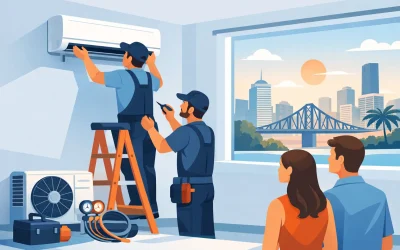
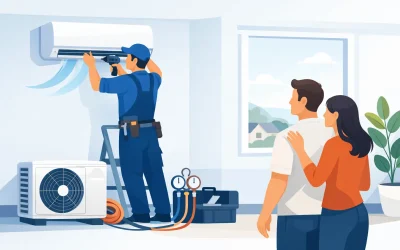
Professional cleaning goes further. A qualified technician can inspect and clean the indoor coil, fan barrel, condensate drain and outdoor unit, while checking electrical connections, refrigerant performance, airflow and overall operation. This is the work that helps identify small faults before they become an after-hours repair callout.
For ducted systems, cleaning may also involve return-air grilles, filters, drains and accessible components within the indoor fan coil unit. Ductwork itself does not automatically require cleaning every year. It should be assessed based on its condition, contamination concerns and the building’s use rather than treated as a routine add-on.
How often should aircon be cleaned at home?
For Brisbane households, a practical starting point is to clean split-system filters every one to three months. If the aircon runs most days through summer, check them monthly. If it is used only occasionally, every three months may be enough.
Book a professional service and hygiene clean every 12 months for most residential split and ducted systems. Ideally, arrange it before the heat and humidity build up, rather than waiting until the first 35-degree day exposes a problem.
Some homes need more frequent attention. Cleaning every six months is worth considering if you have pets, smokers in the home, young children, allergies, a dusty location, nearby construction work or a system that runs for long hours. A home office that is cooled every weekday can put more wear on a split system than a lounge room unit used only at night.
Humidity is another Brisbane factor. Moisture around the indoor coil and drain creates conditions where mould and biofilm can develop, particularly if filters are neglected or the system is switched off immediately after heavy use. A musty smell when the unit starts is a clear sign it needs professional attention.
A sensible residential routine
Keep it simple. Check filters monthly during peak use, clean them when dust is visible or airflow drops, and have the full system serviced annually. If performance is poor, water is dripping inside, the unit smells unusual or it is making new noises, do not wait for the annual appointment.
A clean filter is useful, but it will not fix a blocked drain, dirty fan barrel, failing capacitor or refrigerant issue. Those faults need proper diagnosis.
Commercial aircon needs a planned schedule
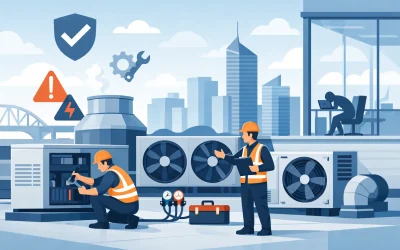
For commercial properties, yearly servicing is rarely enough. Offices, hospitality venues, schools, retail spaces, medical settings and aged-care facilities place a heavier load on HVAC equipment. Systems may run all day, cycle across multiple zones and support areas where comfort, indoor air quality and continuity of operations matter.
Most commercial systems benefit from preventative maintenance every three to six months. High-use sites may require monthly filter inspections and more regular cleaning. The exact programme should be based on the equipment type, operating hours, occupancy, site conditions and any manufacturer or compliance requirements.
A café kitchen-adjacent system, for example, can take on more airborne grease and contaminants than an air-conditioned meeting room. A childcare centre or aged-care environment may require closer hygiene attention due to the people using the space. A large VRV/VRF system or central plant also needs technical checks beyond basic cleaning, including controls, condensate management, electrical components and performance across the full system.
The trade-off is straightforward. More frequent maintenance carries a planned cost, but it reduces the risk of lost trading hours, tenant complaints, emergency callouts and avoidable energy waste. It also gives facility managers a clearer picture of asset condition and upcoming repair or replacement needs.
Signs your aircon needs cleaning sooner
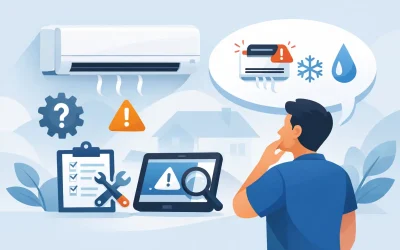
A calendar reminder is helpful, but the system will often tell you when it needs attention. Reduced airflow is one of the most common signs. If the fan is running but little air is coming through the vents, blocked filters or a dirty indoor coil may be restricting performance.
Musty, damp or dirty-sock smells can point to build-up around the coil, fan or drain. Water dripping from the indoor unit is another warning sign, often linked to a blocked condensate drain. Rattling, grinding or repeated cycling should be investigated promptly, as cleaning alone may not be the answer.
You may also notice rooms taking longer to cool, uneven temperatures in a ducted home, or a power bill that has climbed without a clear reason. Dirty equipment is not the only cause of these issues, but it is a common and preventable one.
Do not use harsh household chemicals, pressure washers or improvised tools inside an air conditioner. They can damage coils, electrical parts and plastic components, while pushing dirt deeper into the system. For anything beyond the filters and external casing, bring in a licensed air conditioning technician.
Why cleaning affects comfort and running costs
Air conditioners move heat, not just cold air. To do that efficiently, they need unrestricted airflow across clean heat-transfer surfaces. When filters and coils are loaded with dust, the system must run longer to achieve the set temperature. That extra runtime increases wear and can add to electricity costs.
Clean equipment also manages moisture better. In Brisbane’s humid conditions, proper drainage matters just as much as cooling performance. A neglected drain can overflow into walls, ceilings or carpet, turning a routine service issue into a repair job.
For businesses, the effect reaches beyond the power bill. A poorly performing system can make customers uncomfortable, affect staff productivity and create unnecessary pressure on maintenance budgets. Planned cleaning is a practical way to protect the equipment you already own.
Choose the interval based on use, not guesswork
There is no single cleaning schedule that suits every air conditioner. Start with monthly filter checks during heavy use, annual professional servicing for a typical home, and a three-to-six-month maintenance plan for most commercial sites. Then adjust based on dust, humidity, pets, occupancy and operating hours.
If you are unsure what your system needs, Big Dog Mechanical can assess its condition and recommend a practical cleaning and maintenance schedule for your home, tenancy or commercial site. A clean, well-maintained unit is quieter, more efficient and far less likely to let you down in the middle of a Brisbane heatwave.