You usually start asking how long do air conditioners last when the unit stops keeping up on a hot Brisbane afternoon, the power bill jumps, or repairs start coming too often. That is normally the point where lifespan becomes more than a general question – it becomes a cost, comfort, and reliability issue.
The short answer is that most air conditioners last around 10 to 15 years. Some systems fail earlier, especially if they are poorly installed, rarely serviced, or worked hard through long Queensland summers. Others can run well beyond that range if the unit is correctly sized, properly maintained, and not pushed past its limits year after year.
How long do air conditioners last in real conditions?
In real-world conditions, lifespan depends on the type of system, how often it runs, and how well it has been looked after. A residential split system in a well-maintained home may give you 12 to 15 years of reliable service. A ducted system can land in a similar range, but because it is more complex, neglected components such as zone motors, fans, ductwork leaks, or control issues can affect performance sooner.
Commercial systems are a different story. If a unit is servicing a busy office, retail space, school, hospitality venue, or aged care environment, it may run longer hours and face heavier demand. That can shorten service life unless there is a proper preventative maintenance plan in place. VRV, VRF, and larger packaged or central plant systems can last well, but only when servicing is consistent and faults are dealt with early.
A simple age number on its own does not tell the full story. Two systems installed in the same year can be in very different condition by year ten.
What affects air conditioner lifespan most?
Installation quality is one of the biggest factors. Even a good brand can underperform if the system is oversized, undersized, poorly located, badly drained, or commissioned without attention to airflow and refrigerant charge. If the setup is wrong from day one, the system often runs harder than it should and wears faster.
Maintenance is the next major factor. Dirty filters, blocked coils, failing capacitors, worn fan motors, drainage issues, and low refrigerant can all reduce efficiency and place extra strain on the unit. Small faults tend to become expensive faults when they are ignored.
Usage matters too. In Queensland, air conditioning is not a luxury for much of the year. Systems often run hard through long humid periods, and some commercial sites rely on them daily. The more operating hours a system racks up, the more important regular servicing becomes.
The surrounding environment also plays a role. Coastal air, dust, pollen, grease in hospitality settings, and general outdoor exposure can all shorten component life. Corrosion is a real issue in some locations, particularly for outdoor units that are not cleaned and checked properly.
Signs your system is ageing faster than it should
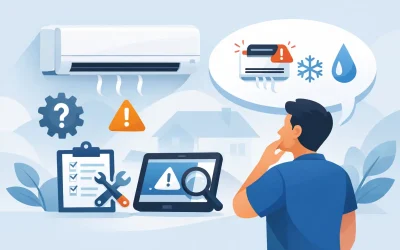
A lot of systems do not fail all at once. They usually give you warning signs first. You might notice rooms taking longer to cool, weak airflow, uneven temperatures, unusual noises, water leaks, or a bad smell when the unit starts up. On the commercial side, you may see repeated tenant complaints, rising energy use, or more frequent callouts.
Repairs every now and then are normal over the life of an air conditioner. What is not normal is a pattern of breakdowns that keeps interrupting comfort or operations. If your unit is needing one repair after another, that usually points to broader wear across the system.
Another common sign is poor efficiency. An older air conditioner may still run, but if it is using more power to deliver less cooling, its remaining life may not be worth much from a practical point of view.
When a 10-year-old system still has life left
Age alone does not mean replacement is the right move. A 10-year-old unit that has been serviced properly, still cools effectively, and has not had major recurring faults may continue to perform well for several more years.
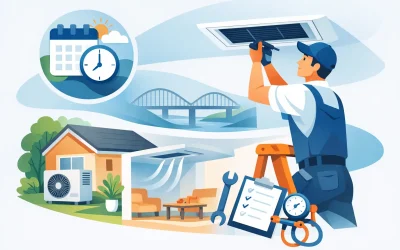
This is where a proper inspection matters. A technician can look at coil condition, refrigerant performance, compressor health, electrical components, condensate drainage, fan operation, and overall system efficiency. That gives you a clearer picture than guessing based on age.
For commercial customers, an asset audit can be especially useful. It helps identify which units are still sound, which ones are becoming higher risk, and where replacement can be planned rather than rushed after a failure.
When repair stops making sense
There is always a balancing point between repair and replacement. If the system is relatively young and the issue is isolated, repair is usually the sensible option. If the unit is older, inefficient, and starting to fail across multiple components, replacement often delivers better value.
A common rule of thumb is to look at the frequency and cost of repairs alongside energy performance. If you are spending money just to keep an ageing unit limping along, and it still struggles in peak heat, replacement may save money over time. That is true for households, but it matters even more for businesses where downtime affects staff, customers, stock, or compliance.
Refrigerant type can also influence the decision. Some older systems use refrigerants that are becoming less practical or more expensive to manage. If a major component fails in one of those systems, replacement can be the cleaner long-term decision.
How to make an air conditioner last longer
The best way to extend service life is not complicated, but it does need to be consistent. Regular servicing keeps the system clean, safe, and running closer to design performance. It also helps catch issues before they turn into breakdowns.
For homeowners, that means cleaning filters as recommended, keeping the outdoor unit clear, and booking routine professional servicing. For businesses and facility managers, it means scheduled maintenance based on the system type, operating hours, and the demands of the site.
Good operating habits help as well. Setting realistic temperatures reduces strain. Running a unit at extreme settings all day does not cool a space faster in any meaningful way, but it can increase wear and power use. Making sure doors, windows, insulation, and zoning are working in your favour also takes pressure off the system.
If you are replacing an older unit, proper system selection matters just as much as ongoing servicing. A tailored setup suited to the size and use of the space will generally last longer and perform better than a rushed like-for-like swap.
How long do air conditioners last with regular servicing?
With regular servicing, many systems reach the upper end of the expected lifespan, and some exceed it. That does not mean servicing prevents every fault. Parts still wear out, electronics still age, and compressors still have a working life. What servicing does is reduce avoidable stress and give the system a better chance of lasting as long as it should.
It also improves reliability along the way. That is the part people often miss. A system that lasts 14 years but gives you constant trouble in the final three is not delivering the same value as one that stays dependable for most of its life.
For commercial sites, reliability is usually the bigger issue than raw age. A unit that fails during a heatwave, during service hours, or in a sensitive environment can create more cost than the repair invoice alone. Planned maintenance and timely upgrades reduce that risk.
Replacement timing is about more than failure
Waiting until the system dies completely is not always the smartest move. If you replace early by a year or two, you may avoid emergency callout costs, stock loss, comfort complaints, and the pressure of making a rushed decision in summer.
That is particularly relevant for larger homes, commercial buildings, and multi-system sites. Staged replacement planning gives you more control over budget, equipment choice, and installation timing. It also helps avoid having old and inefficient units dragging up running costs for longer than necessary.
For Brisbane and wider Queensland conditions, where cooling demand is no small issue, a proactive approach usually pays off. Big Dog Mechanical works with both homeowners and commercial operators on that exact balance – keeping worthwhile systems running properly and replacing the ones that are costing more than they are worth.
If you are wondering whether your air conditioner has a few solid years left or is heading towards the end, the best next step is not guessing from the date on the compliance plate. It is getting clear advice based on condition, performance, and how hard the system needs to work for your space.