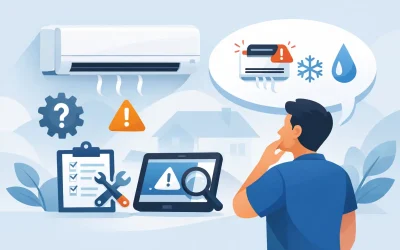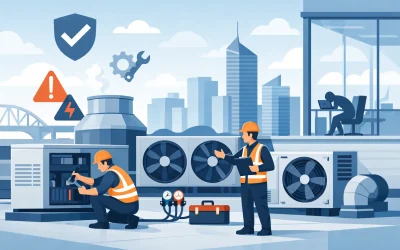
When the temperature is climbing and the system will not respond, searching why aircon won’t turn on is usually the first step. The cause may be as simple as a flat remote battery or tripped circuit breaker. It can also point to an electrical fault, failed component or a safety protection issue that needs a licenced air conditioning technician.
The key is to check the safe, obvious causes first, then stop before a minor fault turns into damaged equipment or an unsafe electrical situation. That matters for a split system at home and even more for a commercial site where a failed air conditioner can affect staff, customers, stock or compliance.
Why aircon won’t turn on: start with the basics
Before assuming the unit has failed, make sure it is actually receiving the right command and power supply. Check that the remote has fresh batteries, is set to cooling or heating as required, and has a temperature setting that calls for the system to run. For cooling, set the temperature several degrees below the current room temperature. In heating mode, set it above the room temperature.
If the indoor unit beeps or displays a light but does not start immediately, give it five minutes. Many systems have a built-in compressor protection delay after being switched on or after a power interruption. This prevents the outdoor unit from starting too quickly and protects the compressor.
Also check the isolator switch near the outdoor unit, if it is safely accessible. It can be accidentally switched off during gardening, cleaning or other work around the home. In an office, shop or larger building, the issue may be a local isolator, wall controller setting or building management control rather than the air conditioner itself.
A tripped breaker or power supply problem
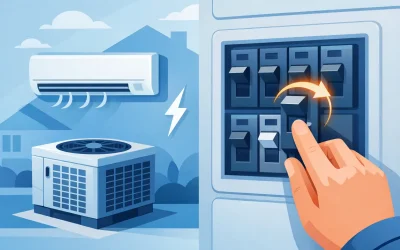
A tripped circuit breaker is one of the more common reasons an air conditioner will not turn on. Check your switchboard for a breaker or safety switch that has moved to the off position. You can reset it once if there are no signs of damage, burning smells or water around electrical equipment.
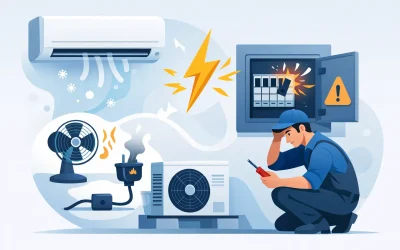
If it trips again, leave it off and arrange a professional inspection. Repeated resets can mask a fault such as damaged wiring, water ingress, a failing compressor, a capacitor problem or an overloaded circuit. Air conditioning equipment draws significant power, particularly when the compressor starts, so electrical faults are not a DIY job.
For commercial premises, avoid treating a recurring trip as a nuisance. A breaker that will not hold can create downtime at the worst possible time and may indicate a fault affecting other equipment on the circuit. Prompt diagnosis is usually less disruptive than waiting for a complete breakdown.
The remote, controller or settings may be the issue
A remote can look normal while still not communicating with the indoor unit. Replace the batteries, make sure there is no obstruction in front of the receiver, and try using the manual on/off button on the indoor unit if your model has one. This button is often behind the front cover and should only be used as a basic test, not as a long-term operating method.
A wall controller can also be locked, programmed incorrectly or set to a timer. This is particularly common in commercial systems, ducted air conditioning and properties where multiple people use the controls. Check for timer icons, error codes, locked settings or a schedule that has switched the system off.
If the unit starts from its manual button but not from the remote or controller, the problem may be the control device rather than the air conditioner. If it still does not respond, further testing is required.
Dirty filters can trigger protection faults
Blocked filters do not always stop an air conditioner from turning on, but severe airflow restriction can cause the system to protect itself. A heavily clogged filter can contribute to coil icing, overheating or poor indoor airflow. Some systems will shut down and show a fault light or code when operating conditions are outside safe limits.
Remove and inspect the return-air filters if your system allows it. Wash reusable filters in lukewarm water, let them dry fully and refit them correctly. Do not operate a unit without its filters, and do not spray chemicals or hose water into internal electrical sections.
Clean filters are a good first step, but they are not a cure for every issue. If the air conditioner has been struggling for weeks, running loudly, leaking water or failing to cool before it stopped altogether, there may be a separate fault that needs attention.
Water leaks, blocked drains and float switches
Many split systems and ducted units use a condensate drain to remove moisture. If that drain blocks, water can back up into the indoor unit or drain tray. Some installations have a safety float switch that shuts the system down before it overflows into the ceiling, wall or room.
Signs of a drainage-related shutdown include dripping water from the indoor unit, staining around the grille, a musty smell, or an air conditioner that stopped after a period of humid weather. Brisbane’s warm, humid conditions can put extra load on drainage systems, especially where maintenance has been missed.
Turn the system off if water is leaking near electrical components. A technician can clear the drain, inspect the condensate pump where fitted, clean the indoor coil and confirm the unit is draining properly. Simply restarting it without resolving the blockage may lead to water damage.
Outdoor unit faults can stop the whole system
Your indoor unit may appear to have power, yet the outdoor unit may not start. The outdoor unit contains key components including the compressor, fan motor, capacitor, control board and electrical connections. A fault in any of these can prevent the system from operating.
Leaves, dirt and restricted clearance around the outdoor unit can contribute to overheating, but a unit that will not start at all may have a more specific electrical or mechanical issue. You may hear clicking, humming, buzzing or repeated attempts to start. Do not remove panels or touch wiring to investigate.
A licenced technician can test the electrical supply, start components, fan motor, compressor operation and fault codes safely. They can also determine whether repair is worthwhile or whether an older system is reaching the point where replacement offers better reliability and running costs.
Refrigerant and sensor faults need professional diagnosis
Low refrigerant, a failed temperature sensor, communication fault between indoor and outdoor units, or a faulty control board can all stop an air conditioner from operating correctly. These faults are not always obvious from the outside. Some units display an error code, while others simply flash lights or refuse to start.
Refrigerant is not something to top up without finding the reason it is low. Air conditioners operate as sealed systems, so low refrigerant can indicate a leak. Proper repair involves locating the fault, repairing it where practical, testing the system and charging it to the manufacturer’s requirements.
This is where regular servicing pays off. Preventative maintenance can identify loose connections, blocked drains, dirty coils, deteriorating capacitors and abnormal system performance before they become a no-start callout in the middle of summer.
When to call for an air conditioning repair
Call a licenced air conditioning professional promptly if the breaker keeps tripping, there is a burning smell, water is leaking around electrical equipment, the system displays an error code, or the outdoor unit makes unusual noises. The same applies if basic checks have not restored operation.
For businesses, urgent support is sensible where a breakdown affects occupied areas, temperature-sensitive stock, server spaces, hospitality operations, aged care settings or tenant comfort. Temporary workarounds may help in some situations, but they should not replace a proper assessment of the fault and the system’s overall condition.
Big Dog Mechanical provides responsive air conditioning repairs and maintenance for Brisbane homes and commercial sites. The right repair starts with accurate fault finding, clear advice and work that addresses the cause rather than just getting the unit running for the day.
A system that will not turn on is frustrating, but it does not automatically mean replacement. Complete the safe checks, avoid repeated resets or electrical DIY, and get the fault assessed early so your air conditioning can return to reliable service.