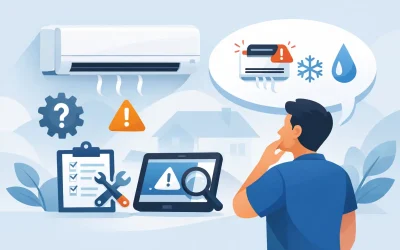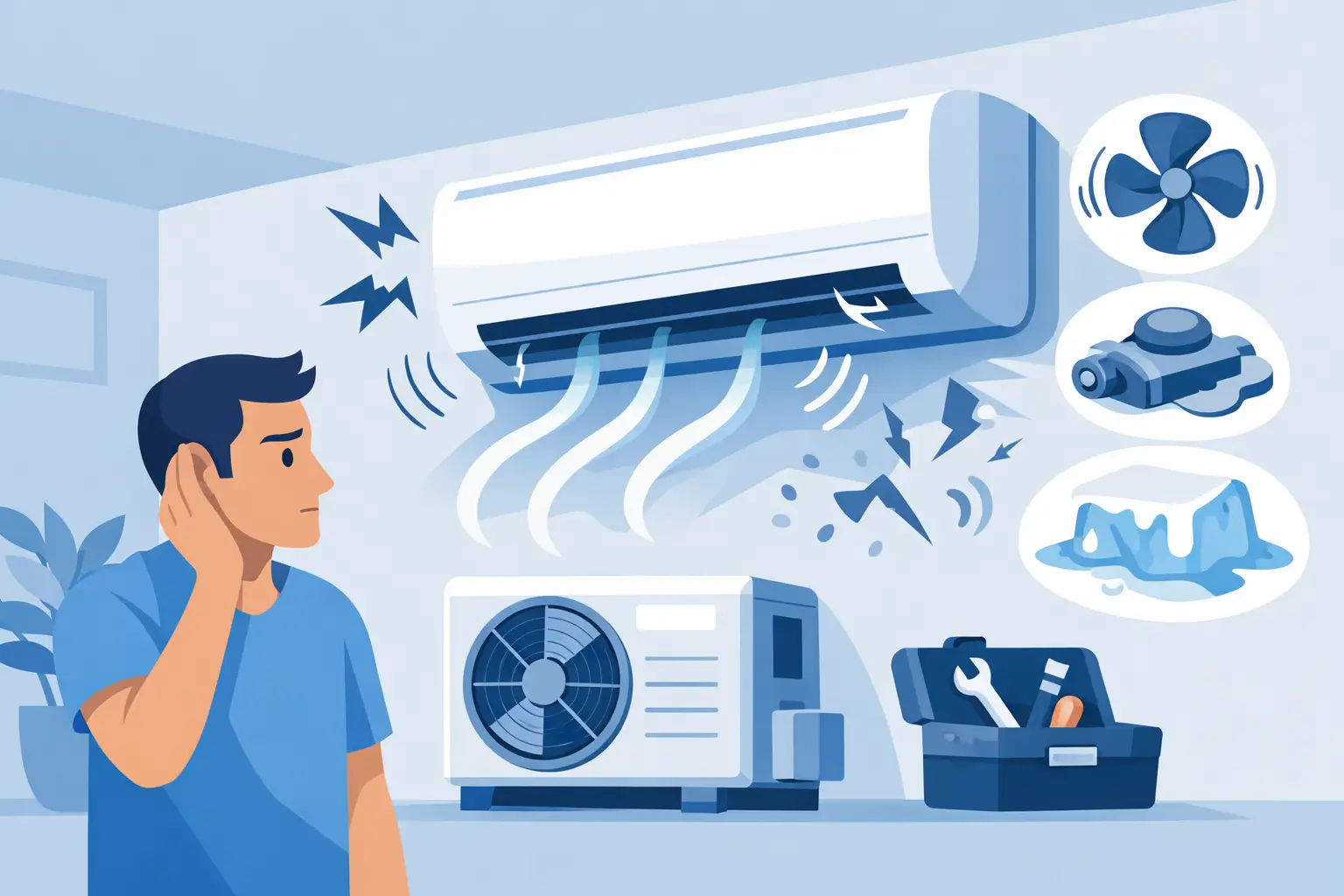
That sudden rattle at 2 am, the buzzing that gets louder every week, or the bang when the system kicks on – if you’re asking why is my aircon noisy, there’s usually a mechanical reason behind it. Some noises are minor and tied to normal operation. Others are early warning signs that a small issue is turning into a bigger repair, higher power bills, or a full breakdown.
Air conditioning systems are not silent, especially in Brisbane’s heat when they’re working hard. A gentle fan sound or brief click at start-up can be normal. What is not normal is a new noise, a louder-than-usual noise, or a sound that comes with weak airflow, poor cooling, leaks, bad smells, or the unit switching itself off.
Why is my aircon noisy all of a sudden?
When an aircon suddenly becomes noisy, the cause is often one of three things: loose parts, restricted airflow, or a component under strain. In a residential split system, that could mean a dirty filter, fan imbalance, worn motor bearings, or loose casing panels. In a ducted or commercial setup, noise may also come from duct movement, failing belts, damaged insulation, or issues in the mechanical plant.
The key point is this: aircons rarely start making new noises for no reason. The sound is usually the symptom, not the fault itself.
Rattling and vibrating sounds
A rattling aircon often points to something loose. That may be as simple as a panel screw backing off, debris caught near the outdoor unit, or ageing brackets and mounts allowing extra movement. Outdoor condensers are especially prone to vibration noise because they sit exposed to weather, dirt, and constant operation.
In other cases, the vibration is not from a loose cover but from the fan assembly or compressor creating more movement than the unit’s mounts can absorb. Left alone, a small rattle can turn into damage to surrounding components.
Buzzing or humming
A low hum can be normal. A louder buzzing is different. Buzzing often relates to electrical components, a struggling motor, a contactor issue, capacitor trouble, or a fan that is trying to run under load. It can also happen when dirt buildup forces the system to work harder than it should.
If the buzzing is paired with poor performance or the unit hesitates to start, it is worth getting checked sooner rather than later. Electrical faults do not usually improve on their own.
Banging or clunking
Banging is one of the more serious noises because it can mean a moving part has come loose or something internal is out of balance. In some systems, duct expansion and contraction can create a popping sound when the temperature changes quickly. That can be annoying but not always urgent.
A heavy clunk from the indoor or outdoor unit is different. That can indicate fan issues, compressor trouble, or internal wear. If the noise is repeated, shut the system down and book service.
Squealing or screeching
A high-pitched squeal usually points to a motor or fan problem. Bearings can wear over time, especially in units that have not had regular servicing. In some commercial systems, belt-driven components can also squeal when belts are worn or misaligned.
This sort of noise tends to get worse, not better. If you keep running the system, there is a fair chance the failing part will cause more extensive damage.
Clicking and ticking
A single click when the system starts or stops is generally normal. Repeated clicking, especially if the unit is not starting properly, can point to an electrical control problem or a faulty relay. Ticking may also happen when plastic parts expand and contract, though that should be brief and consistent, not loud and constant.
If the clicking is new and the aircon is struggling to cool, it is time to investigate.
Common reasons an aircon gets noisy
Noise nearly always links back to wear, restriction, looseness, or poor maintenance. The exact fault depends on the type of system, its age, and how hard it has been running.
Dirty filters are one of the most common culprits in homes and small businesses. When filters clog up, airflow drops and the system has to work harder. That strain can make the fan noisier, create whistling through return air grilles, and lead to icing or temperature imbalances that trigger other noises.
Dirty coils can have a similar effect. If the indoor evaporator coil or outdoor condenser coil is coated with dust and grime, heat transfer suffers. The unit runs longer, components stay under load, and what started as reduced efficiency can become excess noise and premature wear.
Loose components are another frequent issue. Screws, panels, mounts, and fan blades can all shift over time through vibration and weather exposure. In ducted systems, sections of ductwork may move or flex, especially if supports have deteriorated or airflow is excessive.
Then there are worn mechanical parts. Fan motors, bearings, compressors, and capacitors all age. Some fail suddenly, but many give warning signs first. Noise is often one of them.
Why is my aircon noisy inside the house?
If the noise seems to be coming from the indoor unit, the fault may still be elsewhere. Sound can travel through ductwork, wall cavities, or pipe runs, so what sounds internal may actually start outside or in the roof space.
That said, indoor noise commonly comes from blocked filters, fan wheel buildup, condensate issues, loose fascia panels, or duct pressure problems. A whistling sound can point to airflow restriction. A dripping or gurgling sound may suggest a drain issue. A rattle at the indoor head unit can simply be a loose panel, but it can also mean the blower assembly is out of balance.
For ducted systems, noise at the grille or ceiling can be caused by design or maintenance faults. Oversized airflow, undersized duct sections, poor zoning balance, or damaged insulation can all make a system seem louder indoors than it should be.
When you can monitor it, and when to act fast
Not every sound means emergency repairs. A brief startup click or light airflow noise is part of normal operation. Even a minor rattle might come down to a loose cover or debris around the outdoor unit.
What matters is the pattern. If the sound is getting worse, recurring daily, or paired with weak cooling, water leaks, bad odours, tripping power, or rising running costs, it should not be left alone. That is especially true for commercial sites where downtime affects staff, customers, stock, or compliance.
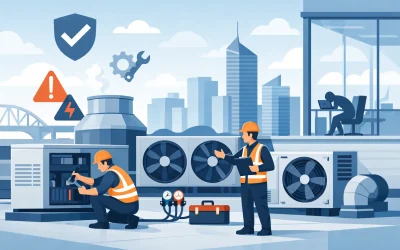
For homeowners, the risk is usually comfort, efficiency, and repair cost. For facility managers and business operators, the risk can quickly become operational. A noisy unit in a classroom, office, aged care setting, or hospitality venue is not just irritating – it can point to a system that is heading towards failure during peak demand.
What you can check before calling a technician
There are a few sensible checks you can do safely. Clean or replace the filter if your system allows for it. Look for visible debris around the outdoor unit, such as leaves, twigs, or rubbish caught near the fan guard. Check whether any accessible covers seem loose or whether the noise is linked to a particular mode, such as cooling, fan-only, or startup.
Beyond that, avoid guessing. Do not open electrical sections, and do not keep running a unit that is banging, screeching, or struggling to start. Continuing to operate a faulty system often turns a manageable repair into a larger one.
How regular servicing helps prevent noise problems
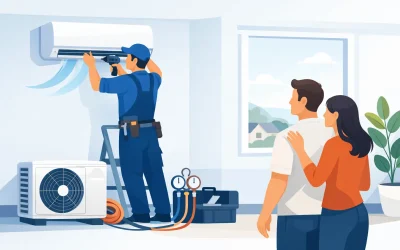
Most noisy aircon faults do not appear overnight. They build gradually through dirt, vibration, wear, and missed maintenance. Routine servicing helps catch these issues early by checking fan performance, electrical components, drainage, cleanliness, mounting, refrigerant performance, and overall system condition.
For commercial sites, preventative maintenance is often the difference between planned repairs and costly disruption. For homes, it is the best way to protect comfort through summer and avoid surprise breakdowns when the system is needed most.
An experienced HVAC team will not just chase the noise. They will look at what is causing the component to strain in the first place. That matters because replacing a failed part without fixing the underlying issue can send you straight back to the same problem.
The value of getting the noise checked early
If you have been wondering why is my aircon noisy, the safest assumption is that the system is telling you something. Sometimes it is a straightforward service issue. Sometimes it is the start of a more serious fault. Either way, early attention is usually cheaper, faster, and far less disruptive than waiting for the unit to stop altogether.
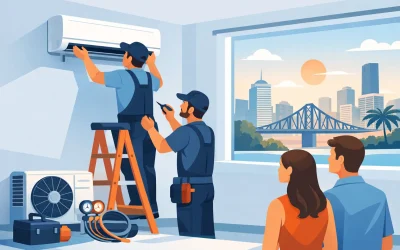
For Brisbane homes and commercial properties, where air conditioning is not a luxury but part of day-to-day comfort and operations, a noisy system is worth taking seriously. A good technician will pinpoint the cause, explain what is urgent and what can wait, and get your system back to running the way it should. Big Dog Mechanical sees this often – and in most cases, the earlier the call, the better the outcome.
If the sound is new, louder, or simply does not seem right, trust that instinct and have it checked before the noise becomes the least of the problem.