When an air conditioning system drops out, the impact is usually immediate. In a home, comfort disappears fast. In a business, downtime can mean unhappy staff, complaints from customers, product risk, compliance issues, or lost trading hours. If you want to know how to reduce HVAC downtime, the answer is not one big fix. It is a set of practical decisions that improve reliability before a breakdown happens.
The biggest mistake property owners make is treating HVAC as a repair-only service. If the system is running today, it gets ignored. That approach often works right up until the first hot week, when units are under pressure, faults appear all at once, and parts are suddenly hard to get. Reducing downtime starts with changing that mindset from reactive to planned.
How to reduce HVAC downtime with the right maintenance plan
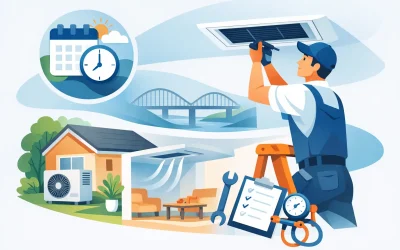
Preventative maintenance is still the most effective way to reduce unplanned outages. That sounds simple, but not all maintenance is equal. A quick once-over that misses worn components, airflow restrictions or early electrical issues will not do much to protect runtime.
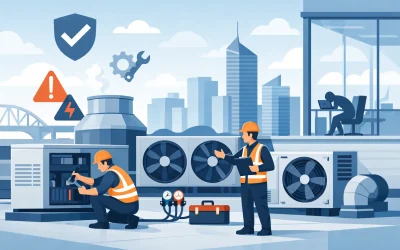
A proper maintenance plan should match the type of system, the age of the equipment, and how hard it works. A ducted residential unit used seasonally has different demands to a VRF system in a commercial building running long hours. Hospitality, aged care and education sites also carry different risks, because comfort, ventilation and continuity matter more when the building is occupied all day.
At a practical level, maintenance reduces downtime because it picks up the faults that usually cause sudden failures. Dirty coils force the system to work harder. Blocked drains lead to water issues and safety cut-outs. Failing capacitors and contactors often give warning signs before they stop the system entirely. Refrigerant problems, loose electrical connections and fan motor wear can all be found early if someone is looking properly.
Timing matters too. Servicing just after a failure is not a strategy. Servicing before summer and before winter is far more useful, because that is when systems are about to face higher demand.
Start with the faults that cause the most downtime
Not every HVAC issue deserves the same level of attention. If your goal is uptime, focus on the faults most likely to shut the system down or leave you waiting on parts.
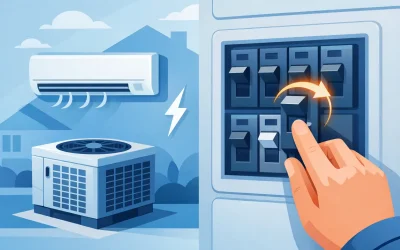
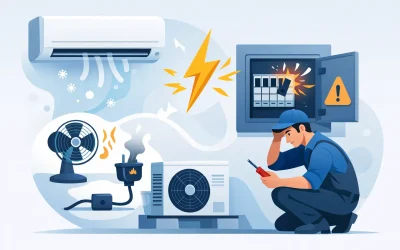
Electrical components are high on that list. Relays, circuit boards, capacitors and contactors can fail without much notice, especially in older units or systems exposed to heat and weather. Drainage issues are another common cause of interruption, particularly where routine cleaning has been skipped. Sensors and controls also create problems that are easy to dismiss at first, but a faulty sensor can make a healthy system behave like a broken one.
Then there is airflow. Restricted filters, dirty coils, damaged ducting or failing fans can trigger a string of performance issues before a complete shutdown. Often the complaint starts as poor cooling, uneven temperatures or higher power bills. Leave it long enough, and you are no longer dealing with inefficiency. You are dealing with downtime.
For homeowners, this means not ignoring small warning signs. For facility managers and business operators, it means logging repeat issues and acting on trends instead of treating each callout as a one-off.
Warning signs you should not leave alone
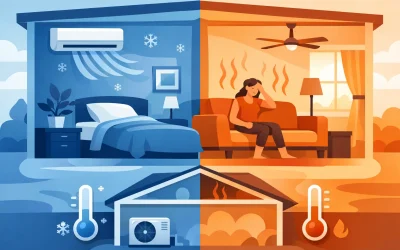
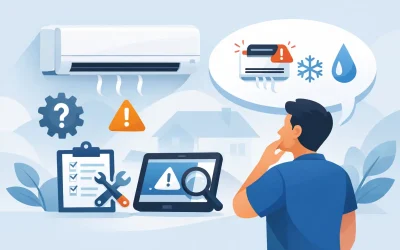
Short cycling, strange noises, warm air when cooling is on, water leaks, bad odours and inconsistent room temperatures all deserve attention. So do unexplained rises in energy use. None of these automatically means a major breakdown is coming, but they are often the early stage of one.
The trade-off is cost versus risk. Some owners delay repairs to stretch the life of a component a bit further. Sometimes that works. Sometimes it turns a manageable repair into a system outage in the middle of peak demand. The right call depends on the age of the unit, parts availability and how critical that system is to the building.
Reduce HVAC downtime by improving response speed
Maintenance lowers the chance of a failure. It does not remove it. When a fault does happen, response time becomes the next thing that matters.
This is where service history and asset visibility make a real difference. If your technician already knows the site, the equipment model, past issues and what has been replaced, fault diagnosis is faster. If every breakdown starts with figuring out what system is installed, where it serves, and whether it has had repeat faults, you lose time before the repair even begins.
Commercial sites benefit from keeping a basic HVAC asset register, even if it is simple. Record system type, location, age, service dates and major repairs. For larger properties, note which areas are most critical. That helps prioritise callouts and avoid wasting time on guesswork.
For homes, the same principle applies on a smaller scale. Keep records of previous servicing, installation date and any recurring faults. If a unit is older and parts are becoming difficult to source, that should shape your plan before the next breakdown, not after it.
Spare parts and lead times matter more than most people think
A system does not stay down because the fault is complex. Often it stays down because a basic part is not available quickly. That is especially common with older equipment, discontinued models, or imported systems with long lead times.
If uptime is critical, ask a straightforward question: if this unit fails, how fast can it realistically be repaired? For some commercial clients, holding key spare parts or planning staged upgrades makes sense. For a homeowner with one ageing split system, replacement may be smarter than repeated repairs if parts delays are becoming a pattern.
Good system design reduces breakdown risk
Downtime is not only a maintenance problem. Sometimes the real issue starts with system selection, sizing or installation quality.
An undersized unit runs too hard and wears out sooner. An oversized one may short cycle, creating control and humidity issues while still stressing components. Poor drainage falls, bad pipework practices, weak commissioning and messy electrical work all increase the chance of faults later. The system may operate at handover, but that is not the same as operating reliably over time.
That is why reducing downtime starts before the first service visit. A correctly designed and installed system is easier to maintain, performs more consistently and gives fewer surprises. This matters for both homes and commercial sites, but the cost of getting it wrong is usually much higher in business settings where one failure can affect multiple rooms, tenants or trading areas.
If you are planning a replacement or new install, reliability should sit alongside price and efficiency in the decision. The cheapest quote is not always the cheapest system to own.
When upgrades make more sense than repairs
There comes a point where trying to keep an old system alive creates more downtime, not less. You see it in units with repeat callouts, declining performance, control faults, refrigerant issues, and parts that are harder to source every year.
This is where a lot of owners get stuck. They know the unit is unreliable, but replacement feels like a bigger cost than another repair. Fair enough. The problem is that emergency repairs rarely happen at a convenient time, and repeated interruptions carry their own cost.
A planned upgrade gives you control over timing, budget and equipment choice. It also lets you replace at-risk systems before peak season. For commercial properties, staged upgrades can spread cost while reducing exposure. For households, replacing an unreliable unit before summer often avoids the worst time to be without cooling.
It depends on the system condition and how the site is used. A lightly used older unit may still be worth repairing. A heavily used unit serving a critical area usually deserves a harder look.
The people managing the site play a role too
Even the best equipment will struggle if basic operating issues are ignored. Thermostat settings being changed constantly, blocked return air grilles, neglected filter cleaning, and rooms being used in ways the system was never designed for all add pressure.
In commercial buildings, staff should know what to report and when. If a space is not cooling properly, if water is visible, or if the unit is making unusual noise, that should be raised early. In homes, simple habits help as well – keeping outdoor units clear, changing or cleaning filters as advised, and not waiting months to book a service after noticing a problem.
Clear communication reduces downtime because faults get attention sooner. It also helps technicians arrive with a better picture of the issue, which improves first-visit repair chances.
A practical approach to how to reduce HVAC downtime
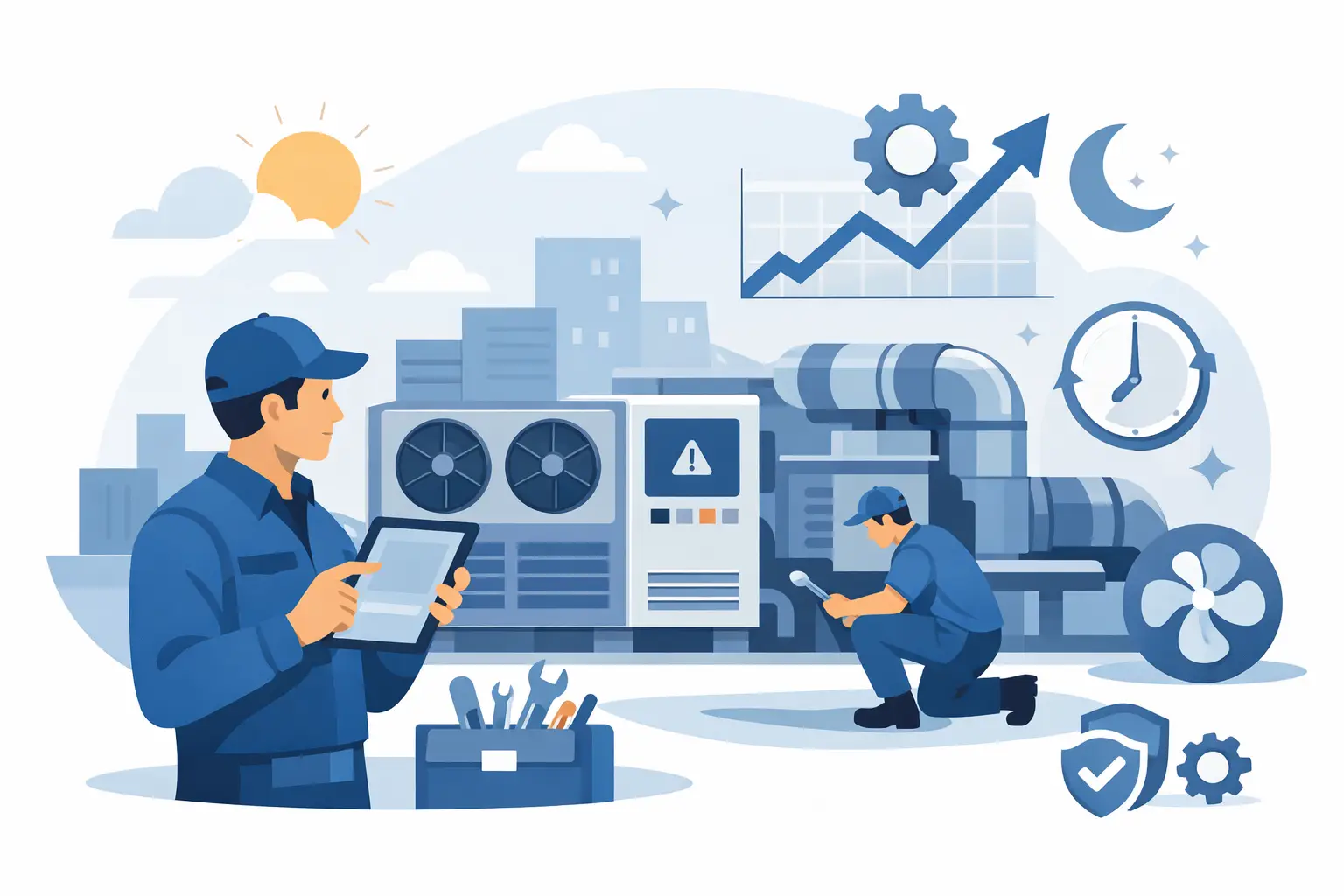
If you strip it back, most downtime reduction comes from four things: planned maintenance, early fault detection, faster repair pathways, and timely replacement of unreliable equipment. None of that is complicated, but it does require consistency.
For Brisbane property owners and facility managers, the climate adds another layer. Long cooling seasons, humidity and heavy system use mean air conditioning is not something you can leave to chance. A dependable local contractor with both residential and commercial capability can help build a maintenance and response plan that fits the site rather than applying the same approach to every unit.
Big Dog Mechanical works with that reality every day. The goal is simple – keep systems running, catch issues early, and make sure when something does go wrong, the path to repair is clear.
The smart move is not waiting for the next breakdown to decide what reliability matters to you. Put a plan around the system now, while it is still running.