A ducted unit in a family home and a rooftop package unit on a commercial site might both be called air conditioning, but that is where the similarity starts to thin out. Commercial versus residential HVAC is really a question of purpose, scale and risk. One is built around household comfort. The other has to protect operations, manage occupancy, meet compliance requirements and keep downtime to a minimum.
If you are a homeowner, that difference affects what system makes sense, how often it should be serviced and what a breakdown is likely to cost you. If you manage a site, tenancy or business, the stakes are higher again. The wrong system, poor maintenance or delayed repairs can affect staff comfort, customer experience, stock, equipment and energy spend in a hurry.
Commercial versus residential HVAC – the core difference
Residential HVAC is designed around a smaller footprint and more predictable use. It is there to keep bedrooms cool, living areas comfortable and power bills under control. In most homes across Brisbane, that means split systems or ducted air conditioning selected to suit the layout, insulation, family size and how often each room is used.
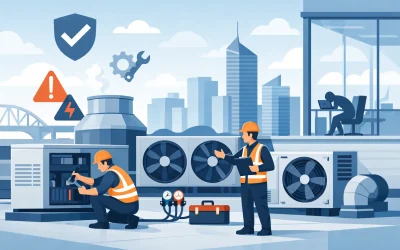
Commercial HVAC has a broader job. It may need to handle larger floor areas, longer run times, higher internal heat loads and a mix of occupied spaces with different temperature demands. A café, office, aged care facility and school can all sit under the commercial banner, but they each place very different demands on the system.
That is why commercial setups often involve more complex equipment such as VRV or VRF systems, larger ducted networks, rooftop units or central plant. They also tend to require tighter control, better access for maintenance and stronger planning around redundancy and uptime.
Size matters, but it is not the whole story
People often assume the difference is just about capacity. Commercial systems are bigger and residential systems are smaller. That is true to a point, but it misses what really drives design decisions.
A home system is usually chosen to match a domestic lifestyle. It needs to cool or heat efficiently, run quietly and fit the budget. A commercial system needs to do that while also accounting for occupancy swings, operating hours, equipment loads, ventilation requirements and sometimes tenant expectations or lease obligations.
A boardroom that fills with people at 2 pm has a different load profile to a lounge room used mostly at night. A restaurant kitchen has a different heat and airflow problem again. Commercial HVAC has to respond to those conditions without chewing through energy or failing when demand spikes.
Installation is more straightforward at home
For most residential jobs, installation is relatively direct. The available system types are familiar, access is generally easier and the use case is simpler. That does not mean every house is easy. Older homes, poor roof access, awkward layouts and underpowered existing circuits can complicate the job. Still, the pathway from quote to install is usually clear.
Commercial installation tends to involve more moving parts. There can be approvals, design documentation, access restrictions, after-hours scheduling, coordination with builders or facility teams, and specific requirements around fresh air, zoning and controls. Even a replacement unit can become a project if crane lifts, rooftop access or staged works are involved.
This is one reason experience across both markets matters. A contractor who understands domestic comfort but also knows how commercial systems behave under pressure can make better recommendations, especially for mixed-use buildings or large homes with more advanced requirements.
Maintenance looks very different in practice
This is where commercial versus residential HVAC becomes most obvious. In a house, servicing is about keeping the system clean, efficient and reliable. It helps avoid poor airflow, rising power bills, bad odours and premature wear. For many households, regular servicing is enough to keep the system doing its job year after year.
In commercial settings, maintenance is part of operational risk management. Filters, coils, drains, controls and mechanical components all need attention, but the bigger issue is what happens if they do not. A neglected commercial system can lead to uncomfortable occupants, tenant complaints, hygiene issues, lost productivity and expensive emergency failures.
Preventative maintenance is not just a nice extra on commercial sites. It is often the difference between planned servicing and urgent callouts in the middle of peak demand. Asset audits, hygiene cleaning and scheduled inspections give owners and facility managers visibility over what is working, what is deteriorating and what needs to be budgeted before it becomes a problem.
Compliance and ventilation raise the bar for commercial systems
Homes need safe, correctly installed air conditioning. Commercial buildings often face another layer of responsibility. Ventilation standards, building requirements, tenancy obligations and sector-specific expectations can all come into play, especially in healthcare, education, hospitality and aged care environments.
That does not mean every commercial property is tied up in red tape. But it does mean HVAC decisions are rarely just about comfort. Air distribution, fresh air provision, system hygiene and documented maintenance can carry real operational weight.
For residential owners, compliance is generally less complex, but proper installation and licensed work still matter. Shortcuts at install stage can lead to drainage issues, electrical faults, poor performance and expensive rectification later.
Controls and zoning are usually more advanced in commercial HVAC
A residential system might have a wall controller, a mobile app or a few ducted zones. That is enough for most households. The aim is convenience and comfort without overcomplicating things.
Commercial systems often need finer control. Different areas may need different setpoints. Some rooms may be used only at certain times. Tenants may want independent control. Management may want central visibility over run times, faults and scheduling.
That extra control can improve efficiency, but it also adds complexity. More sensors, more interfaces and more components mean more things to configure correctly and more to maintain over time. The best setup is not always the most complicated one. It is the one that gives the site the control it actually needs without creating unnecessary headaches.
Repairs carry different urgency and consequences
When a home air conditioner fails, it is uncomfortable and frustrating, especially in a Queensland summer. In a commercial environment, the consequences can spread fast. Staff performance drops, customers notice, equipment rooms overheat, and business operations can be disrupted.
That is why commercial clients usually place a premium on response time and fault diagnosis. They need technicians who can isolate the issue quickly, communicate clearly and get the system back online with minimal interruption. Temporary workarounds, staged repairs or after-hours attendance may be part of the job.
Residential repairs are still time-sensitive, but the decision-making is often more personal. Homeowners are weighing repair cost against replacement value, household needs and future running costs. A straight answer matters. Sometimes a repair is worth doing. Sometimes a tired unit is better replaced before it burns through more money.
Energy efficiency means different things to different clients
Everyone wants lower running costs, but the numbers land differently. In a home, energy efficiency usually comes down to bill reduction and everyday comfort. Choosing the right size system, using zones properly and keeping filters and coils clean can make a noticeable difference.
For commercial operators, efficiency can be tied to broader business performance. HVAC may be one of the biggest energy users on site. Poor control strategies, dirty equipment or ageing plant can quietly inflate costs month after month. In larger buildings, even modest efficiency gains can add up quickly.
That said, the most efficient unit on paper is not always the right answer. Upfront cost, site conditions, usage pattern and system lifespan all matter. A cheaper install that is wrong for the building can cost more in repairs and power over time. A premium system can be worthwhile, but only if it suits the site and is maintained properly.
Choosing the right approach for your property
If you are comparing options for a home, start with how you actually use the space. Room size, insulation, sun exposure and household habits matter more than guesswork. A system that is too small will struggle. One that is oversized can cycle poorly and waste energy.
If you are responsible for a commercial property, think beyond the equipment itself. How critical is uptime? What are your peak occupancy periods? Do you need staged replacement planning, maintenance reporting or emergency support? Those questions shape the right HVAC strategy just as much as kilowatt rating or brand selection.
This is where a contractor with real cross-market experience can help. Big Dog Mechanical works across both residential and commercial environments, which means the advice is grounded in how systems perform in the real world, not just what looks good on a quote.
The smart question is not which is better
Commercial and residential HVAC are not competing versions of the same thing. They are different solutions for different demands. The smart question is whether the system, service plan and support model fit the way your property actually operates.
If your home needs reliable comfort, a tailored install and dependable servicing will usually do the heavy lifting. If your site depends on air conditioning to protect operations, comfort and compliance, you need a more deliberate approach with maintenance and response built in from the start.
Good HVAC is rarely about buying the biggest unit or chasing the cheapest price. It is about getting the right system, looked after properly, by a team that understands what is at stake when it stops working.