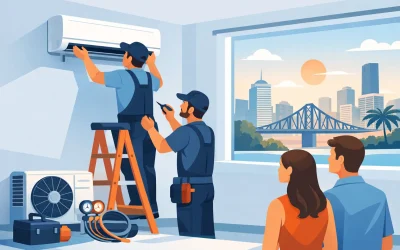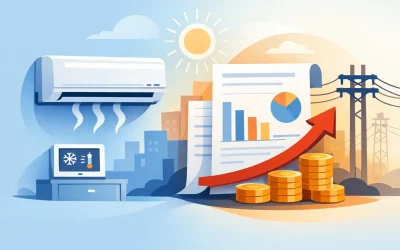
A Brisbane air conditioner can run for long stretches through summer, and a small efficiency issue quickly becomes an expensive power bill. The best ways to reduce aircon bills are not about sweating through the day or switching the system off completely. They are about making sure your equipment is correctly sized, clean, well maintained and used with sensible temperature settings.
For homeowners, that may mean changing a few habits and booking a service before the hottest weather arrives. For facility managers and business owners, it often means looking at operating schedules, zoning, controls and the condition of the wider HVAC plant. Either way, reducing costs starts with knowing where energy is being wasted.
Why aircon bills climb faster than expected
Air conditioning uses the most energy when it has to overcome heat entering the building, restricted airflow or a system that is working outside its intended capacity. A split system with blocked filters, for example, cannot move enough air across its indoor coil. It runs longer to achieve the same result, putting extra pressure on the compressor and increasing electricity use.
The same applies on a larger scale in offices, schools, hospitality venues and aged-care facilities. A poorly scheduled ducted system may cool empty areas for hours. A failed sensor can force plant to run unnecessarily. Dirty outdoor coils can make heat rejection harder, particularly during a hot, still Queensland afternoon.
There is no single fix for every building. The age of the system, insulation, occupancy, sun exposure and how the space is used all affect the right approach. The aim is to reduce unnecessary run time without compromising comfort, indoor air quality or operational reliability.
Best ways to reduce aircon bills without losing comfort
Set a realistic temperature
Dropping the thermostat to an extremely low setting will not cool a room faster. It simply tells the air conditioner to keep running until it reaches that lower target, which can add significantly to consumption.
For most occupied spaces, a setting around 24°C to 26°C provides a practical balance between comfort and running costs in summer. Personal preference, humidity, activity levels and the people using the room still matter. A busy café kitchen or a west-facing meeting room may need a different strategy from a shaded bedroom.
Avoid constant adjustments throughout the day. Choose a sensible setpoint, allow the system time to stabilise, and use fans where appropriate to improve how cool the room feels. Ceiling fans use far less energy than air conditioning and help circulate conditioned air through the space.
Clean filters regularly
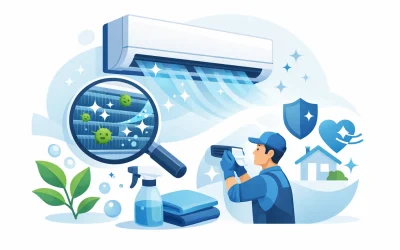
This is one of the simplest ways to reduce aircon bills, and one of the most commonly missed. Filters collect dust, pet hair and airborne particles. Once they become clogged, airflow drops and the unit has to work harder.
In a typical home, check washable split-system filters every month during periods of regular use. Clean them according to the manufacturer’s instructions and let them dry fully before reinstalling. Homes with pets, nearby construction dust or frequent open windows may need more frequent attention.
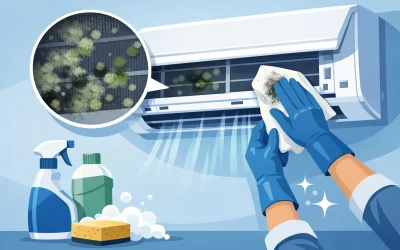
Commercial filters should be inspected as part of a planned maintenance schedule. In high-occupancy or hygiene-sensitive environments, filter condition affects more than energy use. It can also affect indoor air quality, system performance and the cleanliness of internal components.
Keep the outdoor unit clear
Your outdoor condenser needs room to release heat. Leaves, grass clippings, stored boxes, climbing plants and tight screening can restrict airflow around the unit and make it less efficient.
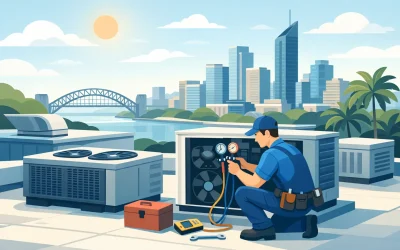
Keep the area around it clear and make sure discharge air is not being pushed straight into a wall or enclosed courtyard. Do not hose coils aggressively or bend the delicate fins. If the coil looks heavily soiled, arrange professional cleaning instead. A technician can clean it safely while checking for corrosion, damaged fins and other faults that may affect performance.
Use timers, zoning and sensible schedules
Cooling an empty building is a direct cost with no comfort benefit. Timers and programmable controls are useful at home, while commercial systems benefit from schedules that match actual occupancy.
At home, set the system to switch on shortly before you arrive rather than leaving it running all day. Overnight, use a sleep mode or timer where available. In a ducted home, close off unused zones only if the system has been designed to operate that way. Closing too many outlets can create airflow and pressure problems, so get advice if you are unsure.
In commercial settings, review start and stop times seasonally. Many sites operate to old schedules that no longer reflect current trading hours, hybrid work patterns or room use. Zone control allows cooling to be directed where people are, rather than conditioning the entire building at full capacity.
Stop heat before it enters
Air conditioning is far cheaper to run when the building is not constantly absorbing heat. Close blinds or curtains on sun-exposed windows, particularly in the afternoon. External shading, awnings and quality window coverings can make a noticeable difference in rooms with strong western sun.
Seal obvious gaps around doors and windows, and keep external doors shut while the aircon is operating. In commercial premises, check that automatic doors close properly and that loading areas are not being left open longer than necessary. Insulation and roof ventilation are bigger investments, but they can deliver long-term savings where heat gain is a consistent issue.
Match the system to the space
An undersized air conditioner may run continuously on hot days without ever reaching the desired temperature. An oversized system can cool a room too quickly, cycle inefficiently and remove less moisture from the air. Both situations can lead to poor comfort and higher costs.
If a room has been extended, converted into a home office, or changed in how it is used, the original system may no longer be suitable. The same is true for commercial tenancies that add equipment, increase staff numbers or alter internal layouts.
Correct system selection considers room size, ceiling height, insulation, glazing, sun load, occupancy and heat-producing equipment. It is not just a matter of choosing the biggest unit available. A properly assessed split, ducted, VRV/VRF or central system is easier to control and cheaper to operate over its life.
Do not ignore weak performance or strange noises
A unit that is taking longer to cool, making unusual noises, leaking water or frequently tripping should be checked early. Refrigerant issues, electrical faults, worn components and drainage problems do not usually fix themselves. Left alone, they can turn into breakdowns during peak summer demand and force the system to consume more power along the way.
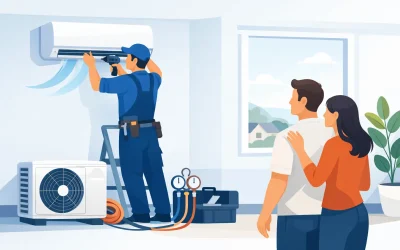
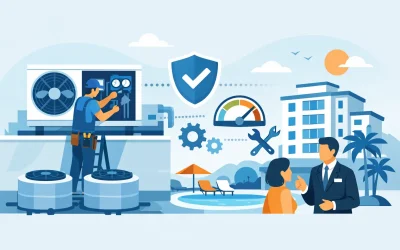
Regular professional servicing looks beyond the filters. It can include checks of electrical connections, refrigerant operation, drainage, coil condition, airflow, controls and overall system performance. For commercial sites, preventative maintenance also helps identify risks before they interrupt operations or affect compliance requirements.
Make maintenance part of your cost-control plan
Servicing is often viewed as a repair expense, but it is better treated as protection for an important asset. A clean, correctly operating air conditioner uses energy more effectively and is less likely to fail when the weather is at its worst.
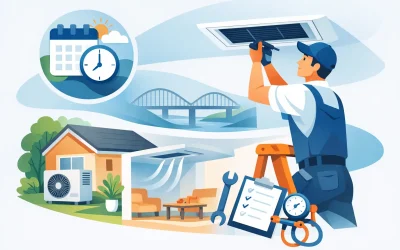
For residential systems, an annual service is a sensible baseline, especially before summer. Systems that run heavily, operate in dusty conditions or serve larger homes may need closer attention. For commercial HVAC, maintenance intervals should reflect operating hours, equipment type, site conditions and the consequences of downtime.
A planned programme also gives facility managers useful visibility over equipment condition. Rather than reacting to emergency callouts, they can budget for repairs, upgrades and replacements based on real asset performance. That makes it easier to prioritise work that will reduce power use and improve reliability.
When an upgrade may be the better financial decision
There comes a point where ongoing repairs and high consumption cost more than a replacement would over time. Older systems can be less efficient, harder to maintain and more prone to component failures. If the aircon cannot hold temperature, needs repeated repairs or has become unsuitable for the space, an upgrade assessment is worth considering.
Newer equipment can offer improved efficiency, inverter technology, more accurate controls and better zoning options. However, replacing a unit solely because it is old is not always necessary. A well-maintained system that is correctly sized and performing properly may still provide good value. The right call depends on its condition, repair history, operating costs and the needs of the property.
For Brisbane homes and businesses, the lowest aircon bill usually comes from consistent attention rather than one dramatic change. Keep airflow clear, set practical temperatures, manage heat gain and act on performance issues early. If your system is costing more than it should, a professional inspection can identify the cause and give you a clear path to more efficient cooling.