A properly operating air conditioner keeps its refrigerant contained inside a sealed pipework system. You should not smell it, touch it or come into contact with it. But if your split system suddenly stops cooling, starts hissing, or leaves you feeling unwell, it is reasonable to ask: is refrigerant harmful indoors?
The short answer is that refrigerant leaks need prompt professional attention. The level of risk depends on the refrigerant type, how much has escaped, the room size and ventilation, and whether there are ignition sources nearby. Most small leaks from a household system do not create an immediate health emergency, but they are never something to ignore or attempt to repair yourself.
Is refrigerant harmful indoors?
Refrigerant is the working fluid that moves heat out of your home or building. It circulates in a closed loop between the indoor unit, outdoor unit and connecting pipework. Under normal conditions, it stays inside that loop.
If refrigerant escapes indoors, it can cause problems in a few ways. At higher concentrations, many refrigerants can displace oxygen in a small or poorly ventilated room. That can lead to dizziness, headaches, nausea, shortness of breath or light-headedness. A significant release is more concerning in plant rooms, enclosed commercial areas, storage spaces and small bedrooms than in a large, open-plan living area.
Direct contact is also a risk. Refrigerant released from a pressurised line becomes extremely cold very quickly and can cause cold burns or frostbite to skin and eyes. Do not investigate a suspected leak by touching oily residue, pipework or the indoor coil.
The type of refrigerant matters too. Many newer residential systems use R32, which is classified as mildly flammable. It is used safely in large numbers of air conditioners, but a leak should be treated carefully. Keep flames, cigarettes, sparks and electrical ignition sources away from the suspected area. Older or larger systems may use different refrigerants, each with its own handling requirements.
What a refrigerant leak can look or sound like
Refrigerant has no reliable smell that homeowners or staff can use to confirm a leak. A musty odour is more often linked to mould, dirty filters, blocked drains or microbial growth in the indoor unit. A burning smell points to a separate electrical issue. Both still warrant a service call, but neither confirms refrigerant loss.
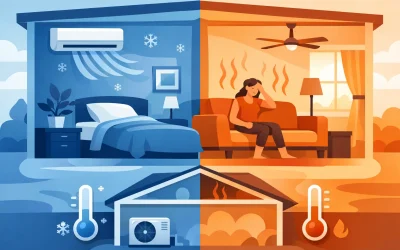
Instead, look for changes in system performance. An air conditioner with low refrigerant may run for longer but deliver weak cooling, struggle to reach the set temperature, or blow air that is less cool than usual. You may notice ice on the indoor coil, copper pipes or outdoor unit, although icing can also be caused by restricted airflow from a dirty filter or fan fault.
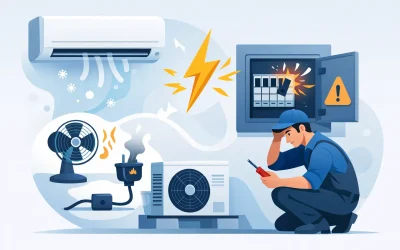
A hissing or bubbling sound around the indoor head unit, refrigerant pipework or outdoor condenser can indicate a leak. Oily marks near pipe connections are another clue, as refrigerant oil can escape with the gas. None of these signs proves the cause on its own, which is why proper testing matters.
What to do if you suspect an indoor leak
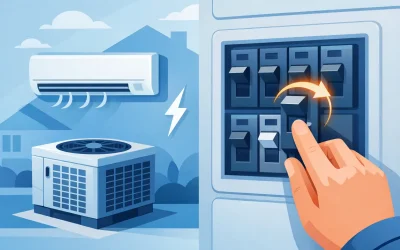
Start by turning the air conditioner off at the controller. If you can do so safely, isolate power at the dedicated switch or circuit breaker. This stops the system from continuing to run under fault conditions and reduces the chance of further damage to the compressor.
Open doors and windows to ventilate the area if practical. Keep people, pets and staff away from the immediate area, particularly if the room is small, there is a strong hissing sound, or anyone feels unwell. Do not use an open flame to check for leaks, and do not smoke nearby. Avoid switching electrical equipment on or off close to a suspected large R32 leak.
If someone has difficulty breathing, faints, experiences chest pain, or has had refrigerant contact with their eyes or skin, move them to fresh air where safe and seek urgent medical help. For skin or eye exposure, flush with plenty of clean, lukewarm water and get medical advice. A large release in an enclosed area should be treated as an emergency rather than a standard air conditioning repair.
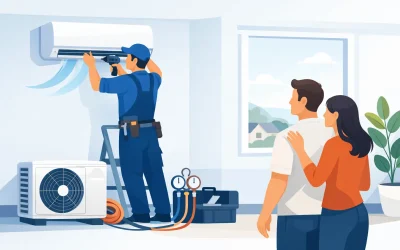
For a typical performance issue without immediate symptoms, arrange a licensed air conditioning technician as soon as possible. Refrigerant work in Australia is regulated. It requires the right equipment, licence and recovery procedures, not a top-up can from the hardware aisle.
Why simply regassing an air conditioner is not the answer
Refrigerant does not get used up like fuel. If an air conditioner is low on gas, it has almost certainly leaked. Adding more refrigerant without finding and repairing the leak may restore cooling for a short time, but it leaves the actual fault in place.
This approach can cost more over time. Low refrigerant forces the system to work harder and may cause poor efficiency, inconsistent comfort and compressor damage. In commercial settings, that can quickly turn a manageable maintenance issue into downtime, product loss, occupant complaints or a costly replacement decision.
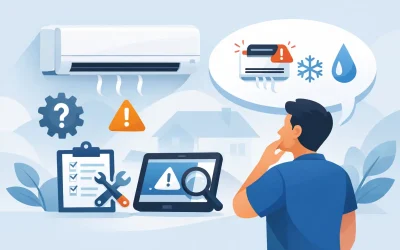
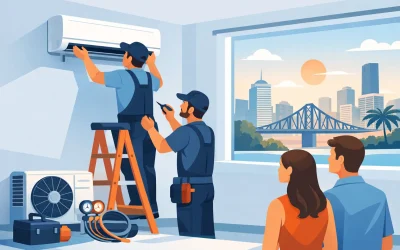
A proper repair starts with inspection and leak testing. Depending on the system, a technician may check flare connections, valves, indoor coils, outdoor coils, pipework and drain areas for evidence of damage or corrosion. Once the leak is repaired, the system must be pressure tested, evacuated and recharged to the manufacturer’s specified amount. That process protects performance, safety and equipment life.
Refrigerant risks in homes versus commercial buildings
For most Brisbane homes, a small split-system leak is more likely to show up as poor cooling than a serious indoor exposure event. The refrigerant charge is relatively limited, homes often have natural ventilation, and the equipment is not usually located in a confined plant room. That does not mean it should be put off through another hot summer. A leak will not fix itself, and continuing to run the unit can make the repair more involved.
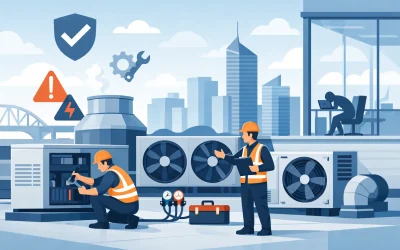
Commercial sites need a broader risk assessment. VRV/VRF systems, central plant and larger ducted installations may carry more refrigerant and serve multiple rooms. Facility managers should pay particular attention to enclosed spaces, plant rooms, accommodation areas, aged care facilities, classrooms and spaces with restricted ventilation. Clear maintenance records, asset audits and planned servicing make it easier to identify recurring faults before they affect operations.
There is also a practical distinction between a refrigerant concern and an indoor air quality concern. Dirty filters, contaminated coils, mould, water leaks and blocked condensate drains can affect comfort and air quality without any refrigerant leak at all. A thorough service should assess both rather than assuming every unpleasant smell or poorly performing unit is a gas issue.
How regular servicing reduces the chance of a leak
Not every refrigerant leak is preventable. Corrosion, accidental damage, ageing components and manufacturing defects can all occur. However, routine servicing gives technicians the opportunity to spot early warning signs such as oil staining, deteriorated insulation, vibration wear, loose connections, coil corrosion and declining cooling performance.
For homeowners, an annual service before peak cooling season is a sensible baseline, particularly for systems that run hard through Queensland summers. Clean filters between services help maintain airflow, but they do not replace professional inspection.
For commercial properties, maintenance intervals should reflect operating hours, system size, occupancy, critical areas and the consequences of downtime. Restaurants, education sites, aged care facilities and busy offices generally benefit from a planned program rather than waiting for a breakdown on a 35-degree day.
When to call for urgent help
Treat a suspected refrigerant issue as urgent when there is a strong hissing sound, a visible cloud or vapour near equipment, a large loss of cooling, ice forming rapidly, or anyone experiencing breathing difficulties, dizziness or eye irritation. Switch the system off, ventilate if safe, keep people clear and arrange qualified assistance.
For less urgent symptoms such as gradual loss of cooling, higher power bills or occasional icing, book an inspection before the system is placed under heavier demand. Big Dog Mechanical can diagnose refrigerant faults, repair leaks and return residential and commercial systems to safe, efficient operation.
A well-maintained air conditioner should cool quietly in the background. If yours is hissing, icing up or no longer keeping the room comfortable, taking action early is the simplest way to protect the people inside and the equipment doing the work.