That musty smell when the air conditioner starts is not something to mask with a spray or ignore until summer. In Queensland’s humid conditions, learning how to clean mould from air conditioner components starts with knowing what is safe to clean and what needs a professional. A dirty filter is one thing. Mould on the indoor coil, fan barrel or inside ductwork is another.
Mould can form where warm, damp air meets dust and condensation. Split systems are especially prone to it because their indoor units remove moisture from the air. If the drain is slow, filters are blocked or the unit is rarely serviced, moisture and organic debris create the conditions mould needs to grow.
Signs mould may be inside your air conditioner
A visible dark mark around the supply vents is a clear warning sign, but mould is not always easy to see. The more common first sign is a damp, earthy or stale odour that appears when the system begins cooling or heating.
You may also notice reduced airflow, water dripping from the indoor unit, black or grey spotting behind the louvers, or dust collecting unusually quickly around the vents. In commercial spaces, complaints about odours in one room or zone can point to a hygiene issue inside the relevant indoor unit or duct run.
These symptoms do not automatically mean every part of the system is contaminated. A smell can also come from a blocked drain, built-up dirt on the coil or stagnant water in the drain pan. The fix depends on where the problem is sitting.
What you can safely clean yourself
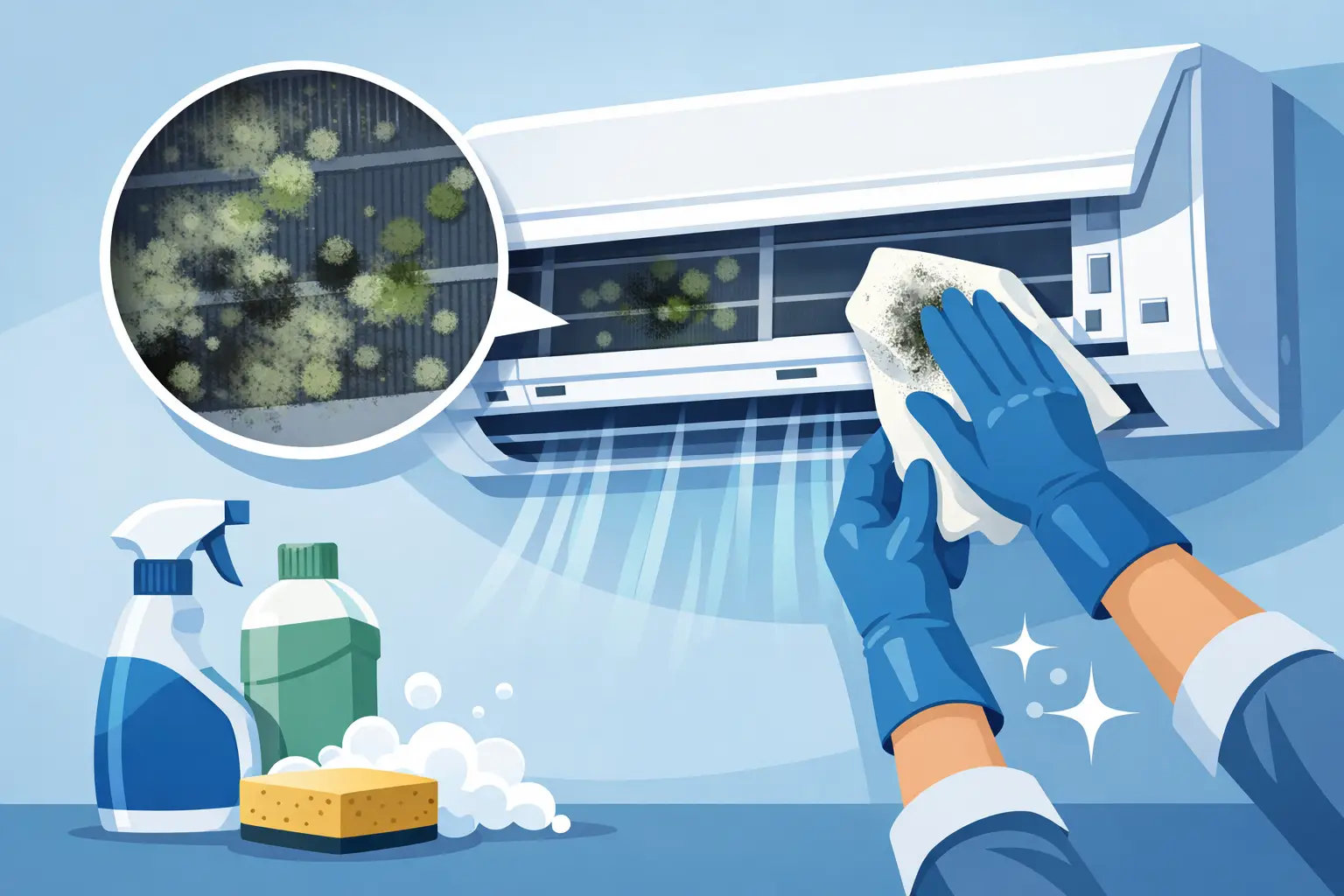
For most homeowners, the safe limit is cleaning accessible filters, the front cover and the exterior louvers. This regular maintenance removes the dust that feeds mould growth and helps the system move air properly.
Before starting, switch the unit off at the isolator or circuit breaker. Do not rely on the remote control. Let the system sit for a few minutes, then open the indoor unit’s front panel and carefully remove the filters according to the manufacturer’s instructions.
Vacuum loose dust with a soft brush attachment. Wash reusable filters in lukewarm water with a small amount of mild detergent, then rinse them thoroughly. Leave them to dry completely in a shaded, well-ventilated spot before reinstalling. Putting damp filters back into the unit can add to the moisture problem you are trying to prevent.
Wipe the accessible plastic surfaces and louvers with a clean, lightly damp microfibre cloth. Avoid soaking the cloth and keep liquid well away from electrical components, display panels and wiring. If there is a small amount of surface spotting on the plastic only, use a cleaning product approved for air conditioner surfaces and follow its directions carefully.
While the filters are out, check for obvious debris near the indoor unit’s air intake. Outside, clear leaves, grass clippings and stored items away from the condenser so it can breathe. This does not remove mould from inside the system, but it supports better overall performance.
How to clean mould from an air conditioner safely
The parts most likely to hold hidden mould are the evaporator coil, condensate drain pan, drain line and cross-flow fan inside a split system. In ducted systems, the issue may also involve return-air grilles, fan coil units, duct insulation or sections of ductwork.
These areas are not suitable for a basic wipe-down. They are difficult to reach, easy to damage and located close to electrical components. Spraying household bleach, vinegar, disinfectant or fragranced deodoriser through the vents is not a proper clean. It may leave residue on the coil, damage materials, create fumes or temporarily cover the odour while the contamination remains.
A proper hygiene clean generally involves isolating the equipment, protecting the surrounding area, accessing the indoor components, removing debris from the coil and fan, cleaning the drain pan and flushing the drain line. The technician should use an HVAC-appropriate cleaner, not a one-size-fits-all household product. The system is then checked for drainage, airflow and correct operation.
This work matters because the fan barrel can hold a surprising amount of residue. Every time it turns, it can push odours and fine particles back into the room. Cleaning filters alone will not resolve that issue.
If visible mould covers a large area, water has leaked into walls or ceilings, or someone in the property has significant respiratory sensitivities, avoid disturbing it. Keep the unit switched off if practical and arrange an assessment. A bigger moisture issue may need attention beyond the air conditioner itself.
Why bleach is usually the wrong answer
Bleach is a common instinct when mould appears, but air conditioning systems are not bathroom tiles. Bleach can corrode metal components, affect nearby materials and does not address a blocked drain, dirty fan or poor airflow. It can also be unsafe when sprayed into a confined indoor unit and then circulated through a room.
Likewise, fogging a room or using an odour bomb is not a substitute for cleaning the source. If the smell returns once the system runs, the underlying issue has not been resolved.
The right approach is mechanical cleaning of the affected components, targeted HVAC-safe treatment where required, and correction of the moisture or drainage problem that allowed the growth in the first place.
When to call an air conditioning technician
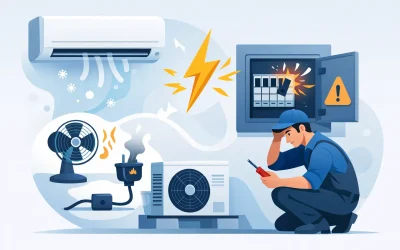
Book a professional service when the odour persists after filter cleaning, mould is visible inside the unit, water is leaking, or the system has not had a proper clean in a long time. The same applies if the unit is noisy, performing poorly or tripping power – these can be separate faults that need attention while the system is open.
For Brisbane businesses, hygiene cleaning is particularly worthwhile in sites with high daily occupancy, such as offices, hospitality venues, schools and aged care facilities. Indoor air quality concerns can quickly become operational concerns when staff, tenants or customers report smells or discomfort.
A qualified technician can also identify why the mould developed. It may be a blocked condensate drain, incorrect drainage fall, a failing condensate pump, excessive indoor humidity, poor maintenance intervals or a system that is not sized or operating correctly for the space. Treating the cause is what stops repeat callouts.
Big Dog Mechanical provides hygiene cleaning and servicing for residential split and ducted systems, as well as commercial HVAC equipment across Brisbane. For commercial sites, planned maintenance can schedule cleaning before odours, drainage failures and downtime become a bigger problem.
Prevent mould from returning
There is no single maintenance interval that suits every air conditioner. A lightly used bedroom split system may need less attention than a unit running all day in a busy shop, kitchen-adjacent area or office. Pets, nearby construction dust, smoking, coastal air and household humidity all affect how quickly dirt builds up.
As a practical baseline, clean accessible filters every few months during regular use and more often if they look dusty. Arrange professional servicing at least annually for systems that work hard, or as recommended by the manufacturer and your maintenance provider.
It also helps to run the fan-only function for a short period after cooling, if your system has this feature. This can help dry residual moisture from the indoor coil. Keep doors and windows closed while cooling, use bathroom and kitchen exhaust fans to manage indoor moisture, and deal with any water leaks promptly.
Do not set the temperature extremely low in an attempt to cool a room faster. It will not cool the space more quickly, and unnecessary run time can add to condensation and energy use. A sensible set point and clean airflow are better for comfort and the equipment.
A clean air conditioner should not be an occasional reaction to a bad smell. Keeping filters clean, drainage clear and internal components professionally maintained gives your system the best chance of delivering cool, healthy-feeling air when you need it most.