A Brisbane summer breakdown is not a minor inconvenience. A home can become uncomfortable within hours, while a failed system in a café, office, classroom or care facility can affect staff, customers, stock and normal operations. When you need Brisbane emergency aircon repairs, the priority is simple: make the space safe, identify the fault properly and get the system operating again without wasting time on guesswork.
The right response is not always a full replacement or a quick reset. It depends on the age of the unit, the type of failure, parts availability and how critical cooling is to the property. A qualified technician can assess the situation, explain the practical options and carry out repairs that suit the system and the circumstances.
When an aircon breakdown needs urgent attention
Some faults can wait for a standard service booking. Others should be dealt with promptly, particularly during extreme heat or when a commercial site depends on temperature control.
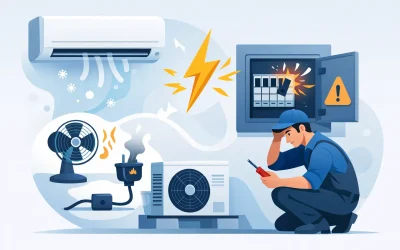
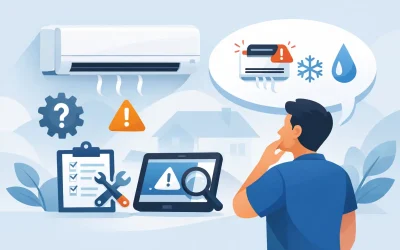
A system that will not start, blows warm air, trips power repeatedly, leaks heavily or displays an unfamiliar fault code needs professional attention. Strong burning smells, smoke, buzzing electrical noises or water near electrical components require more caution. Turn the system off at the isolator where it is safe to do so, keep people clear of the affected area and arrange a qualified technician.
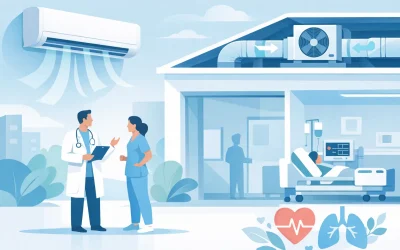
For businesses, urgency is about more than comfort. Hospitality venues may lose diners from overheated spaces. Aged care and education environments have a duty to protect vulnerable occupants. Offices and retail sites can become difficult to operate in, and plant rooms with poor ventilation can place other equipment under strain. Fast fault finding helps reduce downtime and gives managers a clear picture of what needs to happen next.
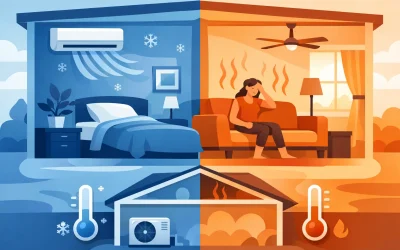
At home, emergency repairs can be especially important for young children, older residents, pets and anyone with heat-sensitive health conditions. Even if the issue appears small, a system that is leaking, cycling on and off or struggling to cool can worsen quickly under Brisbane heat and humidity.
What happens during Brisbane emergency aircon repairs
A proper emergency callout starts with diagnosis, not assumptions. Air conditioning faults can have similar symptoms but very different causes. Warm air from a split system, for example, may be caused by a dirty filter, a failed capacitor, a control fault, low refrigerant from a leak, a compressor issue or a problem with the outdoor unit.
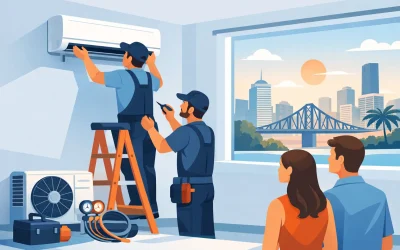
The technician should inspect the unit, check controls and electrical components, assess airflow and drainage, and test operating performance. On ducted, VRV/VRF and larger commercial systems, the process may also involve checking zones, sensors, communication faults, fan motors, condensate pumps and associated plant.
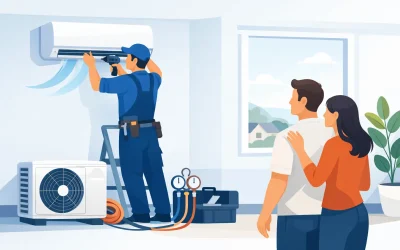
Once the cause is clear, you should receive a straightforward explanation of the fault and recommended repair. Where a safe repair can be completed on the spot, that is usually the fastest path back to comfort. If the job requires a specialised part, further investigation or a larger repair, a good provider will outline the immediate measures available and the next steps to restore reliable operation.
There is a trade-off worth understanding. A temporary fix may get cooling back quickly, but it is not always the best long-term answer for an older or heavily worn system. Conversely, replacing a system immediately is not always justified when a targeted repair can deliver years more reliable service. The right decision comes from the condition of the equipment, repair cost, energy performance and the needs of the people using the building.
Common faults that cause sudden failures
Air conditioners generally give warning signs before they stop altogether, but those signs are easy to miss in a busy building or household. Weak airflow, uneven room temperatures, unusual noises and rising power bills can point to a system working harder than it should.
Electrical faults are a common reason for an unexpected shutdown. Failed capacitors, contactors, circuit boards and damaged wiring can prevent a unit from starting or cause it to trip. These are not DIY repairs. Air conditioning equipment contains high-voltage electrical components, and repairs must be carried out safely by appropriately qualified technicians.
Blocked drains and condensate issues are another frequent problem in Brisbane’s humid conditions. Water may drip from an indoor head unit, stain ceilings near ducted systems or trigger a safety shutdown. Clearing a blockage is only part of the job. The drain line, pump and system operation should be checked so the same issue does not return after the next humid spell.
Refrigerant issues require careful handling too. Refrigerant does not simply run out under normal operation. If a system is low, there may be a leak that needs to be located and repaired before the system is recharged. Topping up refrigerant without addressing the underlying cause can lead to repeat failures and unnecessary expense.
Dirty filters, coils and outdoor units can also push a system to its limit. Restricted airflow reduces cooling capacity, increases energy use and can contribute to frozen coils or compressor stress. Hygiene cleaning and routine maintenance are often what prevent these avoidable breakdowns.
What to do before the technician arrives
You can help speed up the diagnosis without taking risks. If the unit is safe and still powered, note what it is doing: whether it starts, what lights or codes appear, when the problem began and whether it is cooling at all. Take a photo of any error code or visible leak if you can do so safely.
Make the indoor and outdoor units accessible. Move furniture away from wall-mounted systems, clear stored items from around the outdoor condenser and ensure the technician can reach switchboards, plant rooms or roof access points where required. For commercial properties, provide details on access procedures, site contacts and any operational restrictions.
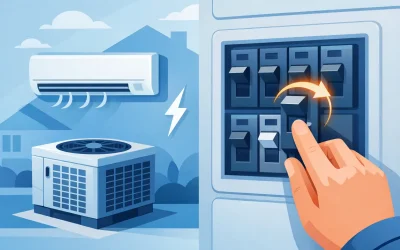
Do not keep resetting breakers or restarting a system that is tripping power. Repeated resets can mask an electrical issue and may cause further damage. Avoid attempting to remove covers, add refrigerant or force open blocked drains. The most useful action is to switch the unit off if there are safety concerns and give the technician clear information.
Commercial repairs need a wider view
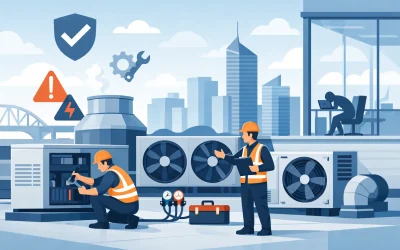
A commercial air conditioning failure is rarely just about one room being too warm. It may be a symptom of a maintenance gap, a system nearing the end of its service life or a control issue affecting multiple areas. This is why facility managers benefit from a repair team that understands both individual units and wider HVAC systems.
After an urgent repair, consider whether the site needs a follow-up inspection, asset audit or preventative maintenance plan. Regular servicing can identify worn components, dirty coils, drainage problems and declining performance before they turn into an after-hours callout. It also helps businesses plan repairs and upgrades around operations rather than reacting during peak demand.
For older systems, energy use matters as much as reliability. A unit that can be repaired may still be expensive to run or unable to maintain consistent temperatures. A practical assessment should compare repair costs with likely future issues, efficiency and the disruption involved in an upgrade. There is no one-size-fits-all answer, especially for sites with central plant, ducted systems or multiple tenancies.
Choosing a repair team you can rely on
Emergency support is only useful when it is backed by sound technical work. Look for a local air conditioning specialist with the capability to work across residential split systems, ducted units and complex commercial equipment. Clear communication matters too. You need to know what failed, what has been done, what it will cost and whether any further work is recommended.
Big Dog Mechanical provides responsive repair support across Brisbane and surrounding areas, with the technical breadth to assist homeowners, property managers and commercial operators. The focus should always be on safe diagnosis, practical repairs and getting your system back to dependable performance.
The best time to think about an emergency is before the next hot spell. If your air conditioner is noisy, leaking, underperforming or overdue for service, arranging an inspection now can be the difference between a planned repair and a breakdown when cooling matters most.