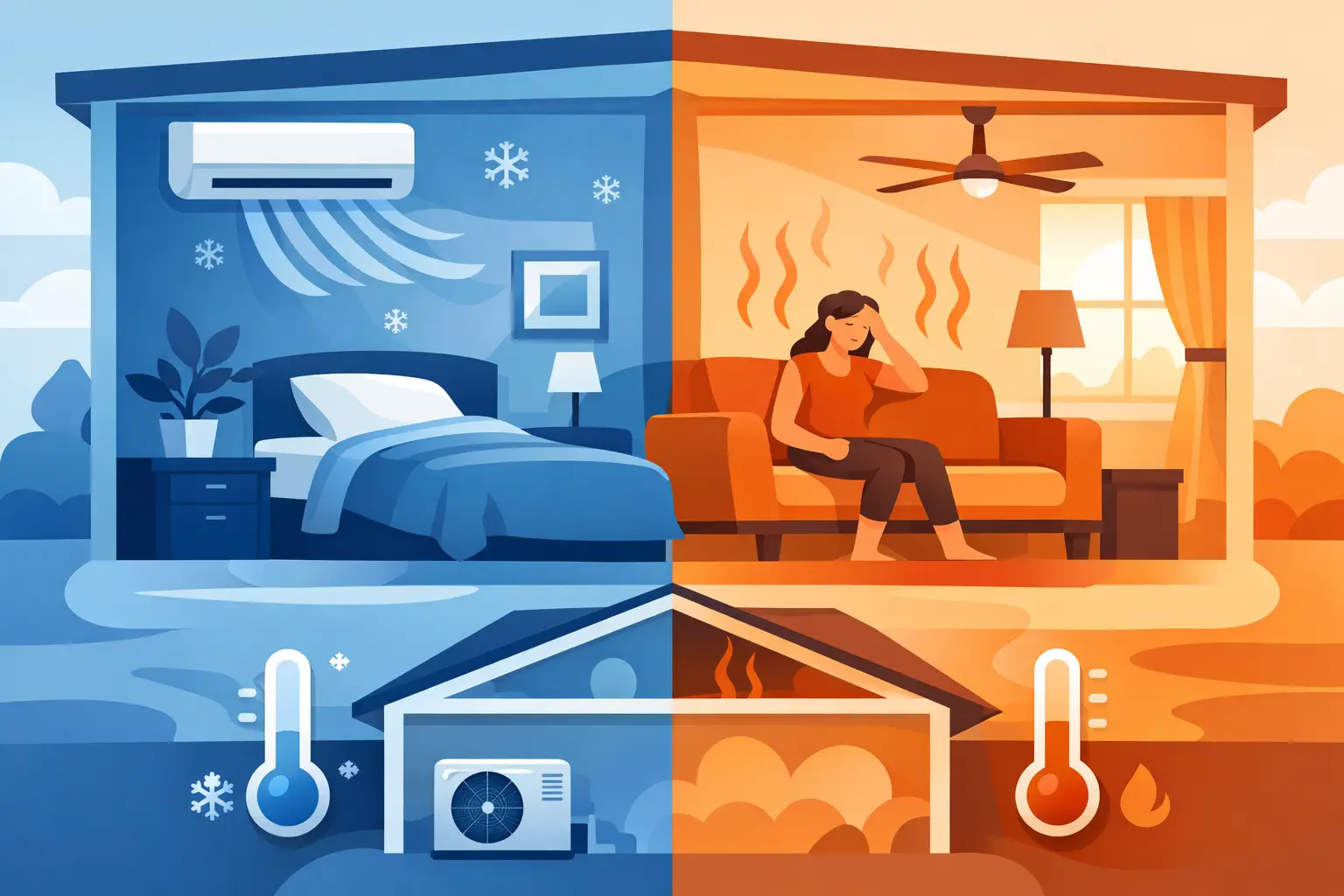
A lounge that feels crisp while the back bedroom stays sticky is more than a minor comfort issue in a Queensland summer. Understanding why aircon cools unevenly helps you separate a simple airflow problem from a fault that could raise power bills, strain equipment or leave part of your property unusable on hot days.
Uneven cooling can affect a single split system, a ducted home system or a large commercial HVAC installation. The cause is not always the air conditioner itself. Room layout, sun exposure, insulation, dirty filters and the way the system was designed can all play a part. The right fix depends on what is happening across the whole property, not just the temperature at one vent.
Why aircon cools unevenly in homes and businesses
Air conditioning works by moving a set amount of conditioned air through a space. If one room receives too little airflow, gains more heat than the others or has a separate mechanical issue, it will feel warmer even when the unit is running.
In a home, this often shows up in west-facing bedrooms, upstairs rooms and areas at the far end of duct runs. In commercial buildings, it may appear in meeting rooms with full windows, busy kitchens, server rooms or sections of an office that have changed use since the system was installed.
Dirty filters and restricted airflow
A blocked return-air filter is one of the most common and most preventable causes. Filters collect dust, lint and airborne particles over time. Once they are clogged, the system cannot pull enough air through to cool and circulate it properly.
With a split system, restricted filters can make the unit work harder while reducing the throw of cool air into the room. With ducted air conditioning, low airflow may be most obvious at the vents furthest from the indoor unit. Dirty indoor coils, outdoor coils and blocked drains can create similar performance issues, particularly where regular servicing has been missed.
Homeowners can generally remove and clean reusable filters as directed by the manufacturer. If filters look clean but airflow remains weak, the unit needs a proper inspection rather than repeated thermostat adjustments.
Closed, blocked or poorly balanced vents
Ducted systems rely on a balance between supply vents, return-air grilles and dampers within the ductwork. A closed vent, furniture placed over a grille or a damper set incorrectly can redirect too much air into one area and starve another.
It is tempting to close vents in unused rooms to force more air elsewhere. Sometimes that helps, but it can also upset the system balance and increase pressure in the ducts. In some systems, too many closed vents can contribute to noise, poor airflow and unnecessary wear.
Check that accessible vents are open, clear of rugs and furniture, and not damaged. If certain rooms have always been warmer, a technician can assess airflow and adjust dampers where fitted. Proper balancing is more precise than simply opening every vent fully.
Leaking, crushed or disconnected ductwork
Ducts hidden in a ceiling cavity do hard work in harsh conditions. Over time, joins can loosen, flexible ducts can sag or tear, and insulation can deteriorate. Cool air may then escape into the roof space instead of reaching the intended room.
A duct issue is often suspected when one or two vents have noticeably weaker airflow than nearby vents, or when temperatures vary sharply despite a clean filter and open grilles. In Brisbane properties, hot roof spaces can make even a modest duct leak costly because the system must overcome significant heat before it can cool the room.
Duct inspection and repair should be handled by a qualified HVAC technician. The job may involve resealing joins, replacing damaged sections, supporting sagging ductwork or improving insulation around runs exposed to heat.
The system is undersized, oversized or poorly zoned
Air conditioner sizing is not just about floor area. Ceiling height, insulation, glazing, orientation, household occupancy, equipment heat load and room use all matter. A system that was suitable before a renovation may struggle after walls are moved, windows are added or a spare room becomes a home office.
An undersized unit may run for long periods without bringing warmer rooms down to temperature. An oversized system has its own drawbacks: it can cool the area closest to the unit quickly, then cycle off before air has mixed properly through the rest of the property. That can leave distant rooms warm and humidity levels uncomfortable.
Zoning can be an effective answer for larger homes and commercial spaces, but only when it is designed and commissioned correctly. A zone actuator that has failed, a control setting that is wrong or a design that tries to condition too many different spaces from one zone can all cause uneven results.
Sun, insulation and heat load differences
Not every warm room has an air conditioning fault. A north or west-facing room with large windows can absorb far more heat than a shaded room across the hall. Poor ceiling insulation, gaps around windows, unsealed doors and dark roofing can further increase the load.
Businesses see the same issue where a retail frontage gets afternoon sun or an office zone has a higher density of people and computers. In hospitality settings, kitchen heat and frequent door openings can overwhelm an air conditioning area that otherwise performs well.
Blinds, external shading, draught sealing and improved insulation can reduce the burden on the air conditioner. These measures do not replace correct system capacity, but they can make a meaningful difference to comfort and running costs.
Aircon cooling unevenly can point to a mechanical fault
If cooling has become uneven suddenly, the issue may be inside the system rather than the building. Refrigerant problems, a failing fan motor, electrical faults, a dirty evaporator coil or a compressor issue can reduce capacity and airflow.
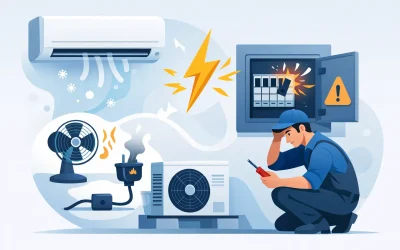
Split systems may show warning signs such as water leaking indoors, ice forming on pipework, unusual noises, short cycling or air that is only mildly cool. Ducted and commercial systems may run continuously, trip breakers, display controller errors or deliver inconsistent temperatures across zones.
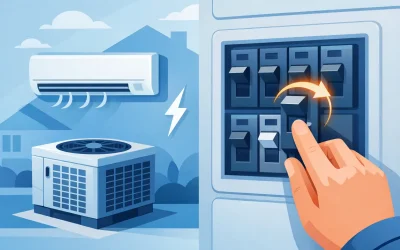
Do not try to top up refrigerant or open electrical components yourself. Refrigerant handling and electrical repairs require licensed technicians, and a refrigerant leak needs to be located and repaired rather than simply refilled. Continuing to run a struggling unit can turn a manageable repair into a larger component failure.
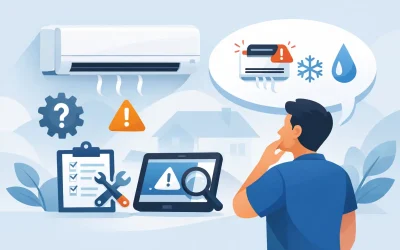
Checks you can make before booking a repair
Start with the straightforward items. Set the controller to cooling mode, use a sensible set point such as 23 to 25 degrees, and allow doors and windows to remain closed while the system runs. Check and clean the filters if they are due, then confirm supply vents and return-air grilles are unobstructed.
For a split system, make sure the indoor unit’s louvres are directing air into the room rather than straight down. For ducted air conditioning, note which rooms are affected, whether airflow is weak or simply warm, and whether the problem occurs only in the afternoon. Those details help a technician diagnose the fault efficiently.
Avoid setting the thermostat extremely low in an effort to cool the warm room faster. The air conditioner does not cool more quickly because it is set to 18 degrees. It will simply run longer, potentially wasting energy while the underlying problem remains.
When uneven cooling needs professional attention
Book a professional assessment if cleaning filters and clearing vents does not improve the issue, if only certain outlets have poor airflow, or if the system is noisy, leaking, icing up or displaying faults. Commercial sites should act early where uneven temperatures affect staff comfort, customer areas, food service, sensitive equipment or compliance requirements.
A proper diagnosis should look beyond the indoor unit. It may include checking refrigerant performance, electrical components, fan operation, coils, condensate drainage, duct condition, zoning controls and system capacity against the current building load. That approach identifies the actual cause instead of applying a quick fix that does not last.
For older equipment, the practical choice may be between repair, targeted upgrades or replacement. A minor duct repair or control adjustment can be excellent value. If a unit is repeatedly failing, inefficient or no longer suited to an altered property, investing in a correctly selected system may provide better comfort and lower operating costs over time.
Big Dog Mechanical can assess uneven cooling across residential and commercial systems, from split units and ducted air conditioning through to more complex HVAC plant. The aim is simple: restore consistent comfort without guessing at the cause.
A room that is always warmer is your system telling you something. Deal with it before the next run of high temperatures, and you will give your air conditioner a better chance of performing when you need it most.