When the air conditioner stops on a humid Brisbane afternoon, the switchboard is often the first place people look. You can reset air conditioner circuit breaker controls safely in some situations, but a breaker that has tripped is doing a job: it has detected a fault, overload or abnormal electrical condition. Resetting it may restore power. It does not automatically fix the reason it tripped.
For homeowners, that distinction helps prevent a small fault becoming a costly repair. For facility managers and business operators, it can be the difference between a controlled response and repeated downtime affecting staff, customers or critical equipment.
What an air conditioner breaker trip can mean
An air conditioner uses significant power when its compressor starts, particularly older, larger or heavily loaded systems. A one-off trip can occur after a storm, a brief power interruption or a temporary overload. If the breaker stays on after one careful reset and the system runs normally, there may be no immediate cause for alarm.
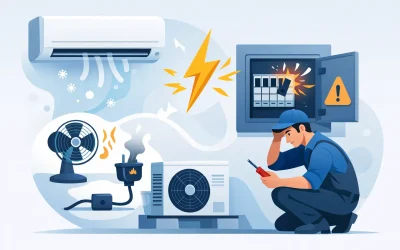
Repeated tripping is different. It can point to a problem within the air conditioning system, its dedicated circuit or the building’s electrical supply. Common causes include a dirty outdoor coil forcing the system to work harder, a failing compressor, a faulty fan motor, damaged wiring, moisture in electrical components, a failing capacitor or an undersized electrical circuit.
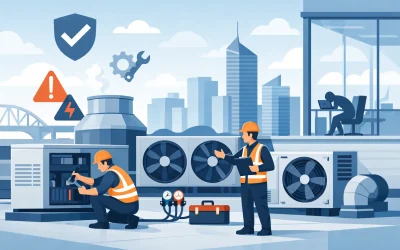
In commercial settings, several units starting at once can also expose demand issues. A tripping breaker on a VRV/VRF system, ducted system or central plant should be treated as an operational fault, not simply reset until it holds. Repeated resets can damage equipment and may create an electrical safety risk.
How to reset an air conditioner circuit breaker
Before touching the switchboard, turn the air conditioner off at its wall controller or thermostat. If it is a split system, use the remote to switch it off as well. This reduces the chance of the unit immediately trying to restart under load when power returns.
Locate your electrical switchboard and find the breaker labelled air conditioner, A/C, HVAC, condenser or a similar description. In some properties, the air conditioner may have a dedicated breaker and an outdoor isolation switch. The isolation switch near the outdoor unit is not a substitute for the circuit breaker and should not be opened or worked on by anyone who is not licensed to do so.
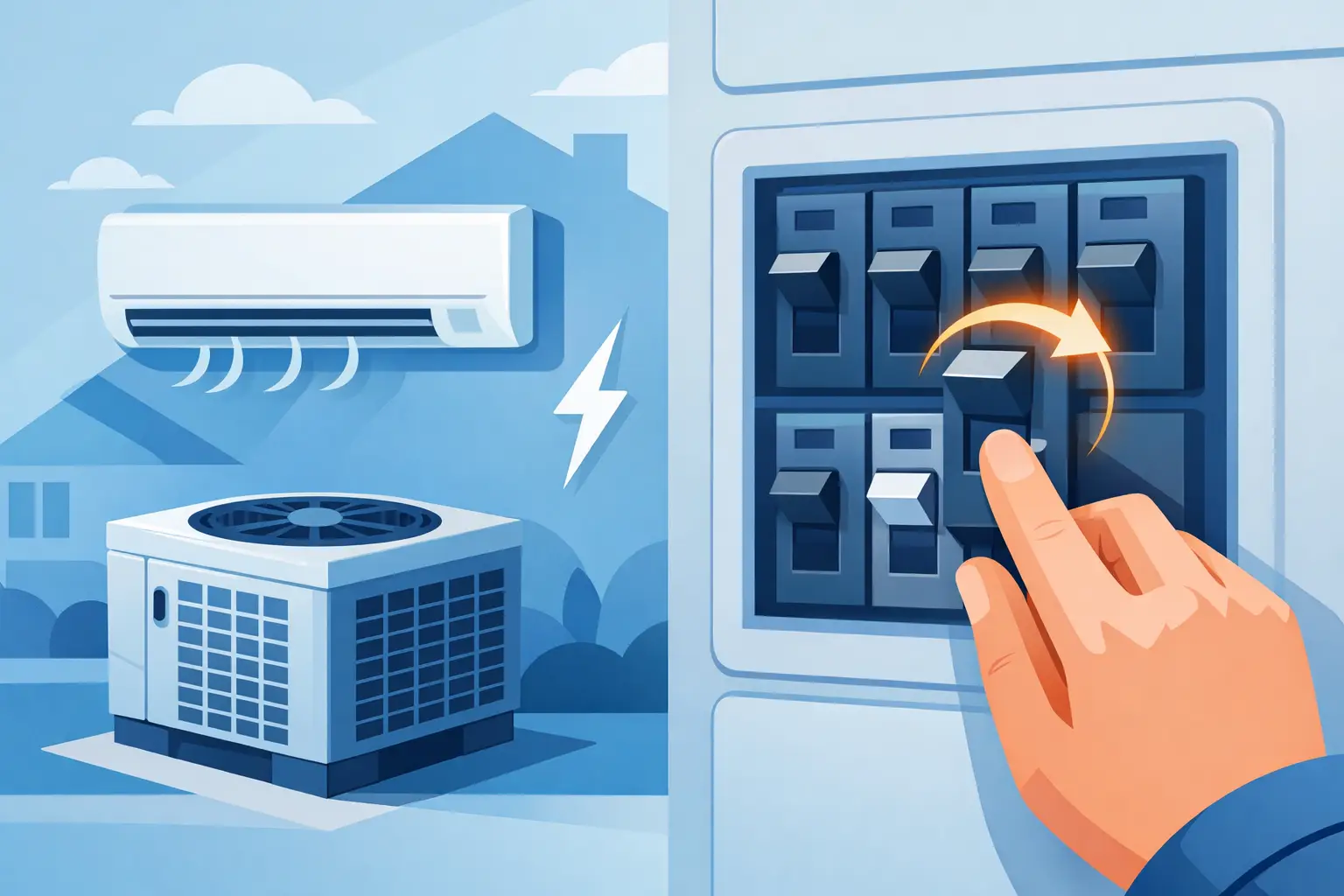
A tripped breaker may sit in the middle position, or it may look close to the off position. Move it firmly all the way to OFF first, then move it back to ON. Do not force a breaker that feels loose, hot or damaged.
Wait five to ten minutes before restarting the air conditioner. This pause allows compressor pressures to equalise and avoids a hard restart. Then turn the system on and watch how it behaves. If it starts, cools or heats normally and the breaker remains on, keep an eye on it through the next operating cycle.
Stop and call for help if the breaker trips again
If the breaker trips immediately, trips when the outdoor unit starts, or trips again within hours or days, leave it off. Do not continue resetting it. That pattern needs assessment by a qualified air conditioning technician and, where required, a licensed electrician.
The same applies if you notice a burning smell, buzzing, scorch marks, water around electrical equipment, smoke, a hot switchboard cover or flickering lights. Keep people clear of the area and arrange urgent assistance. Electrical faults are not a DIY troubleshooting exercise.
Breaker, safety switch and isolator: know the difference
These terms are often used interchangeably, but they protect different parts of the system.
A circuit breaker protects wiring and equipment from overcurrent. It may trip when the air conditioner draws more current than the circuit can safely handle.
A safety switch, also called an RCD, is designed to protect people from electric shock by detecting current leakage to earth. If an RCD trips when the air conditioner runs, moisture, deteriorated insulation or an electrical component fault may be involved. This requires prompt investigation.
An isolator is a local switch, usually near the outdoor unit, used to isolate power for servicing. It should only be operated normally and should never be dismantled, bypassed or used to diagnose a fault.
The labels in your switchboard may not make this obvious, especially in older homes, tenancy fit-outs or larger sites with multiple distribution boards. If you are unsure which switch supplies the unit, do not guess. Switching off the wrong circuit can interrupt refrigeration, security, IT equipment or other essential services.
Checks you can make without opening anything
Once power is safely off, there are a few useful observations you can make from the ground. Check whether the outdoor unit is blocked by leaves, grass clippings, storage boxes or other debris. Restricted airflow makes the unit work harder and can contribute to overheating. Do not hose electrical components or push tools through the grille.
Inside, inspect the return-air filter. A filter packed with dust reduces airflow, increases running strain and affects comfort and energy use. Most residential split-system filters can be removed and cleaned according to the manufacturer’s instructions. For ducted and commercial systems, filter access and maintenance requirements vary, so use the approved process for the unit.
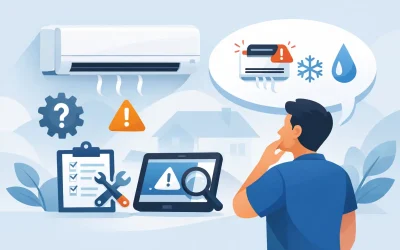
Also consider what happened before the trip. Did it occur during a heatwave, after heavy rain, when the system changed from cooling to heating, or just as the compressor started? Did other circuits trip at the same time? These details help a technician narrow down the cause far faster than simply reporting that the air con stopped.
Why repeated resets cost more than a service call
A breaker is a protective device, not an on-off button for an unresolved fault. Resetting it repeatedly can place extra stress on a compressor, circuit board and electrical connections. If a motor is failing or a wire is damaged, each restart can worsen the defect.
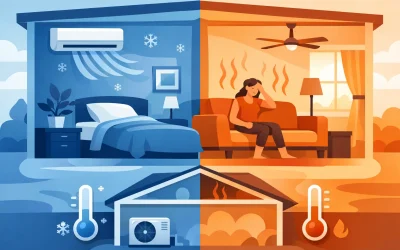
For businesses, the risk extends beyond the plant itself. Loss of cooling can disrupt a restaurant kitchen, classroom, aged care environment, office tenancy or retail floor. It may also lead to reactive callouts at the busiest possible time. Planned maintenance identifies many of the conditions that cause nuisance trips, including dirty coils, poor airflow, loose electrical connections and declining components.
There is a practical trade-off here. A careful single reset after an isolated event can be reasonable. Repeated resets to keep a system running are false economy. The right response depends on the symptoms, equipment type and how critical the conditioned space is.
What a technician will assess
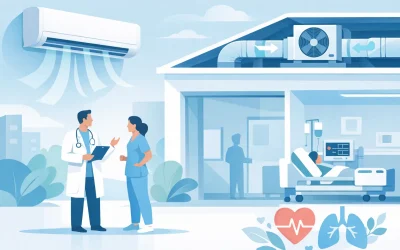
A qualified HVAC technician will not just switch the breaker back on. They will inspect the system’s operation and identify why electrical protection has activated. Depending on the unit, this may involve checking running current, compressor start-up, fan motors, capacitors, contactors, insulation condition, drainage, refrigerant performance, electrical terminals and the condition of the indoor and outdoor coils.
Where the issue sits with the fixed wiring, switchboard or circuit design, an appropriately licensed electrician may need to complete further testing or repairs. Queensland electrical work has licensing requirements for good reason. Avoid anyone who suggests bypassing a breaker, replacing it with a larger rating without assessment, or repeatedly resetting a safety switch.
For Brisbane homeowners and commercial sites, Big Dog Mechanical can assess air conditioning faults, carry out servicing and repairs, and help reduce the chance of another breakdown when the weather turns demanding. Clear fault information from your first call helps get the right response on site.
If your system has tripped once and now runs normally, monitor it rather than panic. If it trips again, smells wrong, makes unusual electrical noises or leaves you without reliable cooling, turn it off and arrange a professional inspection. A prompt diagnosis protects the equipment, the property and the people relying on the space being comfortable.