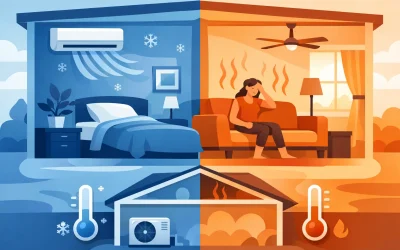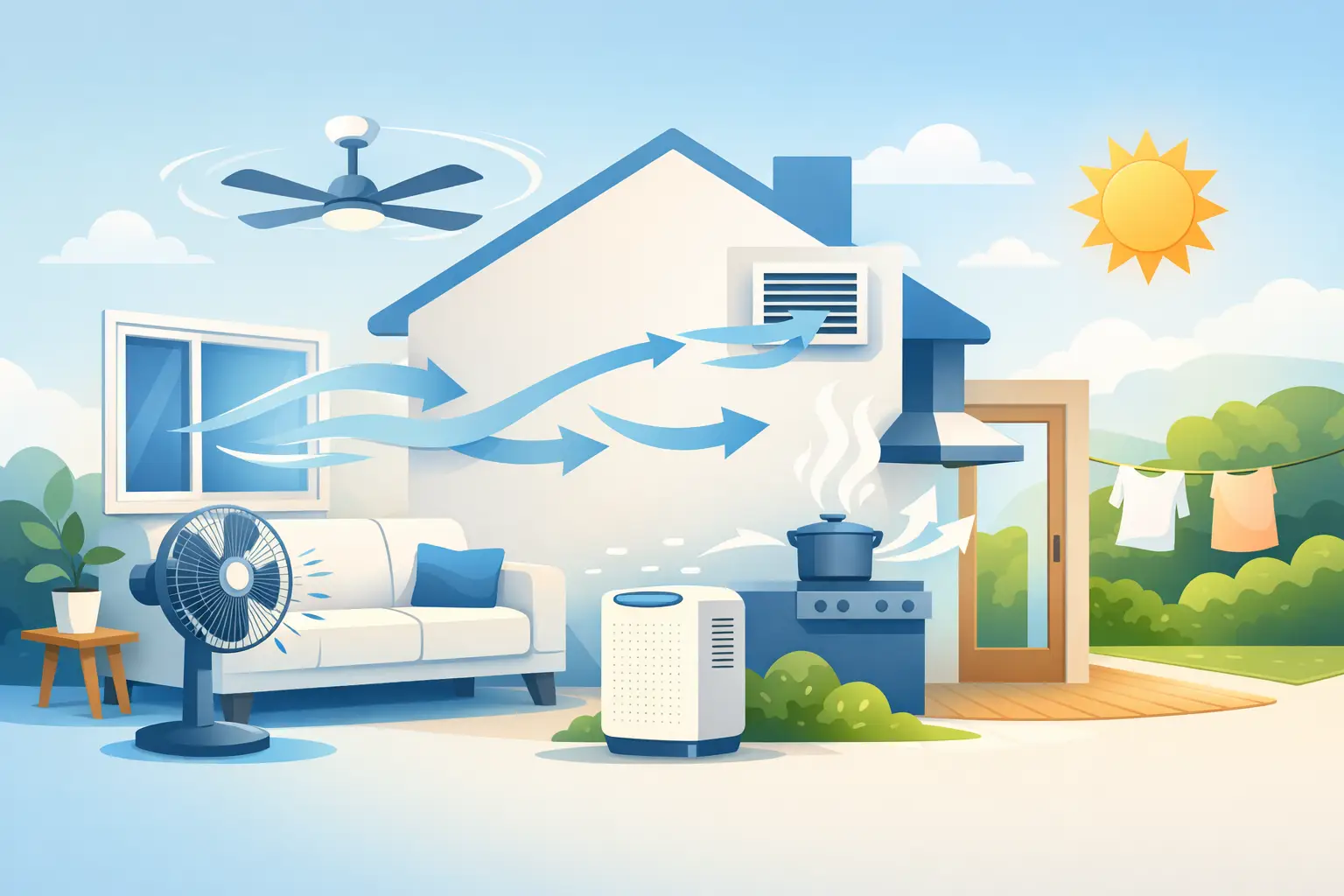
You usually notice bad airflow when one room feels like a sauna, another feels stuffy, and the air con seems to run forever without getting the job done. The best ways to improve airflow are rarely complicated, but they do need the right fix in the right place. If you want better comfort, lower running costs, and less strain on your system, it pays to look at airflow as a whole rather than blaming the unit alone.
In homes and commercial spaces across Brisbane, poor airflow often comes down to a few repeat issues: blocked filters, undersized returns, duct leaks, poor room layout, or a system that was never properly matched to the space. Some are quick wins. Others need a technician to inspect the setup properly. Either way, airflow problems are worth sorting early, because restricted air movement affects performance, efficiency, and indoor comfort every day.
Best ways to improve airflow without replacing your whole system
A full system replacement is sometimes necessary, but it should not be the first assumption. In many cases, airflow improves significantly with a few targeted changes.
Start with the filter. A clogged air filter is one of the most common causes of poor airflow, and it is also one of the easiest to fix. When the filter is packed with dust and debris, your system has to work harder to pull air through. That reduces supply to rooms, increases energy use, and can shorten equipment life. If airflow has dropped off gradually, this is the first place to check.
The next issue is vents and grilles. Supply vents blocked by furniture, curtains, storage, or even rugs can choke airflow into a room. Return air grilles can be just as important. If your system cannot pull enough air back, the conditioned air has nowhere to go. That creates pressure issues and uneven temperatures. Keeping vents clear sounds basic, but it makes a real difference.
Ceiling fans also help more than many people realise. They do not cool the air itself, but they move it around the room more effectively. That helps reduce hot and cold spots and supports your air conditioning system rather than forcing it to do all the work alone. In Queensland conditions, that extra air movement can make a room feel noticeably more comfortable.
Best ways to improve airflow in ducted air conditioning
Ducted systems offer whole-home comfort, but only if the air can actually move where it needs to go. If some rooms are consistently weak while others feel over-supplied, the problem may sit inside the duct network rather than in the unit.
Leaking or crushed ductwork is a common culprit. Flexible ducting can sag, split, or become restricted over time, especially in roof spaces where heat and age take their toll. When that happens, airflow drops before it reaches the outlet. You may still hear the system running, but the room never gets properly conditioned.
Duct design also matters. If the original layout was poorly balanced, some runs may be too long, too narrow, or poorly positioned for the space they serve. That is not something a homeowner can fix by trial and error. It needs proper assessment, especially in larger homes or buildings where pressure balance affects multiple zones.
Zoning can help, but only when it is set up correctly. A zoning system that shuts too many areas at once can create static pressure issues and reduce efficiency. On the other hand, well-designed zoning can direct air where it is needed most and improve comfort across the property. It depends on the system, the control setup, and how the building is used.
Check the return air before blaming the supply
A lot of people focus only on what is coming out of the vents. Just as important is what the system can pull back in. Return air is the other half of the equation.
If return air grilles are too small, blocked, or badly located, the system struggles to circulate properly. Bedroom doors can make this worse. In homes with closed internal doors and limited return pathways, air gets trapped in rooms and circulation drops off. That can leave some areas feeling stale or pressurised while others are under-conditioned.
This is one of those issues where the fix depends on the building. Sometimes it is as simple as keeping doors open when practical or clearing the return grille. In other cases, the home may need transfer grilles, door undercuts, or return air upgrades to restore proper flow.
Maintenance is one of the best ways to improve airflow long term
If airflow has been getting worse over time, maintenance is the smart place to start. Systems do not usually go from perfect to poor overnight unless there is a breakdown. More often, performance slips gradually as dust builds up, components wear, and small issues go unchecked.
A proper service can pick up blocked coils, fan problems, dirty filters, drainage issues, and early signs of duct or motor trouble. Dirty evaporator coils in particular can restrict airflow and reduce heat transfer, which means the system works harder for a weaker result. Hygiene matters too. Dust, mould, and grime inside parts of the system can affect both airflow and indoor air quality.
For commercial sites, preventative maintenance is even more important. Restaurants, aged care facilities, schools, and office spaces depend on reliable air movement for comfort and day-to-day operation. Poor airflow in these settings can quickly become a productivity issue, a customer complaint, or a compliance concern depending on the environment.
Room layout can work against your airflow
Not every airflow problem starts in the HVAC system. Sometimes the room itself is fighting the setup.
Large furniture placed directly under vents, tall shelving near returns, and crowded layouts can interrupt how air moves through a space. You may have enough conditioned air entering the room, but poor circulation stops it from spreading properly. Open-plan areas can have the opposite issue, where air drifts away before it conditions the occupied zone.
Window coverings also make a difference. In hot weather, direct sun can overload one side of the room and make airflow seem weaker than it really is. Closing blinds or curtains during peak heat reduces the cooling load and helps the system maintain a more even result.
This is where practical adjustments can save money. Before assuming you need a bigger unit, it is worth checking whether the room arrangement is undermining the air you already have.
When poor airflow means the system is the wrong size
There are times when the issue is not maintenance, layout, or ducting. The system itself may simply be the wrong fit.
An undersized system can struggle to deliver enough conditioned air across the space, particularly in larger homes, open-plan renovations, or commercial fit-outs with changing occupancy. An oversized system has its own problems. It may short cycle, condition unevenly, and fail to manage humidity properly. Neither option gives you stable comfort.
This is why system selection matters. Good airflow is not just about fan speed. It is tied to load calculations, duct design, room usage, insulation, ceiling height, and how the property handles heat through the day. In Brisbane conditions, those details matter more than many people expect.
If your airflow has never been right from day one, there is a fair chance the original design needs to be reviewed rather than endlessly patched.
Signs you need a professional airflow assessment
Some fixes are simple enough to handle yourself. Others need a technician with the right experience and testing tools.
It is worth booking an assessment if you notice rooms that never reach temperature, weak airflow from multiple vents, rising power bills without a clear reason, loud duct noise, musty smells, or a system that seems to run constantly. These symptoms often point to a broader airflow or efficiency issue rather than a single faulty part.
For commercial properties, an airflow assessment can also support asset planning. If you are managing multiple units or older plant, it helps to know whether the problem is service-related, design-related, or a sign that upgrades are due. Guesswork usually costs more in the long run.
A good technician should not jump straight to replacement. They should inspect the whole system, explain what is causing the restriction, and recommend the most practical fix based on the property and budget.
If you want better comfort from your air conditioning, airflow is one of the first things worth getting right. Small restrictions create bigger performance problems over time, and the right fix is often simpler than people expect. When the air moves properly, the whole system works the way it should.