A lot of air conditioning mistakes start before the unit is even switched on. The wrong size, the wrong layout, or a cheap install can leave you with hot spots, high power bills and a system that never quite feels right. This residential air conditioning buying guide is built to help Brisbane homeowners make a smart choice the first time.
Residential air conditioning buying guide: start with how you live
Before you compare brands or ask about features, look at how you actually use your home. That matters more than most people realise. A family cooling the main living area every afternoon has very different needs to a couple wanting overnight comfort in two bedrooms.
If you mostly need relief in one or two rooms, a split system is often the practical option. It is usually more affordable upfront, efficient for targeted cooling, and easier to install in existing homes. If you want whole-home control, cleaner aesthetics and more even temperatures across multiple rooms, ducted air conditioning may be worth the investment.
There is no universal best system. The right choice depends on house size, insulation, ceiling height, room orientation, how often the system will run, and what level of control you want.
Split system or ducted air conditioning?
For many households, this is the biggest decision.
When a split system makes sense
Split systems suit single rooms, open-plan living areas, home offices and bedrooms. They are a strong fit when you want staged upgrades rather than replacing or cooling the whole house at once. If budget matters and you want solid performance without major building work, a quality split system is hard to beat.
They also work well in Queensland homes where one side of the house gets hammered by afternoon sun. You can target the spaces you actually use instead of paying to cool empty rooms.
The trade-off is coverage and appearance. Multiple indoor units across the home can become less tidy than a ducted setup, and managing several systems is not always as convenient as using one central controller.
When ducted air conditioning is worth considering
Ducted systems are designed for whole-home comfort. They are ideal for larger homes, new builds, major renovations and households that want a more integrated result. Zoning is a major advantage because it lets you cool selected areas rather than running the entire house all day.
Upfront cost is higher, and installation is more involved. Roof space, home design and access all affect what is possible. But if you want even comfort, a cleaner look and central control, ducted often delivers a better long-term outcome.
Getting the size right matters more than the brand sticker
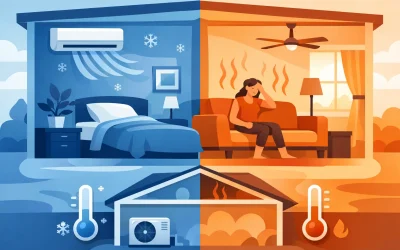
An undersized system will run hard and struggle on hot days. An oversized system can cycle too quickly, waste energy and leave the room feeling clammy rather than consistently comfortable. Bigger is not automatically better.
Correct sizing should account for more than square metreage. A proper assessment considers window size, sun exposure, insulation, number of occupants, ceiling height, room use and construction materials. A west-facing living room in Brisbane is a different job to a shaded bedroom in the same house.
This is where expert advice matters. A good installer does not guess from a floorplan and throw out a rough figure. They inspect the space, ask the right questions and match the unit to the load.
Energy efficiency is about the full system, not just the label
Most buyers look at the energy rating first, and that is sensible, but it is only part of the picture. A high-efficiency unit installed badly or sized incorrectly will not deliver the savings you expect.
Look at how efficiently the system performs in cooling mode, because that is where most Queensland households place the biggest demand. Also consider inverter technology, zoning options and whether the controls make it easy to run the system sensibly.
Running costs are shaped by your home as much as the unit itself. Poor insulation, draughts, unshaded western windows and dirty filters all push power use up. Sometimes a slightly more expensive system with better controls and a better install ends up being the cheaper option over time.
Features worth paying for and features you can ignore
Not every extra on the brochure adds real value. Focus on the features that improve comfort, efficiency and day-to-day use.
Wi-Fi control can be genuinely useful if you want to cool the house before arriving home or manage settings remotely. Zoning is valuable in ducted systems because it helps reduce waste. Quiet operation matters more than many people think, especially in bedrooms and study areas. Air filtration can also be worthwhile for households concerned about dust and general indoor air quality.
On the other hand, some premium add-ons sound impressive but make little difference in normal household use. If a feature does not improve comfort, control or efficiency in a practical way, it may not be worth stretching the budget for.
Installation quality can make or break the result
A good unit with poor installation is still a poor outcome. This is where plenty of buying decisions come unstuck.
Pipework length, condensate drainage, outdoor unit location, airflow design, electrical setup and commissioning all affect performance. With ducted systems, the design of the duct layout and zoning strategy is just as important as the indoor and outdoor equipment.
Ask direct questions. Will the installer inspect the site? Will they size the system properly? Will they explain where indoor and outdoor units should go and why? Will they test and commission the system after installation? A professional contractor should be clear, not vague.
Clean workmanship matters too. Homeowners want a system that performs well, but they also want a tidy install, sensible unit placement and a team that respects the property.
Residential air conditioning buying guide for Brisbane conditions
Brisbane homes deal with long cooling seasons, humidity and sharp differences between shaded and sun-exposed rooms. That changes what a good buying decision looks like.
For many households, cooling performance matters more than chasing every last heating feature. Strong humidity control, reliable operation in peak summer conditions and sensible zoning often deserve more attention than broad marketing claims.
Local knowledge helps here. A contractor working across Brisbane and surrounding suburbs will usually have a better read on home styles, roof space limitations and common heat-load issues than someone quoting from a generic checklist.
Don’t buy on upfront price alone
It is tempting to compare quotes by the bottom line, especially when several systems seem similar. But the cheapest option is often cheap for a reason.
Sometimes the unit itself is lower grade. Other times the quote excludes important electrical work, upgrades drainage assumptions, or cuts back on installation quality. In some cases, the system is simply not the right size.
A better way to compare quotes is to look at total value. What equipment is included? How is the system being sized? What controls come with it? Is the warranty clear? What support is available if something goes wrong in the middle of summer?
A reliable installer is not just selling a box. They are responsible for how that system performs in your home.
Think past installation day
Air conditioning is not a set-and-forget asset. Filters need cleaning, systems need servicing, and small issues are cheaper to fix before they become breakdowns.
That matters even more in heavily used family homes. Dust build-up, blocked drains and neglected components can drag down performance fast. Regular servicing helps protect efficiency, extend system life and reduce the chance of losing cooling when you need it most.
This is one reason many homeowners prefer working with an established HVAC specialist rather than chasing the lowest install quote. Ongoing support counts. If you need servicing, repairs or honest advice later, you want a team that is responsive and knows the system.
Questions to ask before you say yes
A few direct questions can save a lot of grief. Ask what size system is being recommended and why. Ask whether the quote includes full installation and commissioning. Ask how the proposed setup will handle your hottest rooms. Ask what maintenance will be required and what warranty applies to both equipment and workmanship.
If the answers are rushed or unclear, keep looking. Confidence is good. Guesswork is not.
For homeowners who want a dependable result, the best buying decision usually comes down to three things: the right system type, the right size and the right installer. Get those right, and your air conditioning should feel less like a gamble and more like money well spent. If you are weighing up options for your home, a proper site assessment will tell you far more than any online spec sheet ever will.