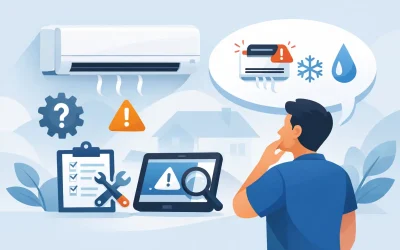
If your air con is working harder, your power bills are creeping up, or certain rooms never seem to cool properly, the filter is one of the first things worth checking. A lot of people ask how often replace HVAC filters, but the honest answer is not one fixed timeframe for every system. It depends on the filter type, how often the system runs, the environment around it, and whether the building is a home, office, school or busy commercial site.
A clogged filter does more than collect dust. It restricts airflow, puts extra strain on motors and fans, and can leave the whole system running inefficiently. In some cases, poor filter maintenance can even contribute to coil fouling, hygiene issues and avoidable breakdowns. That is why filter replacement is not a small housekeeping task. It is a basic part of protecting HVAC performance.
How often replace HVAC filters in most properties
For most residential systems, a good starting point is every 1 to 3 months. That suits a typical split system or ducted setup in a standard home where the unit gets regular use but is not under heavy demand all year. If the home has pets, renovation dust, nearby road traffic, or people with allergies, the interval usually needs to be shorter.
For commercial sites, the schedule can be much tighter. Offices, hospitality venues, medical settings, schools and aged care facilities often need filters checked monthly and replaced far more often than a home system. These environments usually have longer run times, higher occupancy and stricter expectations around indoor air quality and compliance.
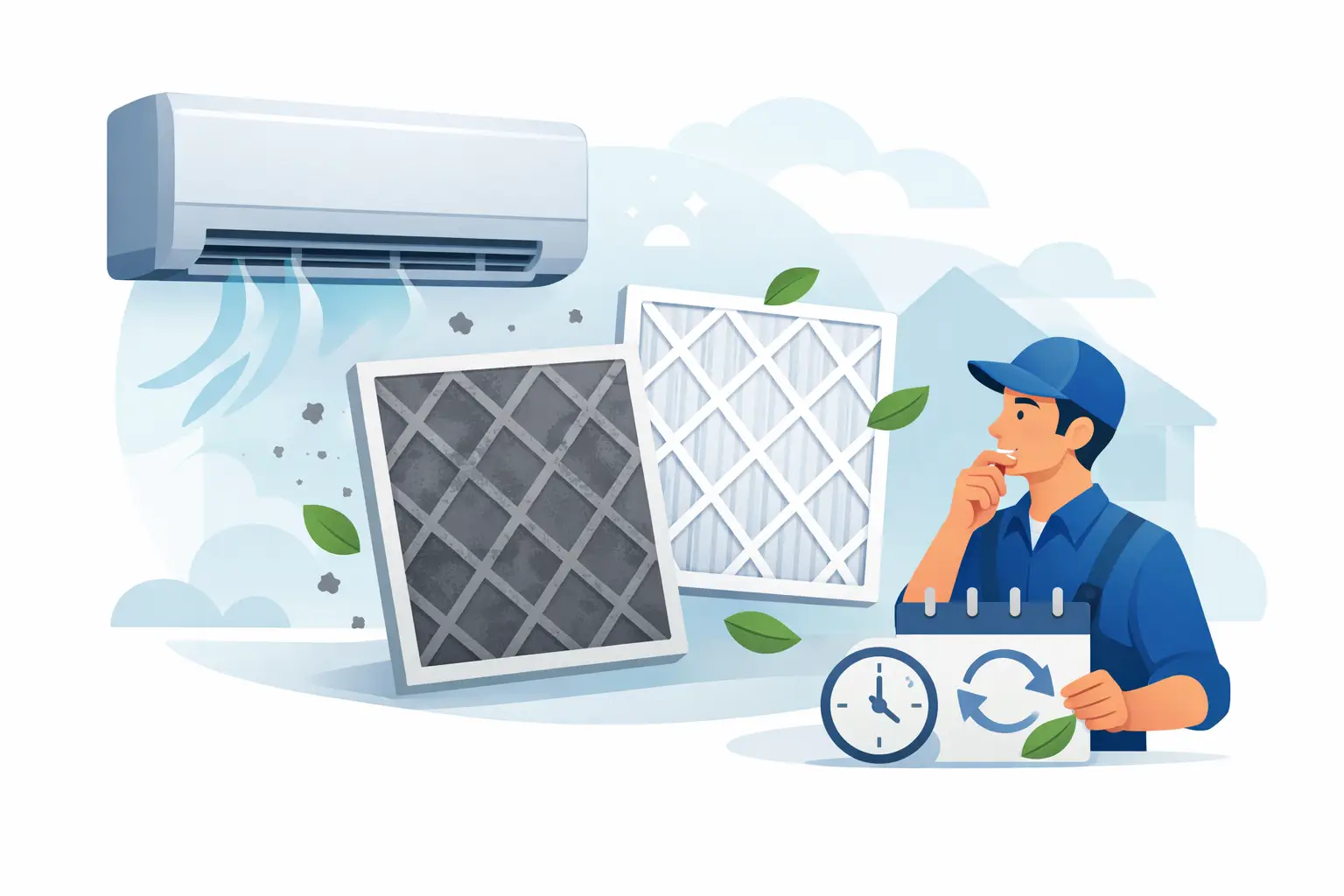
If you want a practical rule, inspect filters monthly and replace them when they are visibly dirty or when airflow starts to drop. That approach is more reliable than sticking blindly to the date on a calendar.
What changes the replacement schedule
The biggest factor is usage. In Queensland, systems often run hard through long hot periods, and heavy cooling demand means filters load up faster. A unit that runs every day through summer will not have the same replacement cycle as one used only now and then.
Filter type matters too. Basic disposable filters generally need more frequent replacement than higher-capacity pleated filters. Washable filters can last longer, but only if they are cleaned properly and fully dried before being put back. A reusable filter that is cleaned poorly is not saving money if it causes airflow issues.
The condition of the space also plays a part. Homes with pets, carpet, open windows, or nearby construction usually collect more airborne dust. Commercial premises with kitchen activity, foot traffic, stock movement or high occupancy can put even more load on the filtration system.
Then there is the system itself. A well-designed and properly maintained HVAC system will generally manage airflow and filtration more effectively than one with existing faults, damaged ductwork or overdue servicing. If a unit is already struggling, the filter tends to become the first visible symptom.
Homes with pets, kids or allergies
In a busy household, filters usually need closer attention. Pet hair, dander and general dust load can build quickly, especially in ducted systems moving air through multiple rooms. If anyone in the home has asthma or allergies, replacing filters more often can help support cleaner indoor air and steadier airflow.
In these cases, every 30 to 60 days is often more realistic than every 90 days. It is a small maintenance job that can make a noticeable difference to comfort.
Commercial sites and high-demand buildings
Commercial buildings are different because the cost of poor filter maintenance is higher. Reduced airflow can affect staff comfort, customer experience, equipment performance and operating costs. In some sectors, it can also affect hygiene standards and compliance expectations.
That is why many facility managers build filter checks into a preventative maintenance program. Monthly inspection and scheduled replacement based on actual operating conditions is the safer approach, particularly in high-traffic buildings.
Signs your HVAC filter needs replacing sooner
You do not always need to wait for the planned date. Systems often show warning signs before the filter reaches the end of its expected life.
A common sign is weak airflow from supply vents or indoor units. If the fan is running but the conditioned air feels reduced, the filter may be restricting circulation. Dust collecting more quickly around vents or on nearby surfaces can also point to a loaded filter.
Another sign is longer run times. When airflow is restricted, the system has to work harder to achieve the set temperature. That can mean higher electricity usage and more wear on components. In some cases, you may also notice the indoor unit looks dirtier than usual, or the system starts to smell musty when it turns on.
If the filter looks grey, packed with dust, or visibly clogged, replace it. Waiting longer rarely saves money.
Why replacing filters on time matters
The first benefit is efficiency. Clean filters help your HVAC system move air properly, which supports better cooling performance and reduces unnecessary strain. When airflow is right, the system can do its job with less effort.
The second benefit is reliability. Dirty filters can contribute to overheating, coil icing, fan issues and general system stress. Not every breakdown starts at the filter, but a neglected filter creates the kind of operating conditions that lead to faults.
The third benefit is air quality. Filters are not a cure-all for every indoor air issue, but they do play a direct role in catching dust and airborne particles before they circulate through the space. In homes, that can mean a cleaner, more comfortable environment. In workplaces, it can support staff wellbeing and a better experience for customers or visitors.
There is also the long-term cost factor. Replacing a filter is inexpensive compared with emergency repairs, major cleaning or avoidable system damage. It is one of the few maintenance tasks where the return is usually immediate.
How often replace HVAC filters if you are not sure what system you have
A lot of owners and tenants do not know the filter specification, and that is common. Split systems, ducted systems, packaged units, VRV or VRF systems and larger commercial plant all handle filtration differently. Some have return air filters that are easy to access. Others have multiple filter banks or specialised media that should be checked by a technician.
If you are unsure, start by finding the filter location and checking its condition once a month. If the filter is disposable and looks dirty, replace it with the correct size and rating. If it is washable, clean it to the manufacturer’s recommendations and make sure it is fully dry before reinstalling it.
If access is awkward, the filter type is unclear, or the system is part of a larger commercial setup, it is better to have it assessed properly. A wrong filter or badly fitted filter can create its own problems.
A smarter approach than set-and-forget
The best filter schedule is based on actual operating conditions, not guesswork. For a homeowner, that might mean checking monthly and replacing every 1 to 3 months depending on pets, usage and dust levels. For a business, it often means formal inspections, documented replacement intervals and maintenance aligned with system demand.
This is where professional servicing adds value. During a routine service, the technician is not just looking at whether the filter is dirty. They are checking whether restricted airflow has started to affect other components, whether the filter choice suits the system, and whether there are broader issues such as coil contamination or duct leakage.
For property owners and facility managers around Brisbane, that practical approach helps avoid the all-too-common cycle of higher bills, inconsistent comfort and breakdowns in the middle of peak season. Big Dog Mechanical sees this regularly across both residential and commercial systems – the filter itself is simple, but the effect of ignoring it is not.
If you remember one thing, make it this: check your filters more often than you think you need to. A five-minute inspection now is a lot easier than dealing with a struggling system when you need it most.